Welcome, fellow garden enthusiasts! We all dream of a lush, vibrant garden overflowing with healthy plants, beautiful flowers, and delicious vegetables. But what’s the secret ingredient to achieving this dream? It all starts beneath the surface, with your soil. Healthy soil is the bedrock of a thriving organic garden, providing the essential nutrients, structure, and microbial life your plants need to flourish.
Think of your soil as a living ecosystem. When it’s healthy, it teems with beneficial microorganisms, worms, and fungi that work tirelessly to break down organic matter, cycle nutrients, and create the perfect environment for roots to grow. Conversely, neglected or poorly treated soil can become compacted, nutrient-depleted, and prone to pests and diseases, leading to struggling plants and gardening frustration.
Today, we’re diving deep into the world of healthy soil habits, showing you what to avoid and what to embrace for a truly organic and bountiful garden. Let’s transform your gardening approach and unlock your garden’s true potential!
The Foundation: Understanding Your Soil
Before we jump into specific practices, let’s briefly touch on what makes soil healthy. Ideally, healthy soil has a good balance of:
- Minerals: The inorganic particles (sand, silt, clay) that provide structure.
- Organic Matter: Decomposed plant and animal material that improves fertility, water retention, and soil structure.
- Water: Essential for plant uptake and microbial activity.
- Air: Crucial for root respiration and soil organisms.
- Living Organisms: Billions of bacteria, fungi, protozoa, nematodes, and larger creatures like earthworms that contribute to soil health.
Our goal is to nurture these components, especially the organic matter and living organisms, which are often overlooked but incredibly vital.
Avoid These Habits: Practices That Harm Your Soil
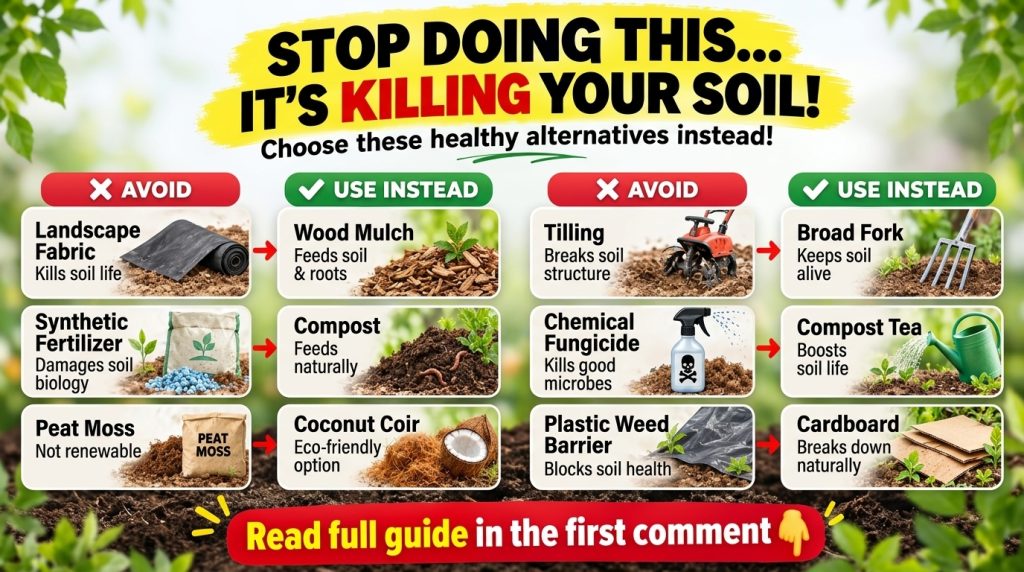
1. Excessive Tilling
Avoid: Deep, aggressive tilling that flips and pulverizes the soil.
While tilling might seem like an easy way to prepare a bed, it’s actually quite destructive to the soil structure. It breaks up beneficial fungal networks (mycorrhizae), exposes dormant weed seeds to light, and releases stored carbon into the atmosphere. Over time, tilling can lead to compaction and reduced organic matter.
2. Relying on Synthetic Fertilizers
Avoid: Solely using chemical, synthetic fertilizers.
Synthetic fertilizers provide a quick burst of nutrients but don’t feed the soil itself. They can often kill off beneficial microbes, accumulate salts, and leach into groundwater, harming the environment. They’re a short-term fix that can create long-term dependency and damage.
3. Using Peat Moss Extensively
Avoid: Heavy use of peat moss as a primary soil amendment.
Peat moss is a non-renewable resource harvested from peat bogs, which are vital ecosystems. Its extraction contributes to habitat destruction and releases significant amounts of carbon dioxide, impacting climate change. While it has good water retention, more sustainable alternatives exist.
4. Deploying Landscape Fabric
Avoid: Covering large areas with landscape fabric.
Landscape fabric, often used for weed suppression, can hinder water and air penetration into the soil. It doesn’t break down, becoming a permanent plastic barrier that prevents organic matter from reaching the soil surface, impeding natural soil building processes, and can be a pain to remove later.
5. Chemical Fungicides and Pesticides
Avoid: Blanket applications of synthetic fungicides and pesticides.
These chemicals don’t discriminate. They kill off beneficial insects, fungi, and bacteria alongside the harmful ones, disrupting the natural balance of your garden ecosystem. This can lead to a reliance on more chemicals as natural defenses are weakened.
Embrace These Habits: Practices for a Thriving Organic Garden
1. Go No-Till or Use a Broadfork
Use Instead: Minimal disturbance methods like no-till gardening or using a broadfork.
Instead of tilling, try layering organic matter directly onto your garden beds (sheet mulching) or use a broadfork to gently aerate and loosen the soil without flipping it. This preserves the soil structure, protects microbial life, and encourages earthworms to do their work, leading to healthier soil over time.
2. Nourish with Compost
Use Instead: Rich, homemade compost.
Compost is black gold for your garden! It slowly releases nutrients, improves soil structure, enhances water retention, and feeds the invaluable soil microbiome. Regularly incorporating compost into your beds will transform tired soil into a powerhouse of fertility. You can also make your own compost from kitchen scraps and yard waste!
3. Opt for Coconut Coir or Sustainable Compost
Use Instead: Coconut coir (coco coir) or locally sourced compost.
Coconut coir is a byproduct of the coconut industry, making it a more sustainable and renewable alternative to peat moss. It offers excellent water retention and aeration properties. For local options, look for high-quality, mushroom-compost, worm castings, or well-aged manure from organic farms.
4. Mulch with Cardboard or Wood Chips
Use Instead: Organic mulches like cardboard, wood chips, or straw.
These materials suppress weeds effectively while also breaking down over time to add organic matter to your soil. Cardboard (remove tape and labels) is excellent for starting new beds, and wood chips or straw provide a natural, beneficial top layer that conserves moisture, regulates soil temperature, and enriches the soil as they decompose.
5. Build Soil Immunity with Compost Tea
Use Instead: Biological solutions like compost tea.
Compost tea is a liquid extract made from compost, brimming with beneficial microorganisms. Spraying it on your plants and drenching your soil can boost plant immunity, deter pests, and introduce helpful microbes that outcompete disease-causing pathogens. It’s a natural, gentle way to protect your plants.
Bringing It All Together for a Holistic Approach
Building healthy soil is a continuous journey, not a one-time fix. By consistently applying these organic practices, you’ll see a remarkable difference in your garden’s vitality. Your plants will be stronger, more resistant to pests and diseases, and yield more abundantly. You’ll also be contributing to a healthier environment by reducing chemical use and promoting biodiversity.
Remember, every shovelful of compost, every gentle aeration with a broadfork, and every layer of organic mulch contributes to a richer, more vibrant garden ecosystem. Embrace these healthy soil habits, and watch your garden truly thrive!