As the chill of winter begins to recede and the first hints of spring are just around the corner, many gardeners are eager to get back into their green spaces. For those with fruit trees, late winter presents a critical window for a task that can dramatically impact the health and bounty of your harvest: pruning. This essential practice, when done correctly, encourages vigorous growth, improves fruit quality, and keeps your trees strong and disease-free for years to come.
At Garden – L. Quyên, we believe that every gardener, regardless of experience, can achieve beautiful and productive results with the right guidance. So, let’s dive into the art and science of late-winter fruit tree pruning, ensuring your apple, pear, and plum trees are set up for their best season yet!
Why Late-Winter Pruning is Crucial
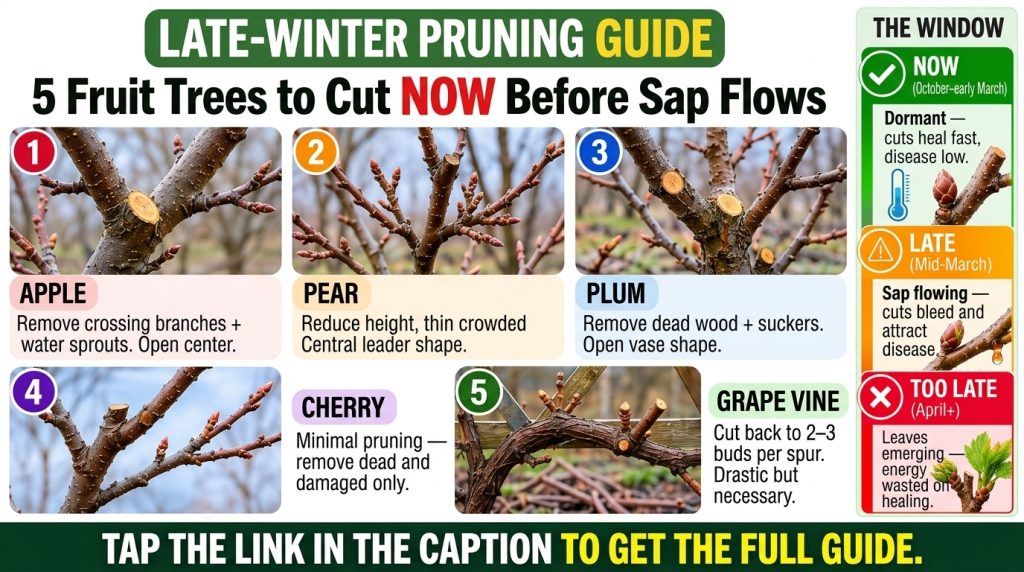
Late winter, typically from January through March in many regions, is considered the ideal time for dormant pruning. During this period, deciduous fruit trees are leafless, making it easier to see their structure and identify branches that need attention. More importantly, the trees are dormant, meaning they are less susceptible to stress and disease compared to pruning during their active growth phases.
Key Benefits:
- Increased Fruit Production: Pruning stimulates the growth of new fruiting wood, leading to a more abundant harvest.
- Improved Fruit Quality: By opening up the tree’s canopy, more sunlight reaches the developing fruit, enhancing flavor and color.
- Enhanced Tree Health: Removing dead, diseased, or damaged branches prevents the spread of pests and diseases, keeping your tree vigorous.
- Better Air Circulation: A well-pruned tree has improved airflow, which reduces the risk of fungal issues.
- Structural Integrity: Shaping the tree helps develop a strong framework that can support heavy fruit loads without breaking.
- Manageable Size: Pruning keeps the tree at a size that’s easier to maintain, spray, and harvest.
Essential Tools for Pruning
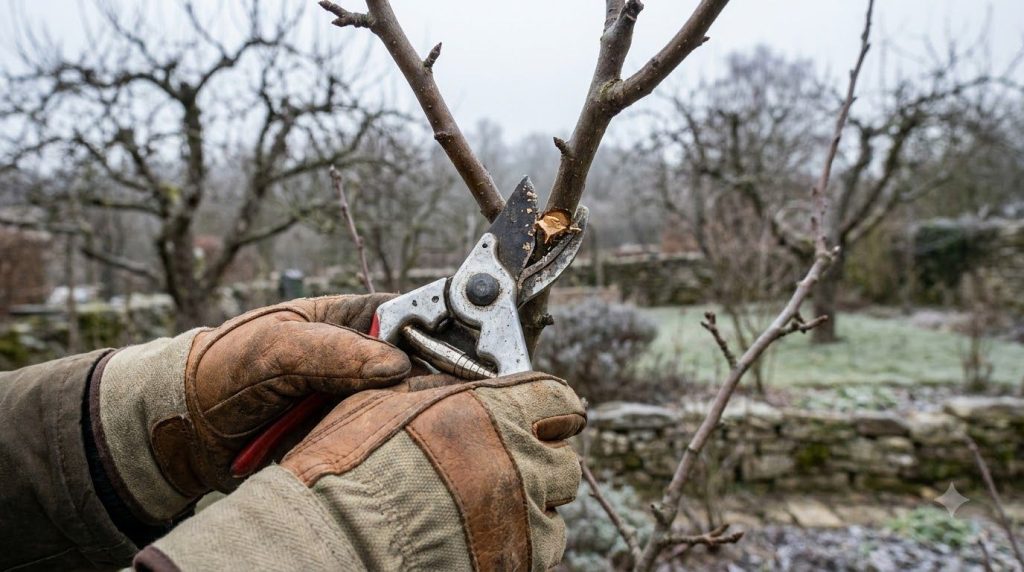
Before you begin, gather the right tools. Clean, sharp tools make precise cuts that heal quickly, minimizing stress on the tree. Here’s what you’ll need:
- Hand Pruners: For branches up to 3/4 inch thick. Opt for bypass pruners for clean cuts.
- Loppers: For branches up to 1 1/2 inches thick. These provide extra leverage.
- Pruning Saw: For branches thicker than 1 1/2 inches. Look for a curved blade for easier cutting.
- Safety Glasses: Protect your eyes from falling debris.
- Gloves: Protect your hands from thorns and splinters.
- Disinfectant: A solution of 1 part bleach to 9 parts water, or rubbing alcohol, to sterilize tools between cuts, especially when dealing with diseased branches.
General Pruning Principles for Fruit Trees
While specific needs vary by tree type, some universal principles apply to all fruit tree pruning:
- Remove the “3 D’s”: Dead, Diseased, and Damaged branches. These are priority number one to prevent further issues.
- Eliminate Crossing or Rubbing Branches: Branches that rub against each other can create wounds, inviting pests and diseases. Choose the stronger, better-positioned branch to keep.
- Open the Canopy: Remove inward-growing branches or those that are too dense in the center of the tree. This improves light penetration and air circulation. Aim for a “vase” or “central leader” shape depending on your tree type and desired growth habit.
- Maintain a Balanced Structure: Ensure branches are well-spaced around the tree, promoting even growth and fruit distribution.
- Cut Correctly: Make clean cuts just outside the branch collar (the slightly swollen area where a branch meets the trunk or another branch). Avoid leaving stubs or cutting too close to the main branch.
- Step Back and Assess: Periodically step away from the tree to view your progress and ensure you’re maintaining a balanced shape.
Specific Tips for Apple, Pear, and Plum Trees
Apple and Pear Trees
These are often pruned to a “central leader” system (a main vertical trunk with horizontal branches) or a “modified central leader.” For semi-dwarf and dwarf varieties, a “vase” shape can also be effective.
- Thinning Cuts: Remove entire branches back to their origin to open the canopy.
- Heading Cuts: Shorten branches to a strong outward-facing bud or side branch to encourage bushier growth and promote new fruit wood.
- Manage Water Sprouts & Suckers: Remove any vertical, vigorous shoots (water sprouts) growing from horizontal branches and shoots (suckers) growing from the base of the tree or roots.
- Encourage Fruiting Spurs: Apples and pears fruit on spurs, which are short, stubby branches. Preserve these.
Plum Trees
Plums generally benefit from a “vase” or “open center” system, which allows maximum light penetration. They tend to fruit on both spurs and one-year-old wood.
- Open Center Training: Remove the central leader to encourage several strong scaffold branches to grow outwards.
- Thinning is Key: Plum trees can become very dense. Focus on thinning out crowded branches to improve air circulation and light.
- Consider Fruit Location: Plums often set fruit on younger wood. Balance removing old wood with retaining enough new wood for next season’s crop.
Common Pruning Mistakes to Avoid
Even seasoned gardeners can make mistakes. Be mindful of these common pitfalls:
- Over-Pruning: Removing too much wood at once can shock the tree and reduce fruit production. A good rule of thumb is to remove no more than 20-30% of the tree’s canopy in a single season.
- Leaving Stubs: Cuts that are too far from the branch collar can lead to dieback and entry points for disease.
- Cutting Too Close: Cutting into the branch collar can prevent proper wound healing.
- Improper Timing: Pruning at the wrong time (e.g., late spring/early summer) can stimulate excessive vegetative growth at the expense of fruit, or expose the tree to disease.
- Unclean Tools: Dull tools tear rather than cut, creating jagged wounds that are harder for the tree to heal.
Enjoying the Fruits of Your Labor
Late-winter pruning is an investment in your fruit tree’s future. It requires a bit of knowledge, the right tools, and a keen eye, but the rewards are truly sweet: healthier trees, more abundant harvests, and a deeper connection to your garden. Don’t be intimidated; start small, focus on the “3 D’s,” and you’ll gain confidence with each cut.
Ready to give your fruit trees the best start to the growing season? Share your pruning tips or questions in the comments below! Happy gardening!