Tired of scrubbing endlessly and feeling like your cleaning efforts never quite make a dent? You’re not alone! Many of us face common household cleaning challenges, from stubborn grease in the kitchen to unsightly scuff marks on walls, and even that lingering musty smell in towels. It often feels like you need a different specialized product for every single problem, leading to cluttered cabinets and a drained budget.
But what if there was a smarter way to tackle these everyday messes? This guide is for anyone who wants to simplify their cleaning routine, save money, and achieve fantastic results using simple, common household ingredients. Whether you’re a seasoned DIY enthusiast or new to the world of homemade solutions, you’ll find these ‘smart cleaning combinations’ incredibly effective and easy to implement.
We’ll dive into three powerful, natural cleaning concoctions that will transform your home. You’ll learn how to mix up a potent all-purpose degreaser for your kitchen, create a gentle yet effective scuff mark remover for your walls, and discover a simple trick to banish damp smells from your laundry. Get ready to unlock the secrets to a cleaner, fresher home, without the harsh chemicals or hefty price tags!
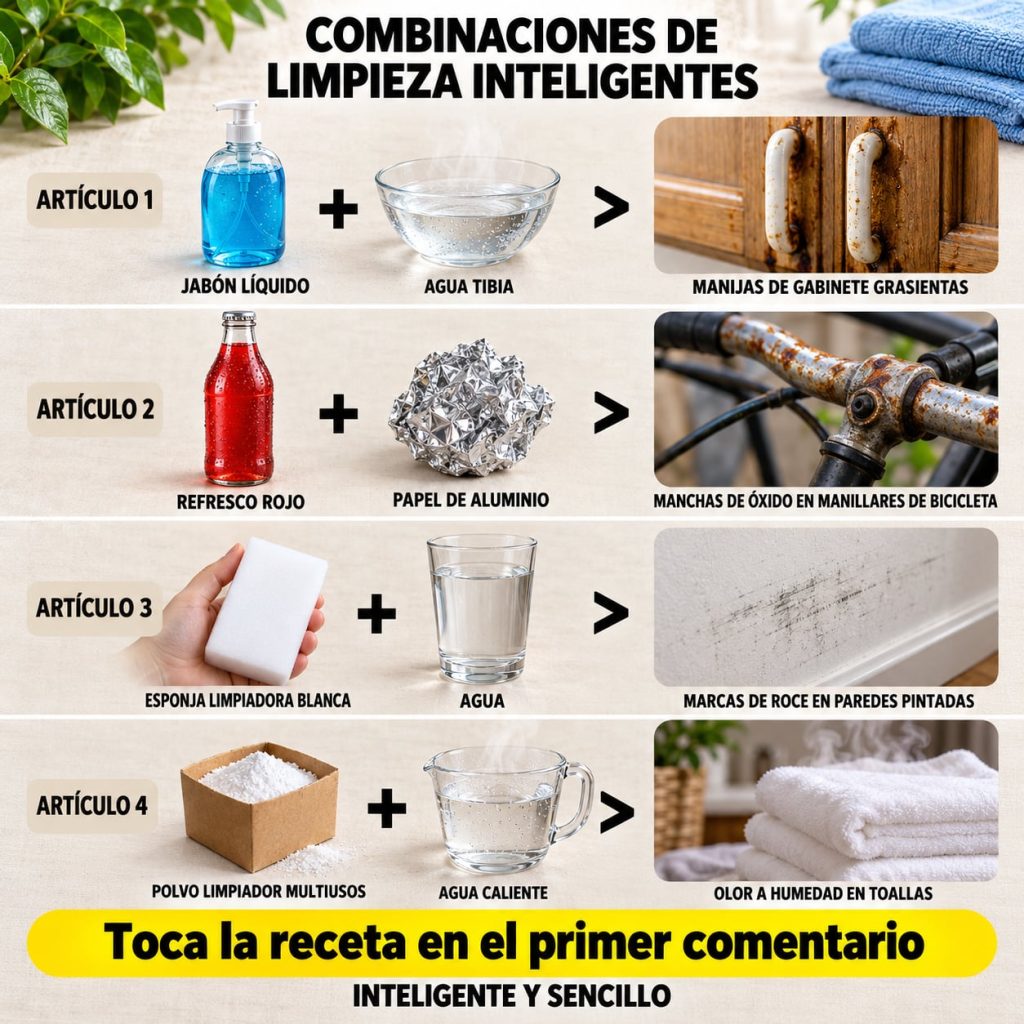 Discover the power of simple ingredients combined for smart cleaning!
Quick Summary
- Preparation Time: 5-10 minutes per solution
- Application Time: Varies by task (5-30 minutes)
- Difficulty Level: Easy
- Best Uses: Kitchen degreasing, wall scuff removal, laundry freshening
- Suitable Surfaces: Countertops, stovetops, sinks, painted walls, tiles, glass, laundry fabrics (always test first)
- Storage Time: 1-2 weeks for solutions with water, longer for dry ingredients.
Why You’ll Love These DIY Solutions
- Easy to Make: No complicated steps or fancy equipment needed.
- Budget-Friendly: Uses ingredients you likely already have in your pantry.
- Eco-Friendly: Reduces reliance on harsh chemicals and plastic waste.
- Effective: Tackles common household messes with surprising power.
- Versatile: Each combination has multiple applications around the house.
- Safer for Your Home: Less exposure to strong fumes and synthetic fragrances.
- Beginner-Friendly: Perfect for those new to DIY cleaning.
Ingredients / Materials
For DIY All-Purpose Degreaser (Kitchen Focus)
- 1 cup white vinegar
- 1 cup warm water
- 1 tablespoon liquid dish soap (mild, unscented is best)
- 10-15 drops lemon essential oil (optional, for scent)
For DIY Scuff Mark & Wall Cleaner
- 1/2 cup baking soda
- 1/4 cup warm water
For DIY Laundry Odor Eliminator/Booster
- 1/2 cup white vinegar
- 1/4 cup borax (optional substitution: 1/2 cup baking soda)
- 5-10 drops tea tree or lavender essential oil (optional, for scent and antibacterial properties)
Equipment Needed
- 2-3 empty spray bottles (for degreaser and scuff mark cleaner)
- Measuring cups and spoons
- Mixing bowls
- Funnel (optional, but helpful for pouring into spray bottles)
- Microfiber cloths (several)
- Soft sponge or non-abrasive scrubber
- Gloves (optional, for sensitive skin)
Step-by-Step Instructions
1. Crafting Your DIY All-Purpose Degreaser (Kitchen Powerhouse)
This combination is perfect for cutting through grease and grime on kitchen surfaces, making your countertops and stovetops sparkle.
- Gather Your Ingredients: Get your white vinegar, warm water, liquid dish soap, and lemon essential oil (if using) ready.
- Combine in a Bowl: In a mixing bowl, combine 1 cup of white vinegar and 1 cup of warm water. Stir gently.
- Add Dish Soap: Pour in 1 tablespoon of liquid dish soap. The soap helps break down grease and adds sudsing power.
- Introduce Essential Oil (Optional): If you want a fresh scent, add 10-15 drops of lemon essential oil. Lemon is known for its degreasing properties and uplifting aroma. Stir until well combined.
- Transfer to Spray Bottle: Carefully pour the mixture into a clean spray bottle using a funnel if needed.
- Shake Before Use: Give the bottle a good shake before each application to ensure ingredients are mixed.
Expected Result: A clear, fresh-smelling liquid ready to tackle greasy kitchen surfaces.
Approximate Time: 3-5 minutes preparation.
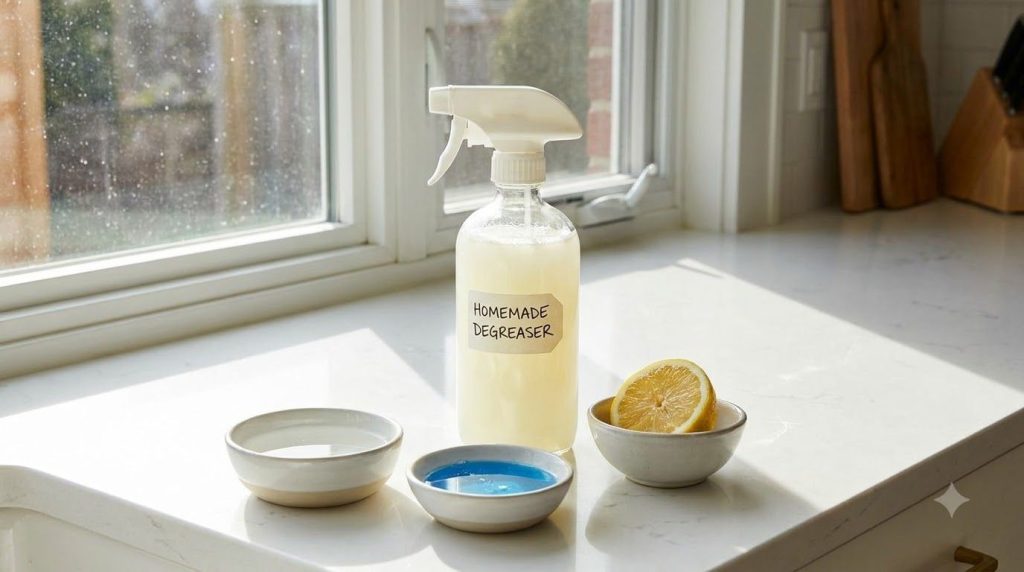 Your homemade degreaser is ready to shine!
2. Mixing Your DIY Scuff Mark & Wall Cleaner (Gentle Yet Effective)
This gentle abrasive paste is excellent for removing scuff marks, crayon, and light dirt from painted walls and other delicate surfaces.
- Prepare Your Basin: Get a small mixing bowl or a shallow dish ready.
- Add Baking Soda: Spoon 1/2 cup of baking soda into the bowl.
- Introduce Water Gradually: Slowly add 1/4 cup of warm water to the baking soda, stirring as you go. You’re aiming for a thick, spreadable paste consistency. Adjust water if necessary, adding a tiny bit more if it’s too thick, or a pinch more baking soda if it’s too watery.
- Mix to a Paste: Continue mixing until you have a smooth, uniform paste without lumps.
Expected Result: A white, slightly gritty paste that can be easily applied with a cloth or sponge.
Approximate Time: 2-3 minutes preparation.
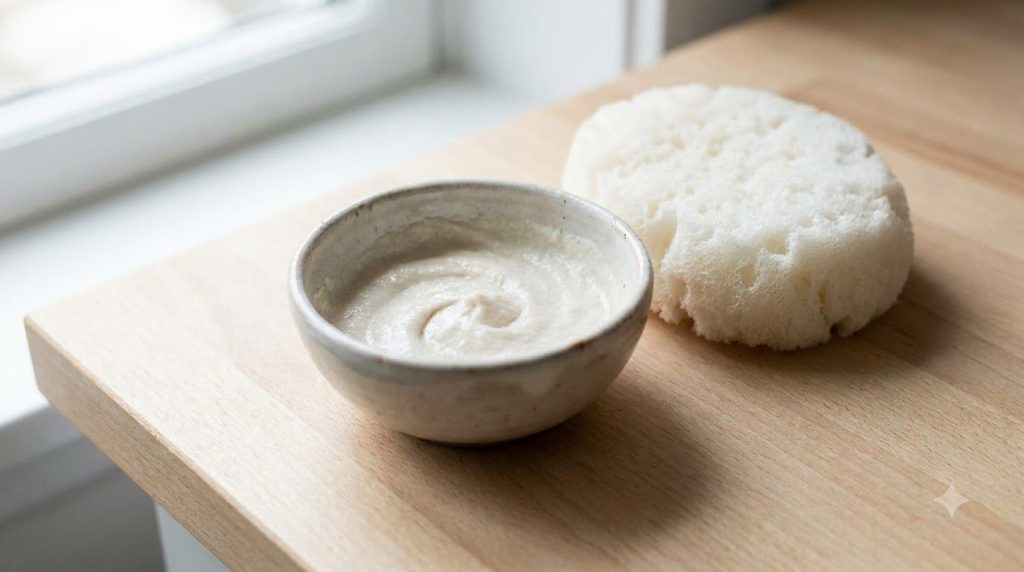 This simple paste works wonders on walls!
3. Creating Your DIY Laundry Odor Eliminator/Booster (Freshness Guaranteed)
Say goodbye to damp, musty towel smells and boost your laundry’s freshness naturally.
- Prepare for Laundry Cycle: Have your washing machine ready with your laundry load, especially those damp-smelling towels.
- Measure White Vinegar: Pour 1/2 cup of white vinegar into a measuring cup. This will go into the fabric softener dispenser or directly into the rinse cycle.
- Measure Borax/Baking Soda: Measure 1/4 cup of borax (or 1/2 cup of baking soda if substituting). This will go directly into the washing machine drum with the detergent.
- Add Essential Oil (Optional): If using, add 5-10 drops of tea tree or lavender essential oil to the white vinegar. This adds a lovely scent and extra germ-fighting power.
- Combine in Wash: Add the borax or baking soda to the detergent dispenser or directly into the drum with your clothes. Add the vinegar (with essential oil if using) to the fabric softener dispenser, or during the rinse cycle if your machine doesn’t have one.
- Run Cycle: Wash your laundry as usual.
Expected Result: Fresher, cleaner laundry without unpleasant odors.
Approximate Time: Less than 1 minute preparation, integrated into laundry routine.
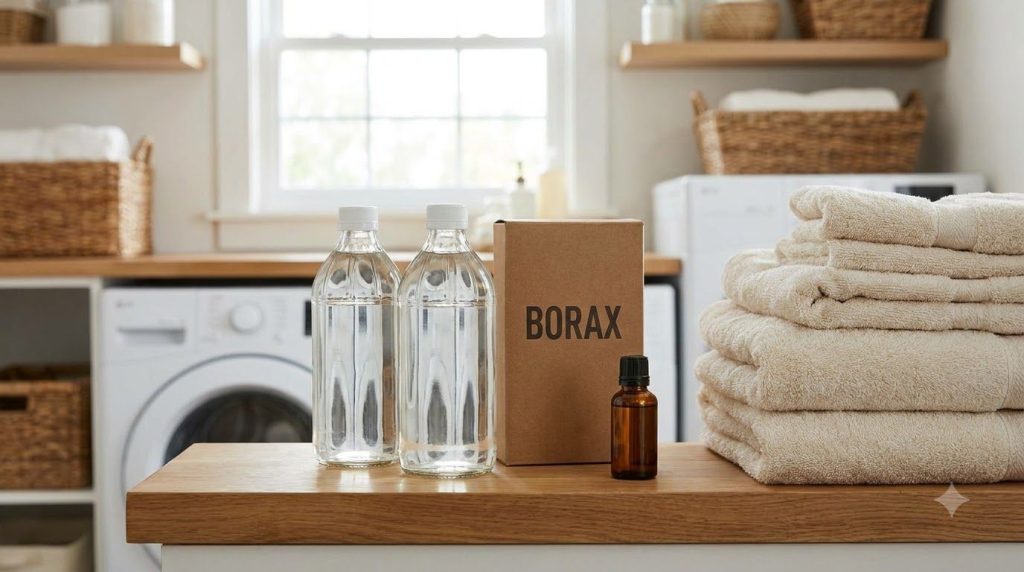 Banish odors and boost freshness with this natural laundry combo!
Best Uses
DIY All-Purpose Degreaser:
- Kitchen Countertops: Safely cleans most sealed countertop materials like laminate, tile, and sealed stone.
- Stovetops & Range Hoods: Cuts through grease buildup effortlessly.
- Kitchen Sinks & Faucets: Removes water spots and grime.
- Cabinet Handles & Exteriors: Great for removing sticky residue and everyday dirt.
- Microwave Interiors: Wipes away food splatters and odors.
- Trash Cans: Disinfects and deodorizes.
Surface Limitations: Avoid on unsealed stone (like marble or granite) as vinegar can etch the surface. Test on a hidden area first, especially on painted or delicate surfaces.
DIY Scuff Mark & Wall Cleaner:
- Painted Walls: Excellent for removing scuff marks, crayon, and light dirt.
- Baseboards: Cleans dirt and scuffs without damaging paint.
- Light Switches & Door Frames: Tackles grime from frequent touching.
- Grout Lines: Helps to gently lift dirt from tile grout.
Surface Limitations: Always test on an inconspicuous area first, especially on matte or delicate paint finishes, as excessive scrubbing could remove paint. Not recommended for wallpaper.
DIY Laundry Odor Eliminator/Booster:
- Musty Towels: The ultimate solution for towels that smell damp even after washing.
- Workout Clothes: Neutralizes strong body odors.
- Baby Clothes & Diapers: Gentle yet effective for sanitizing and deodorizing.
- Pet Beds & Blankets: Eliminates lingering pet odors.
- General Laundry Freshener: Use in any load for an extra boost of freshness.
Fabric Limitations: Generally safe for most washable fabrics. Avoid using vinegar directly on silk, rayon, or acetate. Always follow garment care instructions.
Safety Notes
- Always Test First: Before applying any DIY solution to a large area, always test it on a small, inconspicuous spot to ensure no discoloration or damage occurs.
- Ventilation is Key: When cleaning, ensure good ventilation by opening windows or using a fan.
- Wear Gloves: If you have sensitive skin, consider wearing gloves when handling cleaning solutions, even natural ones.
- Keep Out of Reach: Store all cleaning solutions, homemade or otherwise, out of reach of children and pets.
- Avoid Eye Contact: If any solution gets into your eyes, rinse immediately with plenty of water.
- Do NOT Mix with Bleach: Never mix vinegar with bleach. This combination creates highly toxic chlorine gas, which is extremely dangerous.
- Avoid on Unsealed Stone: Vinegar is acidic and can etch or dull unsealed natural stone surfaces like marble, granite, or travertine.
Expert Tips
- Warm Water Boosts Power: For your degreaser and scuff mark cleaner, using warm water helps dissolve ingredients better and enhances cleaning power.
- Use Microfiber: Microfiber cloths are excellent for cleaning as they trap dirt and grime effectively without scratching surfaces and are highly absorbent.
- Label Your Bottles: Clearly label your DIY cleaning bottles with their contents and date of creation. This prevents confusion and helps you track freshness.
- Shake Before Each Use: Ingredients in homemade solutions can sometimes separate. A quick shake ensures everything is well mixed for optimal performance.
- Don’t Over-Saturate Walls: When cleaning walls, apply the scuff mark paste or degreaser sparingly to avoid saturating the drywall underneath, which can cause damage.
- Embrace the Sun: For really stubborn laundry odors, hang items in direct sunlight after washing. UV rays are natural deodorizers and sanitizers.
- Pre-Treat for Best Results: For very greasy or stained areas, spray the degreaser, let it sit for 5-10 minutes, then scrub.
- Vinegar for Glass: The all-purpose degreaser (without essential oil for purest form) can also be used as an effective glass cleaner, leaving streak-free windows and mirrors.
- Baking Soda Paste for Oven Doors: A slightly thicker baking soda paste can work wonders on greasy oven door glass.
Storage Instructions
DIY All-Purpose Degreaser:
- Shelf Life: Due to the water content, this solution is best used within 1-2 weeks.
- Best Storage Container: A clean, clearly labeled spray bottle.
- Storage Location: Store in a cool, dark place away from direct sunlight to preserve essential oil potency (if used).
- Signs to Discard: If you notice any cloudiness, separation that doesn’t resolve with shaking, or an off smell, it’s time to discard and make a fresh batch.
DIY Scuff Mark & Wall Cleaner:
- Shelf Life: This paste is best made fresh for each use. If you have a small amount leftover, it can be stored in an airtight container for up to 2-3 days.
- Best Storage Container: A small, airtight container.
- Storage Location: Store in a cool, dry place.
- Signs to Discard: If the paste dries out significantly or shows any mold growth, discard it.
DIY Laundry Odor Eliminator/Booster:
- Shelf Life: White vinegar and borax/baking soda are stable dry ingredients. The mixture itself is used immediately.
- Best Storage Container: Store white vinegar in its original sealed bottle. Borax and baking soda should be stored in their original packaging or airtight containers in a dry pantry.
- Storage Location: Pantry or laundry room, away from moisture.
- Signs to Discard: As these are individual ingredients, just check the expiration dates on their packaging.
Frequently Asked Questions
Can I store the DIY Scuff Mark & Wall Cleaner paste?
It’s best to make it fresh for each use. If you have a small amount leftover, you can store it in an airtight container for 2-3 days, but it may dry out.
How long does the DIY All-Purpose Degreaser last?
Due to the water content, it’s best to use this solution within 1-2 weeks for maximum freshness and effectiveness.
Can I use these solutions on all surfaces?
No, not all surfaces. Vinegar, for example, should be avoided on unsealed natural stone like marble or granite. Always perform a patch test on an inconspicuous area first.
Can I replace borax with baking soda in the laundry booster?
Yes, you can! Use 1/2 cup of baking soda as a substitute for 1/4 cup of borax. Both are excellent at neutralizing odors and boosting cleaning power.
Are these DIY cleaners safe around pets and children?
While they use natural ingredients, it’s always best to keep all cleaning solutions, homemade or commercial, out of reach of children and pets. Ensure surfaces are dry before allowing pets or children contact.
Why does my degreaser separate?
This is normal for homemade solutions without emulsifiers. Simply give the bottle a good shake before each use to re-mix the ingredients.
Can I add other essential oils to the cleaners?
Absolutely! Feel free to experiment with essential oils like peppermint, tea tree, or orange for different scents and properties. Always research essential oil safety first.
Will the vinegar smell linger in my home or laundry?
The strong vinegar smell typically dissipates as it dries. In laundry, it will rinse out completely. If using essential oils, they will often leave a pleasant scent behind.
Can I use the degreaser in the bathroom?
Yes, the all-purpose degreaser works well on bathroom sinks, tiled showers (avoiding unsealed grout), and faucets to remove soap scum and grime.
What if the scuff mark isn’t completely removed?
Some deep scuffs or stains may require more intensive cleaning or even touch-up paint. This solution is most effective on light to moderate scuff marks.
Conclusion
Transforming your home cleaning routine doesn’t have to be complicated or expensive. By embracing these smart cleaning combinations, you’re not only creating powerful, effective solutions with common household ingredients, but you’re also making a conscious choice for a more eco-friendly and budget-conscious lifestyle. We’ve explored how simple mixtures like vinegar, baking soda, and dish soap can tackle everything from stubborn kitchen grease and scuff marks on walls to that persistent musty towel smell.
Remember to always prioritize safety: test solutions on hidden areas first, ensure good ventilation, and keep all cleaners out of reach of children and pets. With these easy-to-follow guides, you’re now equipped to make your home sparkle and smell fresh, using methods that are both gentle on your wallet and the environment. Give these DIY hacks a try and experience the satisfaction of a beautifully clean home, achieved the smart and simple way!