Your kitchen range hood is a silent hero, absorbing smoke and grease to keep the air clean while you cook. However, over time, it accumulates a sticky layer of grease and grime that can be daunting to clean. Do you find yourself postponing this task because of its difficulty? Don’t worry, you’re not alone. Many people struggle to find an effective solution that doesn’t involve harsh chemicals or hours of scrubbing.
But what if I told you there’s a simple and economical trick to leave your range hood spotless, using ingredients you probably already have at home? This method is not only effective but also more environmentally friendly and healthier for you than many commercial cleaners.
This guide is designed for anyone who wants to restore their kitchen’s sparkle, from cleaning beginners to those seeking a natural and efficient alternative. If you’re tired of battling stubborn, baked-on grease and want a practical, proven solution, you’ve come to the right place.
Throughout this article, we’ll reveal a foolproof, step-by-step method for degreasing your range hood, including its filters, and give you expert tips to keep it gleaming longer. Get ready to transform one of the most dreaded kitchen chores into a satisfying victory.
Why You’ll Love This Guide
- Easy to follow
- Uses common ingredients
- Budget-friendly and accessible
- Environmentally friendly
- Delivers amazing results
- Saves time and effort
- Beginner-friendly
- Avoids harsh chemicals
Materials & Ingredients
- Hot water (very hot, almost boiling)
- Liquid dish soap (a powerful degreaser like Dawn or Fairy)
- Baking soda (optional, for heavily caked-on grease)
Equipment Needed
- Large sink or a deep basin (large enough for the filters)
- Rubber gloves
- Soft-bristle brush (an old dish brush or nail brush)
- Microfiber cloths
- Non-abrasive sponge
- Spray bottle (optional, for the exterior surface)
Step-by-Step Instructions for a Sparkling Range Hood
Follow these detailed steps to effectively remove grease from your range hood and its filters.
- Prepare the Area and Remove Filters (5-10 minutes): First, ensure the range hood is turned off and unplugged for safety. Carefully remove the metal filters from the hood. Consult your hood’s manual if you’re unsure how to do this. This step is crucial for accessing the embedded grease.
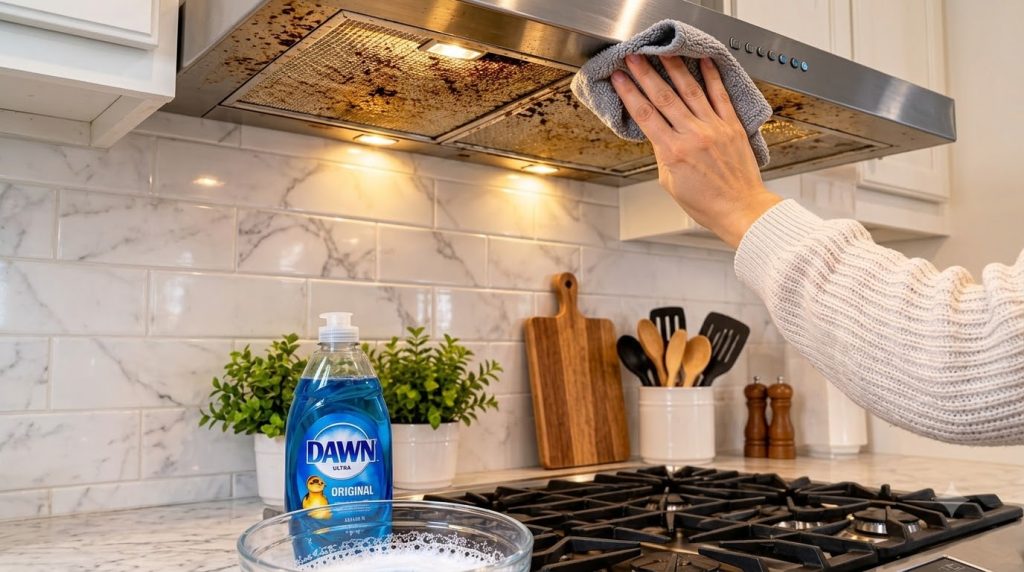
- Deep Soak for the Filters (30-60 minutes): Fill your sink or a large basin with very hot water. The hotter, the better it will dissolve the grease. Add approximately half a cup of liquid dish soap to the water. If the grease is extremely stubborn, you can add half a cup of baking soda. Completely submerge the filters in this solution. Ensure they are fully covered so the grease can soften. Let them soak for at least 30 minutes, or up to an hour if the grease is very thick. You’ll notice the water turning brownish, indicating the grease is coming off.
- Scrub and Rinse the Filters (10-15 minutes): With gloves on, remove one filter at a time from the soak. Use a soft-bristle brush or sponge to gently scrub any remaining greasy areas. Pay special attention to corners and fine grates. The grease should come off easily after soaking. Once clean, rinse each filter under hot running water until no soap residue or grease remains. The water should run clear.
- Clean the Hood’s Exterior Surface (15-20 minutes): While the filters dry, it’s time for the exterior. Mix a few drops of dish soap with warm water in a spray bottle or bowl. Spray or apply the solution onto the exterior surface of the hood (metal, stainless steel, etc.). Let it sit for 5 minutes to soften the grease.
- Wipe and Polish the Exterior Surface (10-15 minutes): Use a clean microfiber cloth to gently wipe the surface, removing grease and stains. For stainless steel, always wipe in the direction of the grain to prevent scratches. If there are tough spots, a little baking soda on a sponge can help. Finally, use a dry, clean microfiber cloth to polish the surface, leaving it streak-free and shiny.
- Drying and Reinstallation (5 minutes): Ensure the filters are completely dry before reinstalling them into the hood. Installing them while damp can encourage mold growth. Once dry, place them back into position. Plug in the hood and admire the result!
Expert Tips for a Greaseless Kitchen
- Regular Maintenance: Don’t wait for grease to accumulate excessively. Clean the filters every 2-4 weeks and the exterior surface weekly to make the task easier.
- Boiling Water: If the grease is very old, you can boil the filters in a large pot with water and dish soap for 10-15 minutes (if your manual allows and filters are compatible). Exercise extreme caution!
- Duct Cleaning: For deeper maintenance, consider cleaning the ventilation ducts annually or hiring a professional.
- Avoid Abrasives: Never use metallic scourers or abrasive cleaners on stainless steel, as they can scratch the surface.
- Gloves are Essential: Protect your hands from hot water and grease with rubber gloves.
- White Vinegar: For a streak-free finish on stainless steel surfaces, after cleaning with soap, spray with white vinegar and polish with a dry cloth.
Variations for Your Cleaning Routine
- Vinegar and Baking Soda Version: For a more eco-friendly clean or if you don’t have strong dish soap, you can use a mixture of equal parts white vinegar and hot water, with a tablespoon of baking soda in the soak. Note that vinegar may not be as effective for extreme grease as degreasing dish soap.
- Homemade All-Purpose Cleaner (for surfaces): For the exterior surface, you can create a cleaner by mixing 1 part white vinegar, 1 part water, and a few drops of lemon essential oil for a fresh scent.
- For Super Stubborn Grease: If grease is truly baked on, you can apply a paste of baking soda and a little water directly to the most affected areas, let it sit for 15-30 minutes before scrubbing and rinsing.
Storage Instructions
This method uses ingredients that do not require special storage beyond their original packaging. If you prepare a cleaning solution in a spray bottle, use it within a few weeks for maximum effectiveness, as natural ingredients can lose potency over time. Store solutions in a cool, dark place, out of reach of children and pets.
Safety Notes
- Unplug the Hood: Always disconnect the range hood from electricity before starting any cleaning to prevent accidents.
- Hot Water: Be very careful when handling very hot or boiling water to avoid burns. Use protective gloves.
- Ventilation: Ensure the kitchen is well-ventilated if using any type of product, even natural ones.
- Do Not Mix Chemicals: Although this method uses natural ingredients, never mix commercial cleaners with vinegar or baking soda, as they can create dangerous gases.
- Surfaces: Before applying any solution, test it on a small, inconspicuous area of the hood to ensure it will not damage the finish. This is especially important for painted or delicate surfaces.
- Children and Pets: Keep all cleaning products, including homemade ones, out of reach of children and pets.
Frequently Asked Questions
- How long does the cleaning effect last? With regular maintenance (cleaning filters every 2-4 weeks and exterior weekly), your hood can remain clean indefinitely.
- Can I use this method on hoods of any material? It is safe for most materials such as stainless steel, aluminum, and plastics. However, always test on a small, inconspicuous area first.
- Is it necessary to wear gloves? Yes, wearing gloves is recommended to protect your hands from hot water and grease.
- What type of dish soap should I use? A dish soap with high degreasing power will be most effective. Brands like Dawn or Fairy are known for their potency.
- Can I leave the filters to soak overnight? Yes, if the grease is heavily encrusted, you can leave them to soak for several hours or even overnight.
- How often should I clean the filters? Ideally every 2 to 4 weeks, depending on how often you cook and the type of food you prepare.
- Will it work if the grease has been there for a long time? Yes, this method is very effective even for long-accumulated grease, but it may require longer soaking and more scrubbing.
- Can I use dishwasher tablets instead of liquid soap? Yes, some people get good results by dissolving a dishwasher tablet in hot water for soaking.
Conclusion
Cleaning your kitchen range hood, especially those grease-filled filters, no longer has to be a daunting task. With this easy-to-follow homemade trick, using common ingredients, you can restore the shine and efficiency of your extractor hood in no time. Not only is it an economical solution, but also more environmentally friendly and healthier for you, avoiding the fumes and residues of harsh chemical products.
We encourage you to try this method in your own kitchen. You’ll be surprised how easy it is and how rewarding it is to see your hood gleaming again. A clean kitchen is not only more aesthetically pleasing but also contributes to a more hygienic and functional environment. Go ahead and restore the shine to your home today!