Imagine multiplying your favorite shrubs and trees, transforming a single plant into several, all from a simple stem cutting. Water propagation is a magical and rewarding way to expand your garden, share plants with friends, or simply enjoy the fascinating process of new life emerging. Many woody plants, often considered more challenging to propagate, actually thrive when given the right start in water.
This method offers a front-row seat to root development, making it an excellent learning experience for gardeners of all levels. There’s a deep satisfaction in watching tiny white roots unfurl in a clear jar, signaling the promise of a new, vibrant plant. If you’ve ever felt intimidated by plant propagation, this guide will demystify the process and equip you with the knowledge to successfully root a variety of beautiful woody plants.
The Magic of Water Propagation
Water propagation is a straightforward technique where a section of a plant stem is placed in water to encourage root formation. This method is particularly popular because it allows you to observe the rooting process directly. It’s also relatively clean and doesn’t require specialized equipment beyond a clean container and fresh water.
For woody plants, which typically have firmer stems than herbaceous plants, success often hinges on selecting the right type of cutting, providing consistent conditions, and being patient. The key benefit is that the cutting has immediate access to hydration, reducing transplant shock once roots have formed and it’s moved to soil.
General Steps for Success with Water Cuttings
While each plant has its nuances, these foundational steps will guide you to success:
- Choose the Right Stem: For most woody plants, semi-hardwood cuttings are ideal. These are stems that have begun to harden but are not yet fully mature and woody. They should be pliable but snap when bent sharply, usually taken in late spring to mid-summer. Look for healthy, disease-free stems without flowers or buds.
- Take the Cutting: Using sharp, clean pruning shears or a knife, make a clean cut just below a leaf node (the point where a leaf or branch emerges). Cuttings should typically be 4-6 inches long. Remove any leaves from the bottom 2-3 inches of the stem, as these would rot in the water.
- Prepare the Cutting: Some gardeners lightly scrape the bark at the very bottom of the cutting to expose more cambium layer, which can encourage rooting. You can also dip the cut end in a rooting hormone, though many woody plants will root without it, especially in water.
- Place in Water: Fill a clean glass jar or container with non-chlorinated water (rainwater or tap water left out for 24 hours). Place the cutting in the water, ensuring at least one node is submerged. Keep the container in a location with bright, indirect light.
- Maintain the Water: Change the water every 2-3 days, or whenever it looks cloudy, to prevent bacterial growth and replenish oxygen.
- Patience is Key: Rooting times vary significantly by plant and environmental conditions. Some may show roots in a week or two, while others take several months.
- Transition to Soil: Once roots are 1-2 inches long and well-established, it’s time to pot them up. Prepare a small pot with a well-draining potting mix. Gently transfer the rooted cutting, being careful not to damage the delicate roots. Water thoroughly.
- Acclimation: Keep the newly potted plant in a sheltered location with indirect light and consistent moisture for a few weeks to allow it to acclimate to soil before moving it to its final outdoor spot.
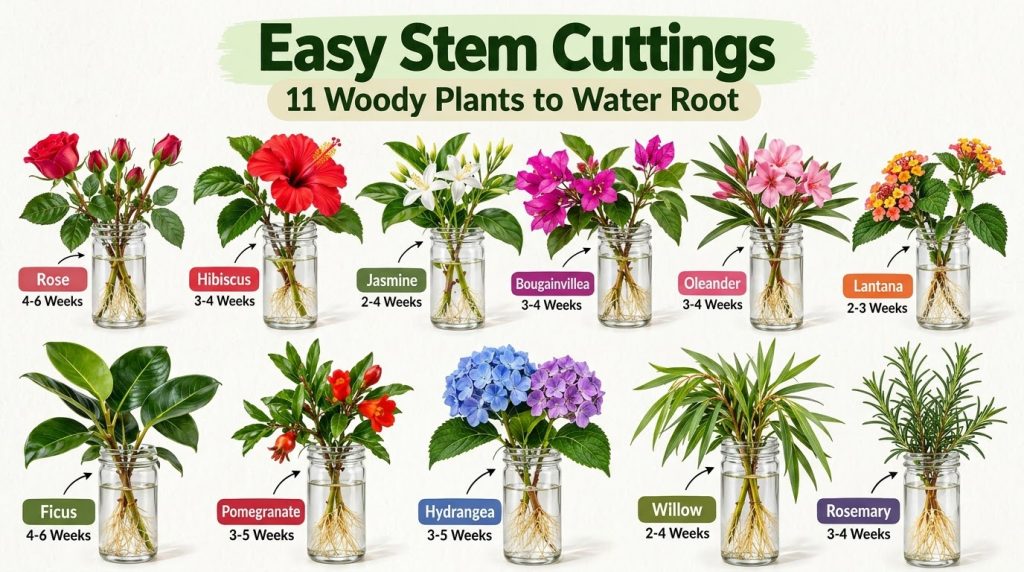
Your 11 Woody Plants for Water Propagation
Here are some fantastic woody plants known for their ability to root in water, along with specific tips for success:
1. Rose (Rosa spp.)
Roses are classic garden favorites, and propagating them from cuttings is a delightful way to expand your collection. Take semi-hardwood cuttings from stems that have just finished blooming. Remove all but the top two leaves.
- Hardiness: USDA Zones 3-10, depending on cultivar.
- Plant type: Deciduous shrub or vine.
- Exposure: Full sun (at least 6 hours direct light).
- Height: 1-20 ft, highly variable by type.
- Spread: 1-15 ft.
- Care Tip: Change water frequently; roses are susceptible to stem rot.
- Rooting Time: Typically 2-4 weeks, but can vary.
2. Hibiscus (Hibiscus rosa-sinensis and other species)
The tropical hibiscus with its showy blooms is a joy to propagate. Cuttings should be taken from non-flowering tips. Many hardy hibiscus varieties also root well from cuttings.
- Hardiness: Tropical *H. rosa-sinensis* (Zones 9-11, grown as annual elsewhere); Hardy *H. syriacus* (Zones 5-9).
- Plant type: Shrub or small tree.
- Exposure: Full sun to partial shade.
- Height: 4-15 ft.
- Spread: 3-10 ft.
- Care Tip: High humidity can encourage faster rooting; consider covering the jar loosely with a plastic bag.
- Rooting Time: 2-4 weeks.
3. Bougainvillea (Bougainvillea spp.)
Known for its vibrant bracts, bougainvillea can be rooted from semi-hardwood cuttings. They appreciate warmth and bright light during the rooting process.
- Hardiness: Zones 9-11 (grown as annual/container plant elsewhere).
- Plant type: Woody vine or shrub.
- Exposure: Full sun.
- Height: 3-40 ft, depending on support and pruning.
- Spread: 3-15 ft.
- Care Tip: Be patient, as these can take a bit longer to show roots. Ensure consistently warm conditions.
- Rooting Time: 4-6 weeks.
4. Hydrangea (Hydrangea spp.)
Hydrangeas are popular for their large, beautiful blooms. Take softwood cuttings in late spring or early summer after the morning dew has dried. Remove large leaves to reduce moisture loss.
- Hardiness: Zones 3-9, species dependent.
- Plant type: Deciduous shrub.
- Exposure: Partial shade to full sun (species dependent).
- Height: 3-15 ft.
- Spread: 3-15 ft.
- Care Tip: Ensure water stays fresh to prevent fungal issues.
- Rooting Time: 2-3 weeks.
5. Forsythia (Forsythia spp.)
The harbinger of spring, forsythia is an easy shrub to propagate. Cuttings taken from new growth in late spring to early summer root readily.
- Hardiness: Zones 3-8.
- Plant type: Deciduous shrub.
- Exposure: Full sun.
- Height: 3-10 ft.
- Spread: 3-10 ft.
- Care Tip: These are quite vigorous; you might see roots faster than expected.
- Rooting Time: 2-4 weeks.
6. Azalea (Rhododendron spp. – Azalea)
Azaleas, part of the Rhododendron genus, are beloved for their stunning spring flowers. Take semi-hardwood cuttings after flowering. They can be a bit slower to root than other plants on this list.
- Hardiness: Zones 4-9, cultivar dependent.
- Plant type: Deciduous or evergreen shrub.
- Exposure: Partial shade.
- Height: 1-20 ft.
- Spread: 1-15 ft.
- Care Tip: Azaleas prefer slightly acidic conditions; consider using rainwater or distilled water if your tap water is very alkaline.
- Rooting Time: 6-8 weeks, sometimes longer.
7. Gardenia (Gardenia jasminoides)
With their intoxicating fragrance, gardenias are highly prized. Take cuttings from non-flowering stems in late spring or early summer. They benefit from consistent warmth and high humidity.
- Hardiness: Zones 8-11 (grown as houseplants in colder regions).
- Plant type: Evergreen shrub.
- Exposure: Partial shade.
- Height: 2-8 ft.
- Spread: 2-6 ft.
- Care Tip: Keep the water consistently clean and warm (around 70-75°F / 21-24°C) for best results.
- Rooting Time: 4-8 weeks.
8. Elderberry (Sambucus spp.)
Elderberries are valuable for their edible berries and attractive foliage. Cuttings from dormant hardwood (in winter) or softwood (in summer) can root. Softwood cuttings in water are generally more successful for beginners.
- Hardiness: Zones 3-9, species dependent.
- Plant type: Deciduous shrub or small tree.
- Exposure: Full sun to partial shade.
- Height: 5-20 ft.
- Spread: 5-15 ft.
- Care Tip: Elderberries are generally robust rooters. Ensure good light for consistent growth once rooted.
- Rooting Time: 3-5 weeks.
9. Willow (Salix spp.)
Willows are famously easy to root in water, producing roots in just a week or two. Their stems contain natural rooting hormones that can even benefit other cuttings placed in the same water. Take cuttings at any time during the growing season.
- Hardiness: Zones 2-9, species dependent.
- Plant type: Deciduous tree or shrub.
- Exposure: Full sun.
- Height: 10-70 ft.
- Spread: 10-50 ft.
- Care Tip: Willow water can be used as a natural rooting stimulant for other difficult-to-root cuttings.
- Rooting Time: 1-2 weeks.
10. Ficus (e.g., Ficus benjamina – Weeping Fig)
Many varieties of Ficus, particularly the common houseplant Weeping Fig, root well in water. Take cuttings from healthy, mature stems. Ensure consistent warmth and bright, indirect light.
- Hardiness: Zones 10-12 (primarily grown as houseplants).
- Plant type: Evergreen tree or shrub.
- Exposure: Bright, indirect indoor light.
- Height: 6-10 ft indoors, much larger outdoors.
- Spread: 3-6 ft indoors.
- Care Tip: Ficus sap can be irritating to skin; wear gloves when handling cuttings if you are sensitive.
- Rooting Time: 3-6 weeks.
11. Oleander (Nerium oleander)
Oleander is a beautiful, drought-tolerant shrub known for its abundant flowers. It roots very easily in water. Take semi-hardwood cuttings in spring or summer.
- Hardiness: Zones 8-10.
- Plant type: Evergreen shrub or small tree.
- Exposure: Full sun.
- Height: 6-12 ft.
- Spread: 6-10 ft.
- Care Tip: IMPORTANT WARNING: All parts of the Oleander plant are highly toxic if ingested. Exercise extreme caution, especially around children and pets. Wear gloves when handling.
- Rooting Time: 2-4 weeks.
Transitioning Rooted Cuttings to Soil
The transition from water to soil is a critical step. Water roots are delicate and less fibrous than soil roots, making them prone to damage and shock. To ensure success:
- Choose the Right Potting Mix: A light, well-draining mix is essential. A good blend might include potting soil, perlite, and a little sand.
- Gentle Handling: Handle the rooted cutting with extreme care. Support the roots as you place the plant in the prepared hole in the soil.
- Water Thoroughly: After potting, water immediately to settle the soil around the roots and eliminate air pockets.
- Create a Humid Environment: For the first few weeks, a newly potted cutting benefits from high humidity. You can place a clear plastic bag loosely over the plant, propped up with sticks so it doesn’t touch the leaves, creating a mini-greenhouse effect. Remember to vent it daily for fresh air.
- Indirect Light: Keep the newly potted plant in a location with bright, indirect light, away from direct sun or strong winds, until it shows signs of new growth.
Common Water Propagation Mistakes to Avoid
Even with the best intentions, a few common pitfalls can hinder your success:
- Not Changing Water: Stagnant water quickly depletes oxygen and harbors harmful bacteria and fungi, which can lead to rot. Frequent water changes are vital.
- Too Much Direct Sun: While plants need light, direct, intense sunlight can overheat the water, stress the cutting, or encourage algae growth. Bright, indirect light is best for rooting.
- Leaving Leaves in Water: Any foliage submerged in water will rot, fouling the water and potentially spreading disease to the cutting. Always remove lower leaves.
- Impatience: Rooting takes time. Don’t discard cuttings too soon. Some plants simply take longer, and inconsistent conditions can prolong the process.
- Potting Too Early: Roots need to be robust enough to support the plant in soil. Wait until they are at least 1-2 inches long before transplanting.
Cultivate Your Green Thumb
Water propagation is a truly rewarding aspect of gardening, offering a unique opportunity to connect with your plants on a deeper level. By understanding the simple science and applying these practical steps, you can confidently multiply your favorite woody shrubs and trees. Remember, every gardener, even the most experienced, learns through observation and practice. So, choose your favorite woody plant, grab a clean jar, and start your water propagation journey today. Happy growing!