Mastering the art of sautéing garlic in olive oil is a foundational skill for any home cook. It’s the simple secret behind countless flavorful dishes, from quick pasta sauces to rich stir-fries and vibrant vegetable sautés. When done correctly, garlic softens, mellows, and releases its aromatic magic, infusing the oil with a subtle sweetness and depth that elevates every ingredient it touches.
This isn’t just a basic step; it’s a crucial technique that can make or break a meal. Learn how to perfectly sauté garlic in olive oil and unlock a new level of deliciousness in your kitchen, ensuring your dishes always start with a robust, aromatic base rather than a bitter, burnt disappointment.
Why You’ll Love Mastering Sautéed Garlic
- Unlocks Deep Flavor: Proper sautéing transforms pungent raw garlic into a sweet, aromatic base for any dish.
- Elevates Every Meal: This simple technique is the foundation for countless recipes, enhancing soups, sauces, pastas, and stir-fries.
- Quick & Easy: It takes just minutes to achieve beautifully golden, fragrant garlic.
- Versatile Skill: Once mastered, you can apply this skill to various aromatics like onions and shallots, boosting your overall cooking confidence.
- Simple Ingredients: Requires only two common pantry staples: garlic and olive oil.
Ingredients
- 8-10 medium garlic cloves (about 1.5 oz or 45 g)
- 2-3 tablespoons (30-45 ml) extra virgin olive oil
- Pinch of salt (optional, to taste)
Ingredient Notes
- Garlic: Always use fresh garlic cloves for the best flavor. Pre-minced garlic in a jar often has a less vibrant taste and can burn more quickly due to added preservatives or smaller pieces.
- Extra Virgin Olive Oil: A good quality olive oil makes a significant difference. Its fruity notes complement the garlic beautifully. You can also use other neutral oils like avocado oil or grapeseed oil if preferred, but olive oil is classic for its flavor.
Equipment You’ll Need
- Small to medium skillet (preferably non-stick or cast iron)
- Cutting board
- Sharp chef’s knife
- Spatula or wooden spoon
How to Make Sautéed Garlic Perfection
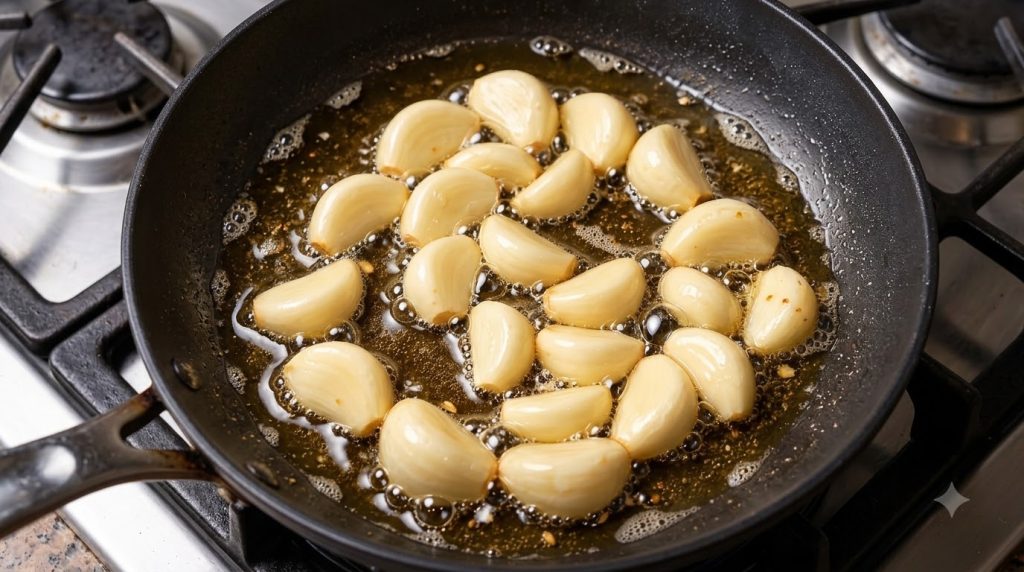
- Prepare the Garlic: Peel the garlic cloves. For a milder flavor and less chance of burning, thinly slice the garlic. For a more pronounced garlic flavor and a finer texture, finely mince it. Ensure the pieces are roughly uniform in size for even cooking.
- Add Oil to Skillet: Pour the olive oil into your skillet. A good rule of thumb is to use enough oil to lightly coat the bottom of the pan and just cover the garlic when added.
- Start with Cold Oil: Add the prepared garlic to the cold oil in the skillet. This is a crucial step! Starting with cold oil allows the garlic to gradually infuse its flavor into the oil as the pan heats up, preventing it from burning too quickly on the outside before the inside is cooked.
- Heat Gently: Place the skillet over low to medium-low heat. You want a gentle, steady heat, not a sizzling inferno. The goal is to slowly warm the oil and garlic together.
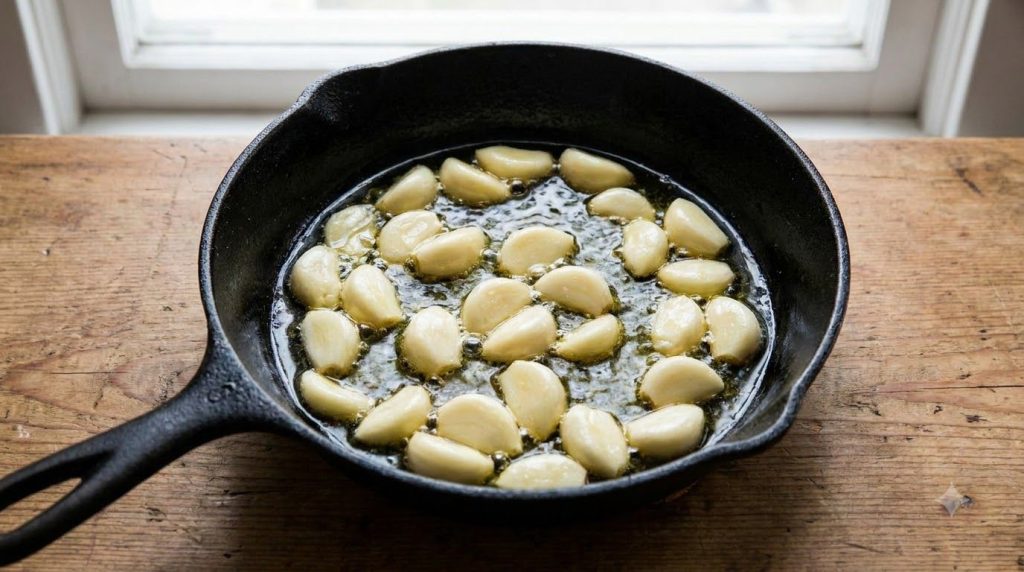
- Sauté Until Golden: Cook, stirring occasionally with a spatula or wooden spoon, until the garlic turns a beautiful light golden color. This usually takes about 3-5 minutes, depending on your heat and the size of your garlic pieces. Keep a close eye on it, as garlic can go from perfectly golden to burnt in a matter of seconds.
- Remove from Heat: As soon as the garlic reaches a light golden hue, immediately remove the skillet from the heat. The residual heat of the pan will continue to cook the garlic for a few more seconds. If you plan to add other ingredients, do so quickly to stop the cooking process of the garlic.
- Season (Optional): If desired, add a tiny pinch of salt to the sautéed garlic and oil, especially if you plan to use it as a standalone topping or in a simple sauce.
Pro Tips for the Best Results
- Uniformity is Key: Whether slicing or mincing, try to keep your garlic pieces roughly the same size. This ensures they cook evenly and prevents some from burning while others are still raw.
- Start Cold: Always, always, always add garlic to cold oil and then heat them together. This infuses the oil with flavor and prevents immediate scorching.
- Low and Slow: Patience is a virtue when sautéing garlic. Keep the heat low to medium-low. If your oil is smoking or bubbling aggressively, it’s too hot.
- Watch and Smell: Don’t walk away! Garlic burns quickly. Watch its color change from translucent to pale yellow, then golden. You’ll also notice a sweet, nutty aroma when it’s perfectly done.
- Pull Early: If you’re adding other ingredients that will cook for a while (like vegetables or meat), remove the garlic a shade lighter than your desired final color, as it will continue to cook with the other ingredients.
- Listen to the Sizzle: A gentle, soft sizzle is ideal. A loud, aggressive sizzle means your heat is too high and you’re risking bitter, burnt garlic.
Common Mistakes to Avoid
- High Heat: The most common mistake is cooking garlic over high heat. This causes it to burn on the outside quickly, leaving it bitter and raw on the inside.
- Adding to Hot Oil: Dropping garlic into already hot, smoking oil will almost guarantee instant burning and a harsh flavor.
- Unevenly Cut Garlic: Large chunks mixed with tiny slivers will result in uneven cooking; some pieces will be burnt, others undercooked.
- Overcrowding the Pan: While not typically an issue for just garlic and oil, if you’re tempted to add too much garlic at once, it can steam rather than sauté, preventing a proper golden crust.
- Not Stirring Enough: Regular, gentle stirring ensures all sides of the garlic come into contact with the heat and oil evenly.
Variations & Substitutions
- Spicy Kick: Add a pinch of red pepper flakes to the cold oil along with the garlic for a subtle heat.
- Herbal Infusion: Toss in a sprig of fresh rosemary or thyme (remove before serving) with the garlic for an aromatic boost.
- Garlic Butter: Substitute half or all of the olive oil with unsalted butter for a rich, nutty flavor, especially good for finishing vegetables or pasta.
- Roasted Garlic: If you prefer a much sweeter, milder garlic flavor without any possibility of bitterness, consider roasting whole cloves in the oven until soft and caramelized, then mash and add to dishes.
- Shallots or Onions: Apply the same cold-oil, low-heat technique to thinly sliced shallots or finely diced onions for a different aromatic base.
Serving Suggestions
Perfectly sautéed garlic in olive oil is the ultimate flavor starter. Here are a few ways to use it:
- Pasta Base: The foundation for classic aglio e olio, marinara sauce, or a simple garlic butter sauce.
- Vegetable Enhancement: Drizzle over steamed or roasted vegetables, or use as the starting point for sautéed greens like spinach or kale.
- Soups & Stews: Begin many soup recipes by sautéing garlic (and onions) to build depth.
- Bruschetta & Crostini: Spoon directly over toasted bread for a simple, flavorful appetizer.
- Rice & Grains: Stir into cooked rice, quinoa, or couscous for an added layer of flavor.
- Marinades & Dressings: Incorporate into homemade vinaigrettes or marinades for meats and vegetables.
Storage & Reheating
Sautéed garlic is best used immediately for optimal flavor and texture. However, if you have any leftover infused oil with garlic bits, you can store it in an airtight container:
- Refrigerator: Store in the refrigerator for up to 2-3 days. Note that garlic in oil can be a risk for botulism if stored improperly or for too long at room temperature. Always err on the side of caution.
- Freezer: For longer storage, you can freeze the infused oil and garlic in an ice cube tray. Once frozen, transfer the cubes to a freezer-safe bag for up to 1-2 months.
- Reheating: Simply warm gently in a pan or microwave until fragrant. It’s usually best to incorporate it directly into a dish that’s being heated.
FAQ
Why should I start garlic in cold oil?
Starting garlic in cold oil allows it to heat up gradually with the oil, gently releasing its flavor without scorching. If you add garlic to hot oil, the outside burns quickly, leading to a bitter taste and leaving the inside raw.
How do I know when my sautéed garlic is perfectly done?
Perfectly sautéed garlic will be a light golden-brown color and emit a sweet, nutty, and highly aromatic scent. It should not be dark brown or smell burnt.
Can I use pre-minced garlic from a jar?
While convenient, pre-minced garlic from a jar often contains preservatives and has a less fresh, sometimes metallic flavor. It also tends to burn much faster due to its fine consistency. For the best results, always opt for fresh garlic.
What’s the difference between sautéing and frying garlic?
Sautéing garlic involves cooking it in a small amount of fat over medium-low heat until tender and aromatic, typically golden. Frying garlic (like making crispy garlic chips) usually involves cooking it in more oil and often at a slightly higher temperature until deeply golden and crisp. Sautéing aims for a soft, flavorful aromatic base.
My garlic burned! Can I still use it?
Unfortunately, burnt garlic has a very strong, bitter taste that can ruin a dish. It’s usually best to discard it and start over. Always err on the side of undercooking rather than overcooking.
Can I make garlic oil ahead of time?
You can infuse oil with garlic, but store it in the refrigerator for no more than 2-3 days due to the risk of botulism. For longer storage, consider freezing the oil with the garlic.
What if I don’t have olive oil?
While olive oil is traditional and provides excellent flavor, you can use other neutral oils like avocado oil, grapeseed oil, or even vegetable oil. Butter also works beautifully for a richer flavor.
Recipe Card
Sautéed Garlic in Olive Oil: A Flavor Foundation
Master the simple yet essential technique of sautéing garlic in olive oil to create an aromatic base for countless delicious dishes.
- Prep Time: 5 minutes
- Cook Time: 3-5 minutes
- Total Time: 8-10 minutes
- Servings: Yields enough for a dish serving 4-6 people
- Course: Basic Technique, Appetizer, Side Dish
- Cuisine: Mediterranean, Italian, Universal
- Cooking Method: Sautéing
Ingredients:
- 8-10 medium garlic cloves (about 1.5 oz or 45 g), peeled and thinly sliced or minced
- 2-3 tablespoons (30-45 ml) extra virgin olive oil
- Pinch of salt (optional, to taste)
Instructions:
- Prepare the Garlic: Peel the garlic cloves and either thinly slice them for a milder flavor or finely mince them for a stronger garlic presence. Ensure all pieces are roughly the same size for even cooking.
- Add Oil to Skillet: Pour the olive oil into a small to medium skillet. Use enough oil to lightly coat the bottom and adequately cover the garlic when added.
- Start with Cold Oil: Add the prepared garlic to the cold olive oil in the skillet.
- Heat Gently: Place the skillet over low to medium-low heat. Allow the oil and garlic to heat up slowly together, fostering a gentle sizzle.
- Sauté Until Golden: Cook, stirring occasionally with a spatula or wooden spoon, for about 3-5 minutes, until the garlic turns a light golden-brown. Watch carefully as it can burn quickly.
- Remove from Heat: Immediately remove the skillet from the heat once the garlic is golden to prevent it from overcooking. If adding other ingredients, do so promptly.
- Season (Optional): If desired, add a tiny pinch of salt to enhance the flavor.
Notes:
Always use fresh garlic for the best flavor. Starting garlic in cold oil is critical for preventing bitterness and ensuring a sweet, aromatic result. Keep the heat low and stay attentive, as garlic burns very quickly.
Storage:
Sautéed garlic is best used immediately. If storing infused oil with garlic, refrigerate in an airtight container for up to 2-3 days. For longer storage, freeze in ice cube trays for up to 1-2 months.
Nutrition information is an estimate and may vary depending on the ingredients and brands used.