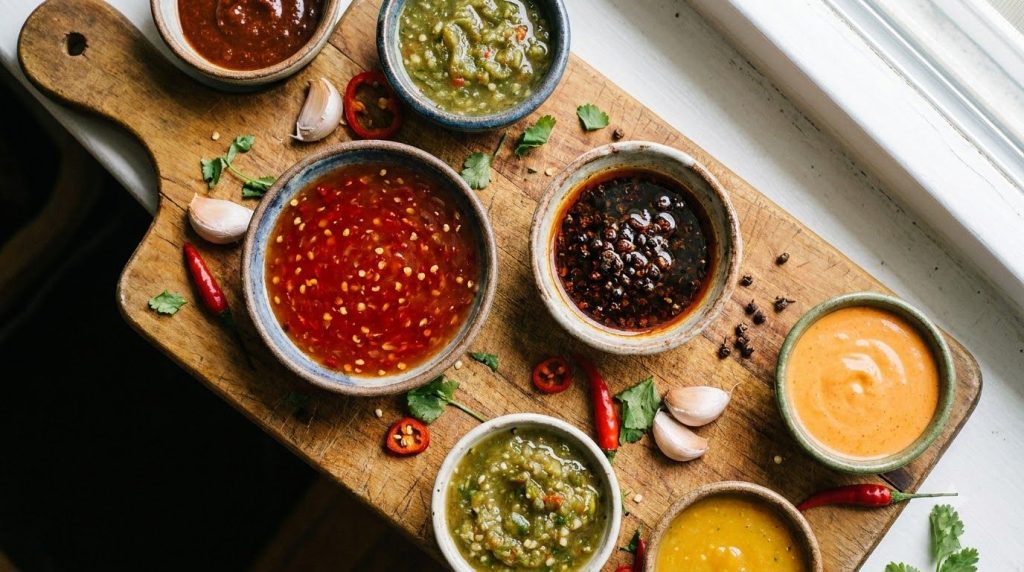
Are you ready to elevate your culinary creations with a kick of homemade flavor? Ditch those store-bought bottles and discover the joy of crafting your own spicy sauces right in your kitchen. This collection of 6 essential homemade spicy sauces offers an exciting array of flavors, from sweet and tangy to deeply savory and fiery hot, ensuring there’s a perfect match for every dish and palate.
Making your own sauces isn’t just about saving money; it’s about controlling the ingredients, customizing the heat level, and infusing your meals with unparalleled freshness and depth. Imagine drizzling vibrant Sweet Chili Sauce over spring rolls, coating chicken wings with rich Buffalo Sauce, or stir-frying noodles with a bold Szechuan creation. These versatile condiments are game-changers, transforming everyday meals into extraordinary dining experiences. Get ready to spice up your life, one delicious homemade sauce at a time!
Why You’ll Love These Homemade Spicy Sauce Recipes
- Unbeatable Flavor: Fresh ingredients mean bolder, more vibrant flavors compared to most store-bought options.
- Customizable Heat: Adjust the amount of chili and spices to perfectly suit your spice tolerance.
- Simple Ingredients: Most sauces use common pantry staples you likely already have.
- Versatile Use: Perfect for dipping, marinating, stir-frying, grilling, and dressing almost any meal.
- No Preservatives: Enjoy wholesome, natural flavors without artificial additives.
- Impress Your Guests: Homemade sauces add a gourmet touch to any gathering.
Ingredients for Your Homemade Spicy Sauces
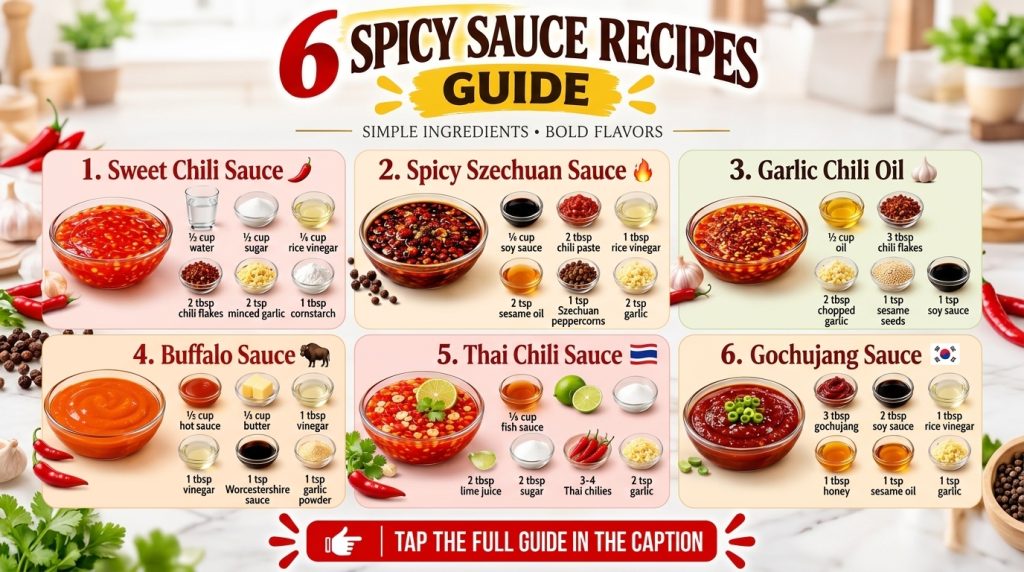
1. Sweet Chili Sauce
- 1/2 cup (100g) granulated sugar
- 1/2 cup (120ml) water
- 1/4 cup (60ml) white vinegar
- 2-3 tbsp (30-45ml) rice vinegar
- 2 tbsp (30g) minced fresh red chilies (or 1 tbsp chili flakes), adjust to taste
- 1 tbsp (15g) minced garlic
- 1/2 tsp salt
- 1 tbsp (8g) cornstarch, mixed with 2 tbsp (30ml) cold water (slurry)
2. Spicy Szechuan Sauce
- 1/4 cup (60ml) soy sauce
- 2 tbsp (30ml) rice vinegar
- 1 tbsp (15ml) sesame oil
- 1 tbsp (15ml) chili oil (or more for extra heat)
- 1 tbsp minced garlic
- 1 tbsp grated fresh ginger
- 1 tsp Szechuan peppercorns, toasted and ground
- 1 tsp brown sugar (or honey)
- 1/2 tsp cornstarch, mixed with 1 tbsp (15ml) cold water
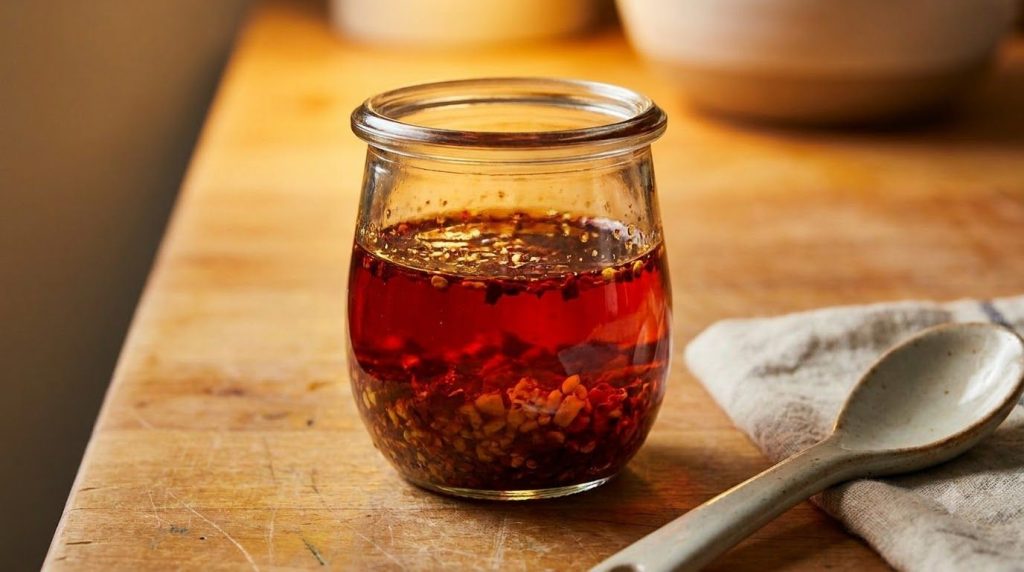
3. Garlic Chili Oil
- 1 cup (240ml) neutral oil (like canola, grapeseed, or vegetable oil)
- 1/2 cup (50g) dried red chili flakes (Korean gochugaru or crushed red pepper flakes)
- 1/4 cup (30g) finely minced garlic
- 1 tbsp whole Szechuan peppercorns (optional)
- 2-3 star anise pods (optional)
- 1/2 tsp salt, or to taste
4. Buffalo Sauce
- 1/2 cup (120ml) hot sauce (Frank’s RedHot recommended)
- 1/2 cup (113g) unsalted butter
- 1 tbsp (15ml) white vinegar
- 1/2 tsp Worcestershire sauce
- 1/2 tsp garlic powder
- Pinch of cayenne pepper (optional, for extra heat)
5. Thai Chili Sauce
- 1/2 cup (75g) fresh red chilies, roughly chopped (e.g., bird’s eye chilies or serranos)
- 4-5 cloves garlic
- 1/2 cup (100g) granulated sugar
- 1/2 cup (120ml) white vinegar
- 1/4 cup (60ml) water
- 1-2 tbsp (15-30ml) fish sauce
- 1/2 tsp salt
- 1 tbsp (8g) cornstarch, mixed with 2 tbsp (30ml) cold water (slurry)
6. Gochujang Sauce
- 1/2 cup (120g) Gochujang (Korean chili paste)
- 2 tbsp (30ml) soy sauce
- 1 tbsp (15ml) sesame oil
- 1 tbsp (15ml) rice vinegar
- 1 tbsp (15ml) honey or brown sugar
- 1 tbsp minced garlic
- 1 tbsp water (to thin, if needed)
Ingredient Notes
- Chilies: The type and quantity of chilies are key for heat. Fresh red chilies (like bird’s eye or serrano) offer bright, clean heat, while dried flakes (like gochugaru) contribute a deeper, smoky warmth. Always adjust to your personal preference.
- Vinegar: White vinegar provides a sharp tang, while rice vinegar is milder and slightly sweeter. Apple cider vinegar can also be used for a fruitier note in some sauces.
- Oil: For chili oils, a neutral oil like canola or grapeseed is best as it allows the chili and aromatic flavors to shine. Sesame oil is mainly used for flavor in Asian-inspired sauces.
- Gochujang: This Korean fermented chili paste is a cornerstone of Korean cuisine, offering a unique blend of savory, sweet, and spicy flavors. It’s often available in Asian markets or the international aisle of larger supermarkets.
- Fish Sauce: Used in Thai and other Southeast Asian cuisines, fish sauce provides a crucial salty, umami depth. Don’t skip it for authentic flavor.
- Cornstarch: A simple cornstarch slurry is used to thicken sauces, giving them a glossy finish and desirable consistency.
Equipment You’ll Need
- Small to medium saucepans
- Whisk
- Measuring cups and spoons
- Cutting board and sharp knife
- Fine-mesh sieve (for chili oil)
- Blender or food processor (for Thai Chili Sauce)
- Airtight jars or containers for storage
How to Make Your Homemade Spicy Sauces
1. Sweet Chili Sauce
- Combine Ingredients: In a small saucepan, combine sugar, water, white vinegar, rice vinegar, minced chilies, minced garlic, and salt.
- Simmer: Bring the mixture to a gentle boil over medium heat, stirring until the sugar dissolves. Reduce heat to low and simmer for about 5-7 minutes to allow flavors to meld.
- Thicken: Whisk in the cornstarch slurry. Continue to simmer and stir for another 1-2 minutes until the sauce thickens to your desired consistency. It should coat the back of a spoon.
- Cool: Remove from heat and let cool completely before transferring to an airtight jar. The sauce will thicken further as it cools.
2. Spicy Szechuan Sauce
- Toast Peppercorns: If using whole Szechuan peppercorns, toast them lightly in a dry pan over medium-low heat for 1-2 minutes until fragrant. Grind them with a mortar and pestle or spice grinder.
- Combine Ingredients: In a small bowl, whisk together soy sauce, rice vinegar, sesame oil, chili oil, minced garlic, grated ginger, ground Szechuan peppercorns, and brown sugar until the sugar dissolves.
- Thicken (Optional): If you prefer a slightly thicker sauce, whisk in the cornstarch slurry. Gently heat the sauce in a small saucepan over low heat for 1-2 minutes, stirring until slightly thickened. Do not boil.
- Serve: Use immediately or store in an airtight container in the refrigerator.
3. Garlic Chili Oil
- Prepare Aromatics: In a heatproof bowl, combine chili flakes, minced garlic, Szechuan peppercorns (if using), star anise (if using), and salt.
- Heat Oil: Heat the neutral oil in a small saucepan over medium-high heat until it reaches approximately 350-375°F (175-190°C), or until a small piece of garlic sizzles immediately when dropped in.
- Infuse Oil: Carefully pour the hot oil over the ingredients in the bowl. It will sizzle vigorously. Stir gently with a spoon.
- Cool & Store: Let the chili oil cool completely at room temperature for several hours (or overnight) to allow the flavors to infuse. Once cool, remove star anise pods (if used). Transfer to a clean, airtight jar.
4. Buffalo Sauce
- Melt Butter: In a small saucepan over low heat, melt the unsalted butter.
- Combine: Once melted, remove from heat and whisk in the hot sauce, white vinegar, Worcestershire sauce, and garlic powder. Add a pinch of cayenne pepper if you desire extra heat.
- Whisk Until Smooth: Whisk vigorously until the sauce is completely smooth and emulsified.
- Serve: Serve warm or at room temperature with chicken wings, tenders, or anything that needs a kick!
5. Thai Chili Sauce
- Blend Chilies & Garlic: In a blender or food processor, combine fresh red chilies and garlic with 1/4 cup (60ml) of the water until a coarse paste forms.
- Combine & Simmer: Transfer the chili-garlic paste to a small saucepan. Add sugar, white vinegar, the remaining 1/4 cup (60ml) water, fish sauce, and salt. Bring to a gentle boil over medium heat, stirring until the sugar dissolves. Reduce heat and simmer for 10-15 minutes, allowing flavors to deepen and the sauce to slightly reduce.
- Thicken: Whisk in the cornstarch slurry. Continue to simmer and stir for another 1-2 minutes until the sauce thickens to your desired consistency.
- Cool: Remove from heat and let cool completely before storing.
6. Gochujang Sauce
- Combine Ingredients: In a small bowl, whisk together Gochujang paste, soy sauce, sesame oil, rice vinegar, honey (or brown sugar), and minced garlic until thoroughly combined and smooth.
- Adjust Consistency: If the sauce is too thick for your preference, add water, 1 teaspoon at a time, until it reaches your desired consistency.
- Taste & Adjust: Taste the sauce and adjust sweetness, saltiness, or spice level as needed.
- Serve: Use immediately or store in an airtight container.
Pro Tips for the Best Results
- Freshness Matters: Always use the freshest garlic and chilies for the most vibrant flavors.
- Adjust Heat to Taste: When mincing chilies, remove seeds and membranes for less heat; keep them in for more. Taste as you go and adjust chili quantities.
- Toast Spices: For Szechuan peppercorns (and other whole spices), a quick toast in a dry pan before grinding enhances their aroma and flavor significantly.
- Don’t Rush the Simmer: For sauces like Sweet Chili or Thai Chili, allowing them to gently simmer for the recommended time helps flavors meld and deepen.
- Emulsify Buffalo Sauce: For a smooth, cohesive Buffalo sauce, ensure your butter is fully melted and whisk vigorously when combining with the hot sauce.
- Cool Completely: Always allow hot sauces to cool completely before transferring to storage containers. This prevents condensation and helps maintain texture and shelf life.
- Sterilize Jars: If making larger batches, sterilize your storage jars to ensure maximum freshness and prevent spoilage.
- Oil Temperature for Chili Oil: Achieving the correct oil temperature for Garlic Chili Oil is crucial. Too hot, and the chilies can burn; not hot enough, and the infusion won’t be as potent.
Common Mistakes to Avoid
- Burning Garlic/Chilies: When sautéing or infusing, keep an eye on garlic and chilies. Burnt aromatics can turn your sauce bitter.
- Over-Thickening: When adding cornstarch slurry, add gradually and stir continuously. Sauces tend to thicken more as they cool, so aim for a slightly thinner consistency than your final desired thickness when hot.
- Skipping the Cool-Down: Pouring hot sauce into plastic containers can cause warping or leach chemicals. Always cool completely first.
- Ignoring Salt/Sweet Balance: Taste your sauces frequently during preparation and adjust salt, sugar, or vinegar to achieve a balanced flavor profile.
- Not Grinding Szechuan Peppercorns: Whole Szechuan peppercorns can be quite strong and chewy. Grinding them ensures their unique flavor is evenly distributed without overwhelming the sauce.
- Using Rancid Oil: For chili oils, ensure your neutral oil is fresh and doesn’t have an off odor, as it forms the base of the flavor.
Variations & Substitutions
- Herbaceous Additions: For Sweet Chili or Thai Chili, a sprinkle of fresh cilantro or basil after cooking can add a lovely aromatic lift.
- Citrus Zest: A touch of lime or orange zest can brighten up Szechuan or Gochujang sauces.
- Smoky Flavor: A dash of liquid smoke or smoked paprika can add a subtle smoky note to Buffalo or Szechuan sauces.
- Sweetener Swaps: Honey, maple syrup, or agave can be used in place of sugar in most sauces for different flavor nuances.
- Vegan Buffalo: Use a plant-based butter substitute to make a delicious vegan Buffalo sauce.
- Nutty Notes: A tablespoon of finely chopped peanuts or cashews can add texture and flavor to Szechuan sauce.
- Different Chili Varieties: Experiment with different types of chilies (e.g., habanero for extreme heat, ancho for smoky depth) to create unique flavor profiles in any of these sauces.
Serving Suggestions
These homemade spicy sauces are incredibly versatile and can transform a simple meal into something special:
- Sweet Chili Sauce: Excellent with spring rolls, chicken nuggets, fried shrimp, or as a glaze for grilled salmon.
- Spicy Szechuan Sauce: Perfect for stir-fries, noodle dishes, dipping dumplings, or marinating chicken or tofu.
- Garlic Chili Oil: Drizzle over noodles, rice, eggs, pizza, roasted vegetables, or use as a spicy topping for soups and congee.
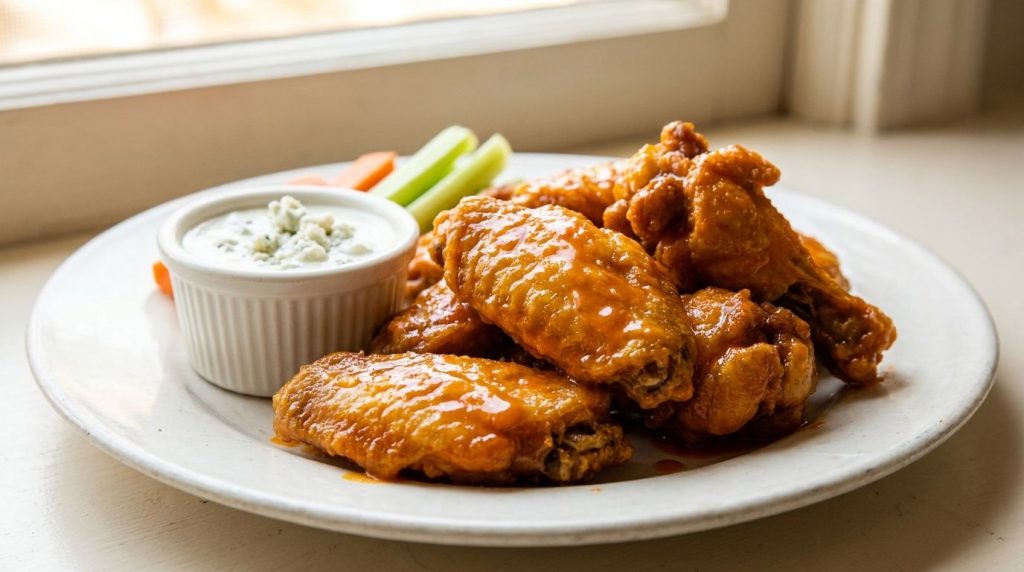
- Buffalo Sauce: The classic choice for chicken wings, chicken tenders, buffalo chicken dip, or even a spicy chicken sandwich.
- Thai Chili Sauce: Great with grilled meats, seafood, fish cakes, or as a dipping sauce for fresh vegetables.
- Gochujang Sauce: Ideal for bibimbap, tteokbokki, marinades for Korean BBQ, dipping grilled pork belly, or as a spicy kick in stews.
Storage & Reheating
- Refrigerator Storage: Store all sauces in clean, airtight jars or containers in the refrigerator.
- Sweet Chili, Thai Chili, Szechuan, Gochujang, Buffalo: These sauces typically last for 1-2 weeks in the refrigerator. Always use clean utensils to scoop out sauce to prevent contamination.
- Garlic Chili Oil: This can last for up to 3-4 weeks in the refrigerator. Ensure the oil completely covers any solids to extend shelf life. If you notice any mold or an off smell, discard immediately.
- Freezer Suitability: Most of these sauces (excluding Buffalo and Gochujang, which may separate) can be frozen for longer storage (up to 2-3 months). Freeze in ice cube trays for convenient portioning, then transfer cubes to a freezer-safe bag.
- Reheating:
- Thick Sauces (Sweet Chili, Thai Chili, Szechuan, Gochujang): Gently reheat in a saucepan over low heat, stirring occasionally, until warmed through. You may need to add a splash of water to thin if they have become too thick.
- Buffalo Sauce: Reheat gently over low heat, whisking constantly to re-emulsify the butter and hot sauce.
- Garlic Chili Oil: Best served at room temperature, no reheating required.
FAQ
Here are some common questions about making homemade spicy sauces:
Can I make these sauces less spicy?
Absolutely! The easiest way is to reduce the amount of fresh chilies or chili flakes. For fresh chilies, removing the seeds and membranes will significantly lower the heat level.
How can I make my sauces thicker or thinner?
To thicken, add more cornstarch slurry (1 tsp cornstarch mixed with 2 tsp cold water) and simmer for another minute. To thin, gradually whisk in a small amount of water or broth until your desired consistency is reached.
What kind of chilies should I use?
For Sweet Chili and Thai Chili, red bird’s eye chilies or serranos are common. For Garlic Chili Oil, dried red chili flakes (like gochugaru for a milder, more vibrant color or crushed red pepper for more heat) work well. Always choose what you enjoy!
Can I make these sauces ahead of time?
Yes, all these sauces are excellent for meal prep! In fact, some, like chili oil, taste even better after a day or two as the flavors have more time to meld. Store them properly in airtight containers in the refrigerator.
My Buffalo sauce separated, what happened?
Buffalo sauce can separate if the butter isn’t properly emulsified with the hot sauce, or if it cools down too quickly without enough whisking. To fix, gently reheat over low heat and whisk vigorously until it comes back together.
Is Gochujang very spicy?
Gochujang comes in various spice levels, from mild to extra hot. Check the packaging. It generally offers a moderate, complex heat with sweet and savory notes rather than a purely fiery spice.
Can I use dried garlic or ginger?
While fresh garlic and ginger provide the best flavor, you can substitute with dried powdered versions in a pinch. Use about 1/4 to 1/2 teaspoon of powder for every tablespoon of fresh minced ingredient, but be aware the flavor profile will differ slightly.
How do I know if my chili oil is safe to store?
When making chili oil with fresh garlic, it’s crucial to ensure the garlic is fully submerged in oil and stored in the refrigerator to minimize the risk of botulism. For best practice, use within 3-4 weeks or consider using an acid like vinegar for extra safety if making larger batches, though none is called for in this specific recipe. Always rely on visual cues and smell; if it looks or smells off, discard it.
Recipe Card
Here are the recipes for 6 essential homemade spicy sauces to elevate your meals.
Sweet Chili Sauce
Short Description: A classic sweet and tangy dipping sauce with a gentle kick of chili and garlic.
Prep Time: 10 minutes
Cook Time: 10 minutes
Total Time: 20 minutes
Servings: Approximately 1.5 cups
Course: Condiment, Sauce
Cuisine: Thai, Asian
Cooking Method: Simmering
Ingredients:
- 1/2 cup (100g) granulated sugar
- 1/2 cup (120ml) water
- 1/4 cup (60ml) white vinegar
- 2-3 tbsp (30-45ml) rice vinegar
- 2 tbsp (30g) minced fresh red chilies (or 1 tbsp chili flakes), adjust to taste
- 1 tbsp (15g) minced garlic
- 1/2 tsp salt
- 1 tbsp (8g) cornstarch, mixed with 2 tbsp (30ml) cold water (slurry)
Instructions:
- In a small saucepan, combine sugar, water, white vinegar, rice vinegar, minced chilies, minced garlic, and salt.
- Bring the mixture to a gentle boil over medium heat, stirring until the sugar dissolves. Reduce heat to low and simmer for about 5-7 minutes to allow flavors to meld.
- Whisk in the cornstarch slurry. Continue to simmer and stir for another 1-2 minutes until the sauce thickens to your desired consistency.
- Remove from heat and let cool completely before transferring to an airtight jar.
Spicy Szechuan Sauce
Short Description: A bold, savory, and spicy sauce with the distinctive tingle of Szechuan peppercorns.
Prep Time: 10 minutes
Cook Time: 5 minutes
Total Time: 15 minutes
Servings: Approximately 1 cup
Course: Condiment, Sauce
Cuisine: Chinese, Szechuan
Cooking Method: Whisking, Light Simmering (optional)
Ingredients:
- 1/4 cup (60ml) soy sauce
- 2 tbsp (30ml) rice vinegar
- 1 tbsp (15ml) sesame oil
- 1 tbsp (15ml) chili oil (or more for extra heat)
- 1 tbsp minced garlic
- 1 tbsp grated fresh ginger
- 1 tsp Szechuan peppercorns, toasted and ground
- 1 tsp brown sugar (or honey)
- 1/2 tsp cornstarch, mixed with 1 tbsp (15ml) cold water (optional, for thickening)
Instructions:
- If using whole Szechuan peppercorns, toast them lightly in a dry pan over medium-low heat for 1-2 minutes until fragrant. Grind them.
- In a small bowl, whisk together soy sauce, rice vinegar, sesame oil, chili oil, minced garlic, grated ginger, ground Szechuan peppercorns, and brown sugar until the sugar dissolves.
- If you prefer a slightly thicker sauce, whisk in the cornstarch slurry and gently heat the sauce in a small saucepan over low heat for 1-2 minutes, stirring until slightly thickened. Do not boil.
- Use immediately or store in an airtight container.
Garlic Chili Oil
Short Description: Fragrant oil infused with garlic, chili, and optional Szechuan spices, perfect for drizzling.
Prep Time: 15 minutes
Cook Time: 10 minutes
Total Time: 25 minutes (plus cooling)
Servings: Approximately 1 cup
Course: Condiment, Oil
Cuisine: Asian
Cooking Method: Oil Infusion
Ingredients:
- 1 cup (240ml) neutral oil (like canola, grapeseed, or vegetable oil)
- 1/2 cup (50g) dried red chili flakes
- 1/4 cup (30g) finely minced garlic
- 1 tbsp whole Szechuan peppercorns (optional)
- 2-3 star anise pods (optional)
- 1/2 tsp salt, or to taste
Instructions:
- In a heatproof bowl, combine chili flakes, minced garlic, Szechuan peppercorns (if using), star anise (if using), and salt.
- Heat the neutral oil in a small saucepan over medium-high heat until it reaches approximately 350-375°F (175-190°C).
- Carefully pour the hot oil over the ingredients in the bowl. Stir gently.
- Let the chili oil cool completely at room temperature for several hours (or overnight) to allow flavors to infuse. Once cool, remove star anise pods (if used). Transfer to a clean, airtight jar.
Buffalo Sauce
Short Description: The iconic buttery, tangy, and spicy sauce for chicken wings and more.
Prep Time: 5 minutes
Cook Time: 5 minutes
Total Time: 10 minutes
Servings: Approximately 1 cup
Course: Condiment, Sauce
Cuisine: American
Cooking Method: Whisking, Melting
Ingredients:
- 1/2 cup (120ml) hot sauce (Frank’s RedHot recommended)
- 1/2 cup (113g) unsalted butter
- 1 tbsp (15ml) white vinegar
- 1/2 tsp Worcestershire sauce
- 1/2 tsp garlic powder
- Pinch of cayenne pepper (optional)
Instructions:
- In a small saucepan over low heat, melt the unsalted butter.
- Once melted, remove from heat and whisk in the hot sauce, white vinegar, Worcestershire sauce, and garlic powder. Add cayenne pepper if using.
- Whisk vigorously until the sauce is completely smooth and emulsified.
- Serve warm or at room temperature.
Thai Chili Sauce
Short Description: A vibrant, fresh, and zesty chili sauce with a hint of fish sauce umami.
Prep Time: 15 minutes
Cook Time: 15 minutes
Total Time: 30 minutes
Servings: Approximately 1.5 cups
Course: Condiment, Sauce
Cuisine: Thai, Southeast Asian
Cooking Method: Blending, Simmering
Ingredients:
- 1/2 cup (75g) fresh red chilies, roughly chopped
- 4-5 cloves garlic
- 1/2 cup (100g) granulated sugar
- 1/2 cup (120ml) white vinegar
- 1/4 cup (60ml) water
- 1-2 tbsp (15-30ml) fish sauce
- 1/2 tsp salt
- 1 tbsp (8g) cornstarch, mixed with 2 tbsp (30ml) cold water (slurry)
Instructions:
- In a blender or food processor, combine fresh red chilies and garlic with 1/4 cup (60ml) of the water until a coarse paste forms.
- Transfer the chili-garlic paste to a small saucepan. Add sugar, white vinegar, the remaining 1/4 cup (60ml) water, fish sauce, and salt. Bring to a gentle boil over medium heat, stirring until the sugar dissolves. Reduce heat and simmer for 10-15 minutes.
- Whisk in the cornstarch slurry. Continue to simmer and stir for another 1-2 minutes until the sauce thickens.
- Remove from heat and let cool completely before storing.
Gochujang Sauce
Short Description: A versatile Korean sauce featuring the fermented chili paste, balanced with savory and sweet notes.
Prep Time: 5 minutes
Cook Time: 0 minutes
Total Time: 5 minutes
Servings: Approximately 1 cup
Course: Condiment, Sauce
Cuisine: Korean
Cooking Method: Whisking
Ingredients:
- 1/2 cup (120g) Gochujang (Korean chili paste)
- 2 tbsp (30ml) soy sauce
- 1 tbsp (15ml) sesame oil
- 1 tbsp (15ml) rice vinegar
- 1 tbsp (15ml) honey or brown sugar
- 1 tbsp minced garlic
- 1 tbsp water (to thin, if needed)
Instructions:
- In a small bowl, whisk together Gochujang paste, soy sauce, sesame oil, rice vinegar, honey (or brown sugar), and minced garlic until thoroughly combined and smooth.
- If the sauce is too thick, add water, 1 teaspoon at a time, until it reaches your desired consistency.
- Taste the sauce and adjust sweetness, saltiness, or spice level as needed.
- Use immediately or store in an airtight container.
Notes: Remember to adjust spice levels to your preference for all sauces. For optimal flavor, allow sauces to rest for at least 30 minutes before serving, especially the Szechuan and Gochujang sauces.
Storage: Store all sauces in clean, airtight jars in the refrigerator. Sweet Chili, Thai Chili, Szechuan, Gochujang, and Buffalo sauces last 1-2 weeks. Garlic Chili Oil lasts 3-4 weeks. Some sauces can be frozen for longer storage.
Nutrition: Nutrition information is an estimate and may vary depending on the ingredients and brands used.