Are you looking for a simple yet fascinating science experiment you can do right at home? The “naked egg” experiment is a classic for a reason: it’s incredibly easy to set up, uses common household items, and yields a surprising result!
This DIY project lets you observe a cool chemical reaction firsthand, transforming a fragile raw egg into a bouncy, shell-less wonder. It’s a fantastic way to spark curiosity and learn a bit about chemistry and biology without needing a lab.
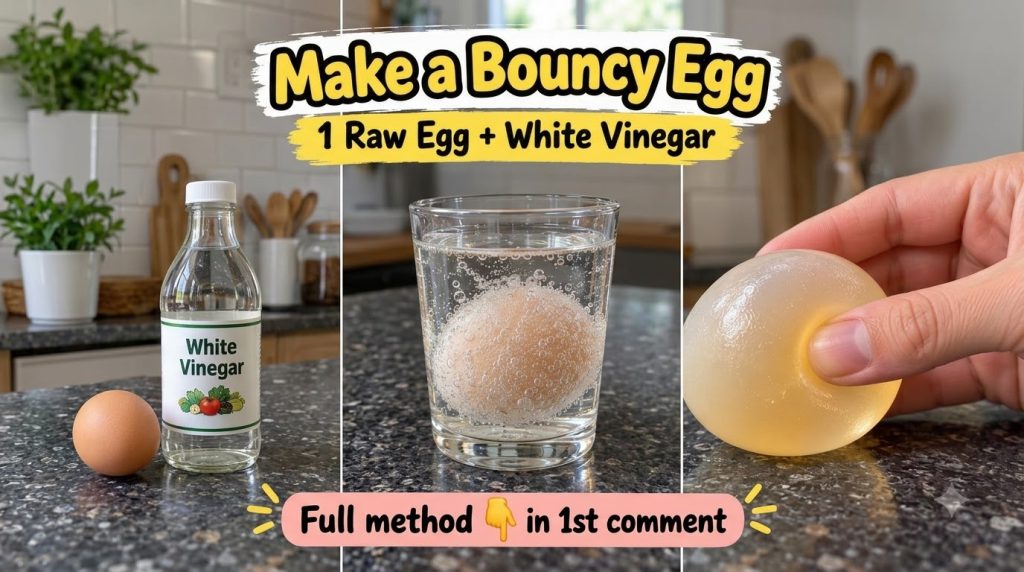
What You’ll Need
- 1 raw egg (preferably fresh)
- 1-2 cups white vinegar (enough to fully submerge the egg)
- 1 clear glass or jar
- A spoon (optional, for careful handling)
Why This DIY Can Be Useful
This experiment provides a visual demonstration of a chemical reaction between an acid (vinegar) and a base (calcium carbonate in the eggshell). Vinegar, which is acetic acid, reacts with the calcium carbonate in the egg’s shell, causing it to break down and dissolve.
As the shell dissolves, the egg’s inner membrane is revealed. You’ll also notice the egg appears to grow slightly larger and become more pliable. This happens due to a process called osmosis, where water from the vinegar solution passes through the semi-permeable membrane into the egg, causing it to swell.
How to Make It
- Gently Place the Egg: Carefully place the raw egg into the clear glass or jar. Try not to crack the shell.
- Pour the Vinegar: Slowly pour white vinegar into the glass, ensuring the egg is completely submerged.
- Observe Immediately: You should start to see tiny bubbles forming on the surface of the eggshell. This is carbon dioxide gas being released as the vinegar reacts with the shell.
- Let It Soak: Leave the egg undisturbed in the vinegar for at least 24 hours, or ideally 48 hours, at room temperature.
- Optional: Change Vinegar: After 12-24 hours, you may choose to carefully pour out the old vinegar and replace it with fresh vinegar. This can speed up the process and ensure a complete shell dissolution.
How to Use It
After 1-2 days of soaking, your naked egg is ready!
- Carefully Remove: Using a spoon, gently lift the egg out of the vinegar. Be very careful, as the membrane is fragile.
- Rinse Gently: Under cool running water, very gently rub away any remaining bits of calcium carbonate or residue from the dissolved shell. You will be left with a translucent, rubbery egg.
- Observe and Explore: Hold the egg up to the light to see its yolk sloshing inside. Gently squeeze it to feel its rubbery texture. You can even try carefully bouncing it from a very short distance onto a soft surface to see its elasticity!
What to Expect
You can expect your eggshell to have completely dissolved, leaving behind a smooth, rubbery membrane. The egg will feel soft and somewhat bouncy, and it might appear slightly larger and translucent compared to its original size. Remember, while the shell is gone, the egg inside is still raw and liquid.
Helpful Tips
- Use a Clear Container: A clear glass or jar allows you to observe the bubbling reaction as it happens.
- Handle with Care: The naked egg membrane is delicate. Treat it gently to avoid breaking it.
- Experiment with Colors: After the shell dissolves, you can try soaking the naked egg in colored water or food coloring to see if the membrane absorbs the color.
- Keep an Eye on the Bubbles: The more bubbles you see, the more active the reaction!
Important Notes / Safety
- Do Not Eat It: The egg is raw and has been sitting in vinegar for an extended period, so it is not safe for consumption.
- Clean Up: Dispose of the vinegar and the egg responsibly once you are done with the experiment.
- Vinegar Smell: The area might smell slightly of vinegar during the experiment, especially if you get close. This is normal.