Stop Ants in Their Tracks: The Unexpected Vaseline Home Hack
Are tiny ant armies marching through your kitchen, invading your pantry, or setting up camp on your countertops? It’s a common household annoyance that can leave you scrambling for solutions. While many commercial pest control products rely on harsh chemicals, what if we told you there’s a surprisingly simple, non-toxic, and incredibly effective barrier you can create using a product you likely already have in your medicine cabinet?
Get ready to discover the power of Vaseline Original Petroleum Jelly as your new secret weapon against those unwelcome six-legged guests. It’s an easy, budget-friendly, and safe way to reclaim your home from marching ants.
The Unexpected Ant Barrier: Vaseline
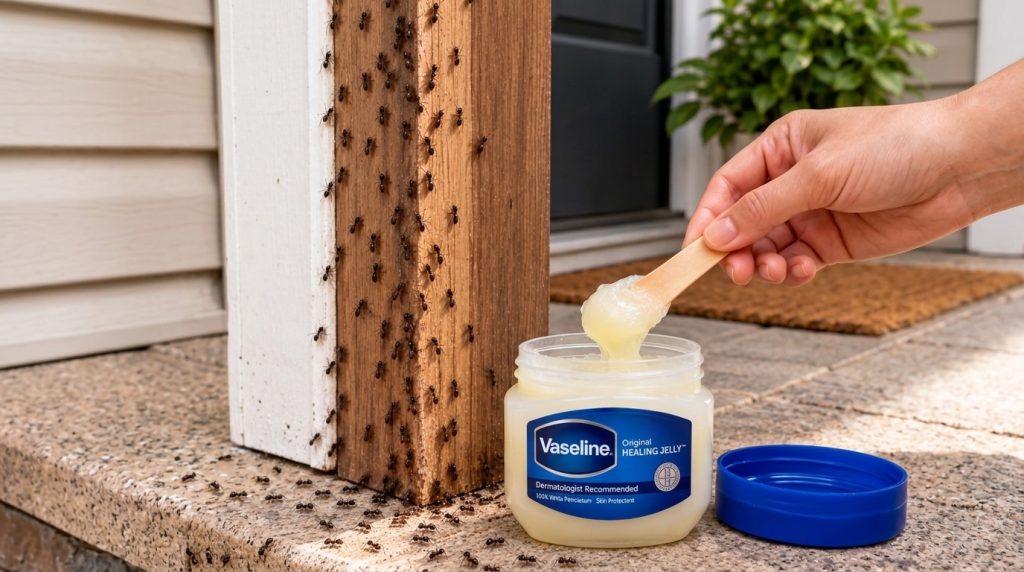
It might sound too simple to be true, but petroleum jelly, commonly known as Vaseline, creates a formidable barrier that ants simply cannot cross. This isn’t about poisoning or killing them; it’s about physically stopping their entry and disrupting their highly organized trails.
Why Vaseline Works Against Ants
Ants rely heavily on pheromone trails to navigate and communicate. When a scout ant finds a food source, it lays down a trail to guide others. Vaseline interferes with this system in several ways:
- Physical Obstacle: Its thick, sticky consistency makes it almost impossible for ants to walk across without getting stuck. Imagine trying to walk through a swamp of honey – that’s what Vaseline is like for a tiny ant.
- Scent Disruption: The petroleum jelly effectively smothers and blocks the pheromone trails ants use to guide their colony. Without their scent markers, they become disoriented and lose their path to your home.
- Non-Toxic: Unlike chemical sprays, Vaseline is not a pesticide. It’s a physical deterrent, making it a safer option for homes with children and pets (though direct ingestion should still be avoided).
Your DIY Vaseline Ant Barrier: Step-by-Step
Ready to put this hack into action? Here’s what you’ll need and how to apply it:
Materials:
- Vaseline Original Petroleum Jelly
- A craft stick, cotton swab, old paintbrush, or even a gloved finger for application
- Cleaning supplies (soap and water or an all-purpose cleaner)
Instructions:
- Identify Entry Points: Observe where ants are entering your home. Look for tiny cracks in windowsills, gaps around doorframes, holes near pipes, or small openings in foundation walls.
- Clean the Surface: Before applying Vaseline, clean the identified area thoroughly to remove any existing ant pheromone trails. Use a bit of soapy water or an all-purpose cleaner and wipe dry. This step is crucial for success.
- Apply the Barrier: Using your applicator of choice, spread a thin, continuous line of Vaseline along the ant’s suspected entry points. You don’t need a thick glob; a thin, visible line is sufficient. Ensure there are no breaks in the barrier, as ants are masters at finding tiny gaps.
- Create Rings (Optional): For specific items like pet food bowls or outdoor plant pots that ants love to invade, you can create a ring of Vaseline around the base or rim. Make sure the ring is wide enough that ants can’t simply step over it.
- Monitor and Reapply: Keep an eye on the treated areas. You should see ants stopping dead in their tracks at the barrier. Reapply the Vaseline if it gets dusty, dirty, or wiped away, or after heavy rain for outdoor applications.
Where to Apply Your Vaseline Barrier
This simple hack can be used in various trouble spots:
- Windowsills and Doorframes: Apply along the bottom and sides where ants might crawl in.
- Pipe Entries: Around pipes under sinks or where utilities enter the home.
- Cracks and Crevices: Any small opening in walls or floors where ants are observed entering.
- Pet Food Bowls: Apply a thin ring around the outside base of the bowl to keep ants out of pet food.
- Outdoor Plant Pots: A barrier around the base can prevent ants and other crawling insects from climbing into your plants.
Benefits of This Natural Pest Control Method
- Non-Toxic: Safe for use around food prep areas (when applied externally), children, and pets (with caution to prevent ingestion).
- Cost-Effective: Vaseline is inexpensive and lasts a long time.
- Readily Available: A common household staple, no special trips to the store needed.
- Effective: Creates an immediate and undeniable barrier.
- No Harsh Smells: Unlike many chemical repellents, Vaseline is odorless.
Important Considerations & Safety Tips
- Apply Thinly: While safe, a thick layer can be messy. A thin, continuous line is all that’s needed.
- Avoid High-Traffic Areas: Don’t apply Vaseline where people or pets might accidentally step in it and track it around.
- Clean Up: If you need to remove the Vaseline, a little soap and warm water, or a dab of rubbing alcohol, usually does the trick.
- Not a Solution for Infestations: This method is best for preventing ants from entering or deterring small numbers. For large-scale infestations, you may need professional pest control.
Give this simple Vaseline hack a try the next time you spot those tiny invaders. You’ll be amazed at how such an everyday item can offer such an effective, chemical-free solution to a common household problem. Say goodbye to ants and hello to a more peaceful home!