Sweet Trap: The Handy Home Lab for Natural Pest Control
Are tiny, uninvited guests making themselves at home in your kitchen? Fruit flies, gnats, and other small flying insects can be a persistent nuisance, especially around fresh produce, house plants, and trash bins. Before you reach for harsh chemical sprays, consider a simple, natural, and incredibly effective solution right from your pantry. This DIY sweet trap, combining just sugar, yeast, and water, is a game-changer for keeping your home comfortable and pest-free naturally!
The Problem with Pesky Invaders
Small flying insects aren’t just annoying; they can contaminate food and be a general hygiene concern. While commercial traps exist, they often come with a price tag or contain ingredients you might prefer to avoid in your living space. The beauty of this sweet trap is its simplicity, affordability, and reliance on common household items.
Your DIY Sweet Trap Solution
This method leverages the natural attractants produced during fermentation. Yeast, when activated by warm water and fed by sugar, produces carbon dioxide and alcohol – both irresistible to many small flying insects. They’ll be drawn in, but won’t be able to escape the liquid, effectively trapping them.
What You’ll Need
- 1 cup (240ml) warm water
- 2-3 tablespoons granulated sugar
- 1 packet (about 2 1/4 teaspoons) active dry yeast
- An empty plastic bottle (e.g., a soda bottle) or a jar
- A funnel (optional, but very helpful)
Step-by-Step Instructions
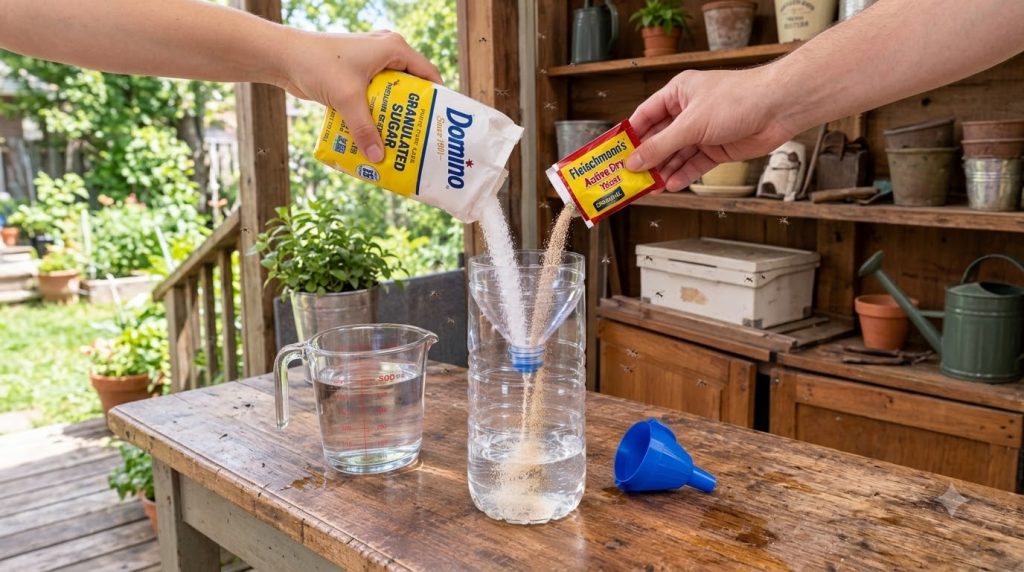
- Prepare Your Container: If using a plastic bottle, you can cut off the top third and invert it into the bottom portion, creating a funnel. For a jar, you can simply use plastic wrap with small holes poked in it, or a paper funnel.
- Mix the Attractant: In a separate bowl or directly in your trap container, combine the warm water and granulated sugar. Stir until the sugar is completely dissolved.
- Activate the Yeast: Add the active dry yeast to the sugar water. Give it a gentle stir. You’ll soon see the yeast beginning to activate, creating a foamy layer on top. This is a sign of fermentation starting!
- Assemble the Trap: Pour the mixture into your chosen bottle or jar. If using the inverted bottle top, ensure the narrow opening is just above the liquid level. If using plastic wrap, secure it tightly and poke several small holes in it with a toothpick.
How This Sweet Trap Works Its Magic
The science behind this trap is fascinating and effective. The yeast consumes the sugar, converting it into carbon dioxide (CO2) and alcohol. Small flying insects, particularly fruit flies, are highly attracted to these fermentation byproducts. The CO2 acts as a beacon, drawing them towards the source. Once they fly into the trap, they struggle to escape the narrow opening or the sticky liquid, effectively containing them.
Placement and Maintenance Tips
For best results, place your sweet trap in areas where you’ve noticed the most insect activity. This is typically near fruit bowls, trash cans, sink drains, or potted plants. Monitor the trap daily. As the yeast continues to ferment, its effectiveness will wane. Change the mixture every 3-5 days, or sooner if it becomes heavily populated with insects, to ensure continuous protection.
Safety Notes and Considerations
This trap uses natural, non-toxic ingredients, making it safe for homes with children and pets. However, always exercise caution to prevent accidental spills, especially in areas where pets might try to ingest the sweet liquid. The trap is most effective for small flying insects like fruit flies and gnats. For larger pests, different methods may be required.
Give this simple sweet trap a try and enjoy a more comfortable, pest-free home without relying on harsh chemicals. It’s a testament to how effective a little home hacking can be!