Finding unwanted guests like cockroaches lurking in your cabinets or under your sink can be incredibly frustrating. Before you reach for harsh chemicals, consider a simple, low-cost homemade solution that can effectively tackle these common household pests. This DIY trap is easy to assemble with materials you likely already have, offering a practical way to manage pest problems without heavy-duty sprays.
What You’ll Need
- 1 large clear plastic bottle (e.g., a 2-liter soda bottle)
- 1 smaller plastic bottle or an extra funnel
- 1-2 ripe bananas
- 2-3 tablespoons sugar
- 1/2 cup warm water
- Optional: 1/4 teaspoon active dry yeast (to enhance attraction)
Tools
- Sharp utility knife or strong scissors
- Measuring spoons and cup
Why This DIY Can Be Useful
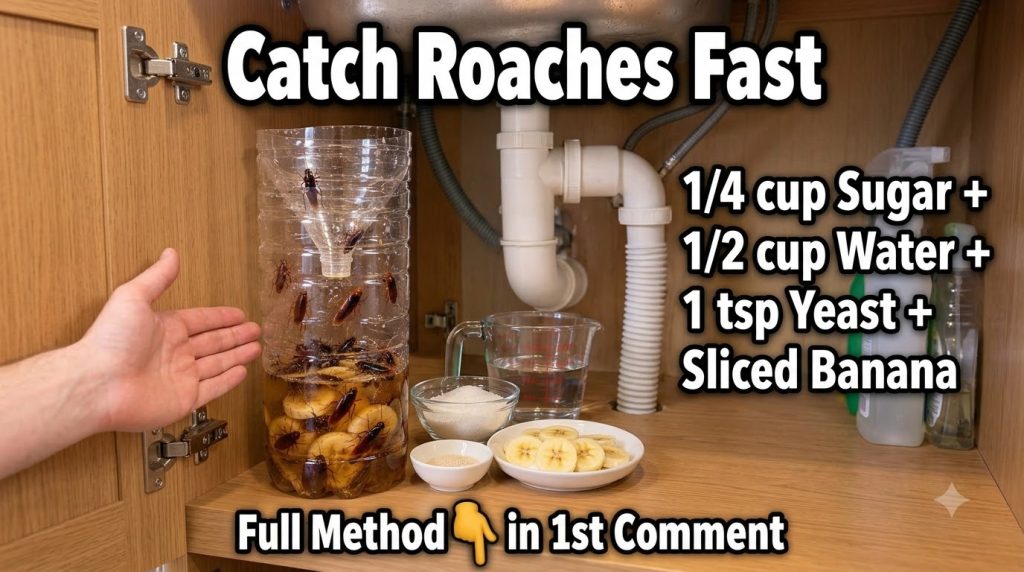
This DIY pest trap works by creating an irresistible lure for common household insects like cockroaches, fruit flies, and ants. The combination of ripe banana and sugar water creates a sweet, fermenting aroma that pests find highly attractive. If you add a small amount of yeast, it further enhances the fermentation process, producing carbon dioxide and alcohols that act as powerful attractants.
The ingenious design of the inverted funnel ensures that once pests enter the bottle to get to the bait, it becomes very difficult for them to find their way out. This makes it an effective, non-toxic way to reduce pest populations in your home.
How to Make It
- Prepare Your Bottle: Take your large plastic bottle and carefully cut off the top third, just above where the bottle begins to narrow. This wider opening will be the base for your funnel.
- Create the Funnel: Take the top section you just cut off (or your smaller plastic bottle/separate funnel). If using the cut-off top, invert it and place it into the larger bottom section of the bottle. It should fit snugly, creating a funnel shape with the bottle’s opening pointing downwards into the trap. If it doesn’t fit tightly, you can use tape around the edge to secure it, but ensure no gaps remain.
- Prepare the Bait: In a separate bowl, mash the ripe bananas. In another small bowl, dissolve the sugar in the warm water. If using, stir in the active dry yeast until combined.
- Assemble the Bait: Spoon the mashed banana into the bottom of the larger plastic bottle. Pour the sugar water mixture over the bananas. Ensure there is enough liquid to cover the banana pieces slightly.
- Complete the Trap: Carefully place the inverted funnel piece into the larger bottle, ensuring the narrow opening of the funnel sits just above the liquid bait. This creates the one-way entry point for pests.
How to Use It
Once your trap is assembled and baited, it’s time to put it to work.
- Placement: Place the trap in areas where you’ve noticed pest activity, such as under the kitchen sink, inside dark cabinets, in the pantry, or even near trash cans. Pests often hide in dark, damp, and undisturbed locations.
- Positioning: Ensure the trap is stable and won’t easily tip over. Position it against a wall or in a corner where pests tend to travel.
- Monitoring: Check the trap daily. You should start seeing pests accumulating inside.
- Maintenance: Depending on the level of infestation and the heat, the bait may need to be refreshed every 3-5 days. As the fruit decays and the liquid evaporates, its effectiveness will diminish.
- Disposal: When refreshing the trap, dispose of the contents and trapped pests hygienically. You can seal them in a plastic bag before discarding them in the outdoor trash.
What to Expect
This DIY pest solution is highly effective for trapping and reducing the population of common household pests like cockroaches, ants, and fruit flies. You should notice a decrease in pest sightings within a few days of placing the trap. While it may not completely eliminate a severe infestation, it is an excellent tool for managing minor to moderate pest problems and complementing other pest control efforts. Remember, consistency in refreshing the bait is key to its ongoing success.
Helpful Tips
- Dark, Humid Spots: Pests are often drawn to dark, humid areas. Placing your trap in these spots will maximize its chances of success.
- Elevate Slightly: Sometimes, placing the trap on a small block or book can make it more accessible for crawling insects.
- Seal Entry Points: While the trap works on existing pests, combine this effort with sealing cracks and crevices in your home to prevent new pests from entering.
Important Notes / Safety
- Keep the trap out of reach of small children and pets to prevent accidental ingestion of the bait or contact with trapped insects.
- This trap is intended for common household pests and is not a substitute for professional pest control for severe infestations or pests that could pose a health risk, such as rodents or termites.
- Always wash your hands thoroughly after handling the trap or its contents.