Ever wondered why some plants just seem to thrive effortlessly while others struggle, despite your best efforts? Often, the secret lies beneath the surface – in the soil! A healthy, well-chosen soil mix is the foundation for a flourishing garden, whether you’re growing vibrant flowers, abundant vegetables, fragrant herbs, or charming succulents.
At Garden – L. Quyên, we believe that understanding your soil is the first step to unlocking your inner green thumb. Forget generic potting soil; learning to customize your mix can dramatically improve your plants’ health and yield. Let’s dig in and discover the ultimate soil mix guide!
Why Your Soil Mix is a Game-Changer
Think of soil as your plant’s home. Just like we need different types of homes to thrive, different plants need specific soil conditions. A good soil mix provides:
- Anchorage: A stable base for roots to grow.
- Nutrients: Essential food for growth.
- Water Retention: Holds moisture for roots, but not too much.
- Aeration: Allows air to reach roots, preventing rot.
- Drainage: Prevents waterlogging, which can suffocate roots.
Without the proper balance of these elements, plants can become stressed, stunted, or even die.
Decoding the Key Ingredients for a Perfect Blend
Customizing your soil mix is simpler than you think! Here are the common components and what they bring to the table:
Compost
This is the black gold of gardening! Compost is decomposed organic matter rich in nutrients and beneficial microorganisms. It improves soil structure, aeration, drainage, and water retention, making it a fantastic all-rounder for almost any plant.
Cocopeat (Coir)
Derived from coconut husks, cocopeat is an excellent alternative to peat moss. It’s fantastic for water retention, holding many times its weight in water, while also providing good aeration. It’s lightweight and sterile, making it ideal for seed starting and moisture-loving plants.
Perlite
These lightweight, white volcanic rocks are incredibly porous. Perlite’s main role is to improve drainage and aeration, preventing soil compaction and ensuring roots get enough oxygen. It’s often used for plants that hate wet feet.
Sand
Horticultural sand (coarse, not fine play sand) is used to improve drainage and add weight to soil mixes, which can be beneficial for larger pots or plants that prefer a grittier texture. It helps prevent compaction and enhances water percolation.
Crafting Custom Mixes for Every Plant
Now, let’s get to the fun part – mixing! Remember, these are general guidelines, and you can adjust slightly based on your specific climate and plant varieties.
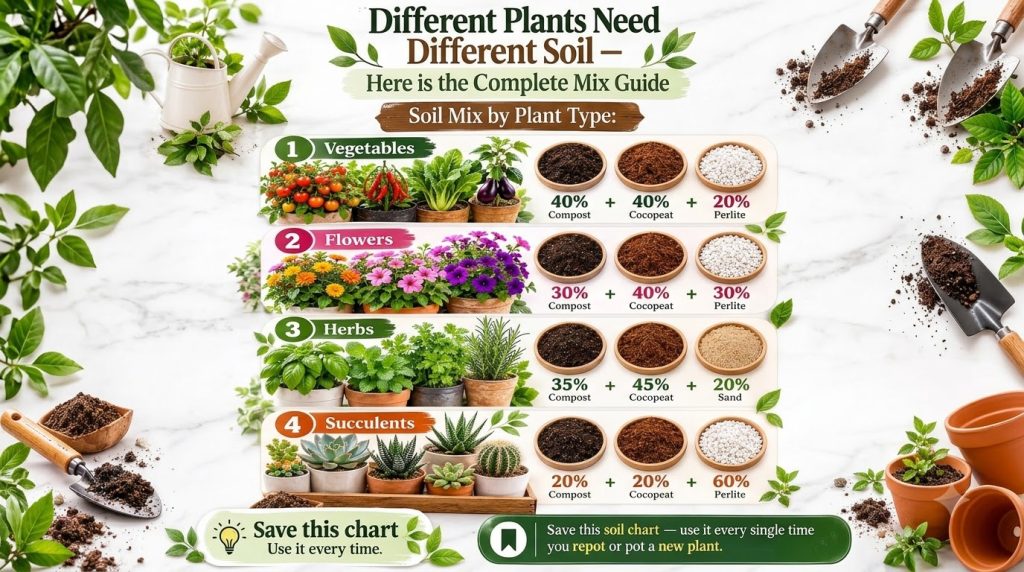
For Bountiful Vegetables
Vegetables are hungry plants! They need a nutrient-rich mix that retains moisture but still drains well.
- 2 parts Compost: Provides essential nutrients and improves overall soil health.
- 1 part Cocopeat: For excellent water retention, keeping roots hydrated.
- 1 part Perlite: Ensures good drainage and aeration, preventing root rot.
This mix supports strong root development and nutrient uptake, leading to healthier, more productive vegetable plants.
For Vibrant Flowers
Flowering plants often have similar needs to vegetables: consistent moisture, good drainage, and plenty of nutrients to fuel those beautiful blooms.
- 2 parts Compost: Feeds your flowers with a steady supply of nutrients.
- 1 part Cocopeat: Helps maintain even moisture levels.
- 1 part Perlite: Keeps the soil light and well-aerated for healthy roots.
This blend will encourage vigorous growth and abundant flowering throughout the season.
For Aromatic Herbs
Herbs generally prefer well-draining soil and don’t like to sit in soggy conditions. A slightly less rich mix works best for many varieties.
- 1 part Compost: Provides a moderate nutrient boost without over-fertilizing.
- 1 part Cocopeat: Offers some moisture retention.
- 2 parts Perlite: Crucial for excellent drainage, which most herbs prefer.
- Optional: 0.5 part Sand: For herbs like rosemary or lavender that thrive in very gritty, sandy conditions.
This mix prevents waterlogging, which can cause root rot and diminish the potency of your herbs.
For Resilient Succulents & Cacti
These desert dwellers absolutely demand excellent drainage. Their roots are highly susceptible to rot if left in consistently moist soil.
- 1 part Compost (or general potting mix): Provides a minimal nutrient base.
- 2 parts Perlite: Maximizes drainage and aeration.
- 2 parts Sand: Adds grit and further enhances drainage.
This gritty, fast-draining mix mimics their natural arid habitats, ensuring their roots stay healthy and dry between waterings.
General Tips for Mixing and Success
- Mix Thoroughly: Use a trowel, your hands (with gloves!), or a small tarp to ensure all components are evenly distributed.
- Start Small: If you’re new to this, try a small batch for a few plants first.
- Consider Pot Size: Larger pots need more soil.
- Water After Planting: Always water new plantings thoroughly to help the soil settle around the roots.
- Observe Your Plants: Pay attention to how your plants respond to the new mix. Adjust if necessary for future plantings.
Cultivate Your Best Garden Yet!
By taking the time to understand and customize your soil mixes, you’re not just planting; you’re cultivating a deeper connection with your garden. It’s a simple yet powerful step towards healthier, happier plants and a more rewarding gardening experience. Experiment, observe, and enjoy the incredible difference the right soil can make! Happy gardening!