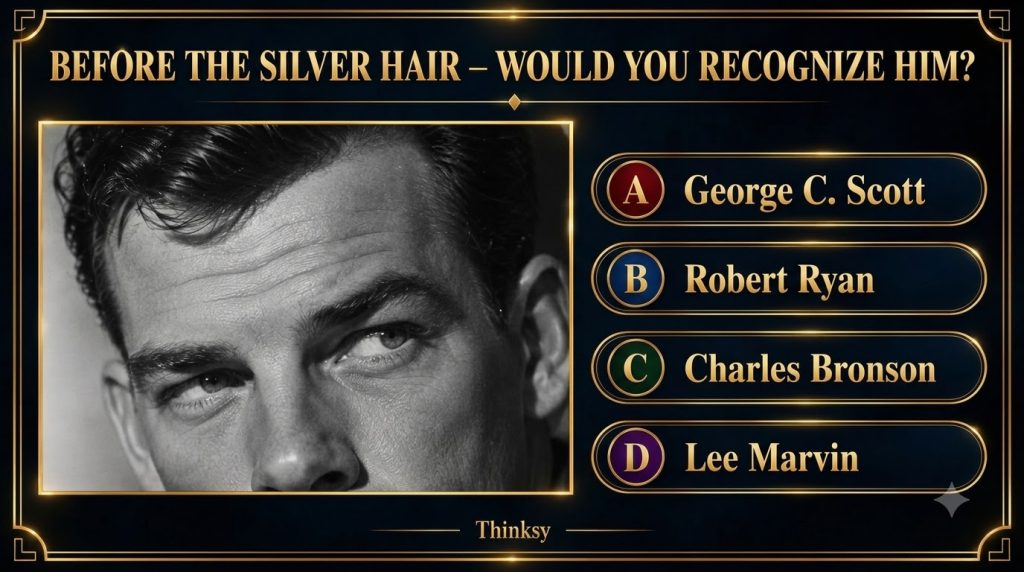
The photograph above does not immediately match the image many movie fans remember. The hair is dark, the face is younger, and one of Hollywood’s most recognizable tough-guy trademarks has not yet fully appeared. This is none other than the legendary Lee Marvin, long before his signature silver hair became iconic.
Before Hollywood made him famous, Marvin had already lived through experiences far more intense than most movie scripts. His life story is as compelling as any of the characters he portrayed on screen, giving him an authenticity that few actors could match.
From the Marines to the Movies
Lee Marvin was born in New York City in 1924. His path to acting was anything but conventional. During World War II, he served in the United States Marine Corps, a period that profoundly shaped the man and the actor he would become. He fought bravely in the Pacific theater and was wounded during the brutal Battle of Saipan.
His military service later informed the authority and toughness he brought to the screen. When Marvin played soldiers, gunfighters, or dangerous men, audiences often felt a credibility that was difficult to fake. There was an unspoken gravitas in his performances, a hint of real-world experience that resonated deeply, making his portrayals incredibly believable.
The Perfect Movie Villain
Early in his film career, Marvin frequently played ‘heavies’ or villains. His tall frame, gravelly voice, and hard, often menacing, expression made him an ideal choice for these roles. He possessed a natural intensity that commanded attention, even when sharing the screen with established stars.
One memorable early appearance came in the classic noir film The Big Heat (1953), where he played the sadistic thug Vince Stone. He also appeared in the iconic biker film The Wild One (1953) alongside Marlon Brando, further solidifying his image as a formidable presence. For years, Marvin seemed destined to become one of Hollywood’s most reliable character actors, always delivering powerful performances but rarely in the leading role.
The Rise of a Leading Man
However, Lee Marvin’s career trajectory shifted. His raw talent and undeniable screen presence eventually propelled him into leading roles. He proved he could carry a film with his commanding performances, often playing morally ambiguous but deeply compelling characters. This transition saw him take on more complex roles that showcased his versatility beyond just being a ‘tough guy.’
His career peaked with an Academy Award for Best Actor for his dual role in the comedic Western Cat Ballou (1965), where he famously played both a drunken gunfighter and his evil twin brother. This surprising comedic turn demonstrated his range and cemented his status as a Hollywood legend. Lee Marvin’s journey from a young, dark-haired character actor to an Oscar-winning icon with striking silver hair is a testament to his enduring talent and unforgettable presence on screen.

