Are you looking for a simple, sustainable, and incredibly effective way to nourish your garden plants, especially those hungry tomatoes? Look no further than in-ground composting! This fantastic method turns your everyday kitchen scraps into a powerful, slow-release fertilizer right where your plants need it most. Say goodbye to synthetic fertilizers and hello to a thriving, eco-friendly garden!
What is In-Ground Composting?
In-ground composting, sometimes called ‘trench composting’ or ‘bury composting,’ is exactly what it sounds like: you bury your organic kitchen waste directly into your garden soil. Unlike traditional compost piles, which require careful management of greens, browns, moisture, and aeration, in-ground composting lets nature do most of the work beneath the soil surface. Microbes, worms, and other beneficial soil organisms break down the organic matter, enriching the soil with essential nutrients and improving its structure.
Why In-Ground Composting is Perfect for Your Tomatoes
Tomato plants are notoriously heavy feeders, meaning they require a lot of nutrients to produce abundant, juicy fruits. In-ground composting provides a steady supply of these nutrients over time, which is ideal for tomatoes. Here’s why it’s a game-changer:
- Slow-Release Nutrition: As scraps decompose, they release nutrients gradually, feeding your tomatoes consistently throughout their growth cycle.
- Improved Soil Health: Organic matter enhances soil structure, aeration, and water retention, creating an optimal environment for roots.
- Reduced Waste: Divert kitchen scraps from landfills, contributing to a more sustainable lifestyle.
- Pest Deterrence: When buried properly, scraps are less likely to attract pests than an open compost pile.
- No Turning Required: Forget about turning compost piles; the soil organisms do the heavy lifting for you.
How to Set Up Your In-Ground Composting System for Tomatoes
Ready to give your tomato plants the best possible start? Here’s a simple guide to in-ground composting:
Step 1: Choose Your Spot
Identify areas in your garden where you plan to plant tomatoes or around existing tomato plants. You want to place your compostable materials close enough for the roots to access the nutrients, but not directly under the main stem to avoid disturbing the plant too much.
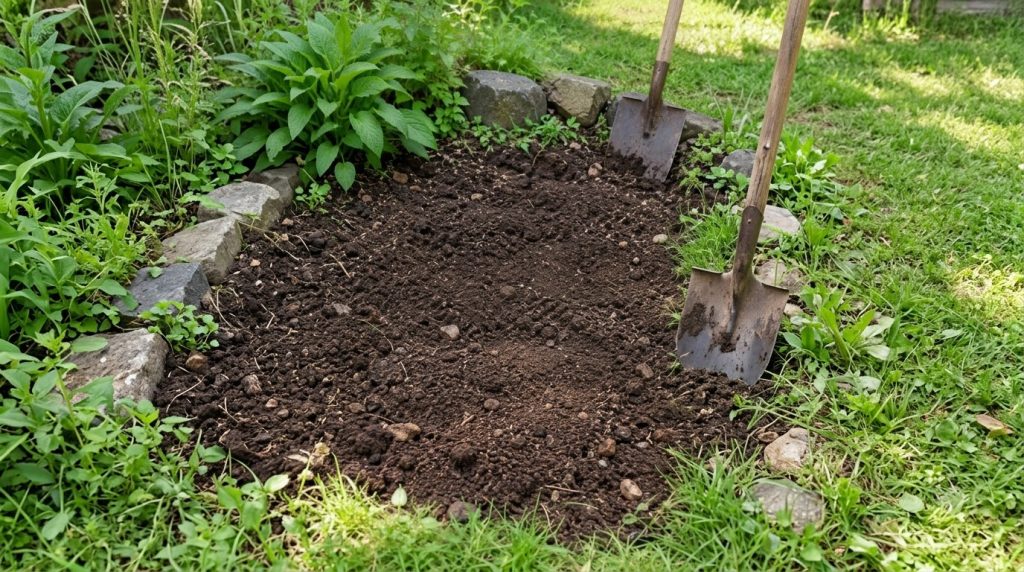
Step 2: Dig a Trench or Hole
Dig a trench about 12-18 inches deep and 12 inches wide, parallel to where you’ll plant your tomatoes, or a series of smaller holes. For existing plants, dig a hole a foot or two away from the base, being careful not to damage roots. The depth helps ensure the scraps are fully covered and decomposition happens efficiently without attracting unwanted critters.
Step 3: Add Your Kitchen Scraps
Fill the trench or holes with your chosen kitchen scraps. A good rule of thumb is to fill the space about halfway to two-thirds full to allow for proper covering.
Step 4: Cover with Soil
Backfill the trench or holes with the soil you dug out, making sure the scraps are completely covered. You don’t want any scraps exposed on the surface. Mark the spot if you need to, especially if you plan to plant there later.
Step 5: Plant Your Tomatoes
If you’re starting fresh, plant your tomato seedlings directly above or next to the buried scraps. The decomposing material will slowly release nutrients into the root zone. For established plants, simply let the compost work its magic nearby.
What to Compost (and What to Avoid)
The success of your in-ground composting depends on what you put into it:
Excellent Additions:
- Vegetable and fruit scraps (peels, cores, bruised parts)
- Coffee grounds and tea bags
- Eggshells (crush them for faster breakdown)
- Grass clippings (in moderation)
- Fallen leaves
- Small amounts of shredded newspaper or cardboard (as ‘brown’ material)
Things to Avoid:
- Meat, bones, and dairy products (can attract pests and produce odors)
- Oils and greasy foods
- Pet waste (contains harmful pathogens)
- Diseased plants (could spread pathogens to your garden)
- Weeds with seeds (you’ll just be planting more weeds!)
Tips for Maximum Success
- Chop Scraps: Smaller pieces break down faster.
- Rotate Spots: Don’t bury scraps in the exact same spot repeatedly. Rotate areas to allow soil to recover and distribute nutrients.
- Moisture is Key: Ensure the soil around your buried scraps is consistently moist to encourage microbial activity.
- Be Patient: Decomposition takes time, but the benefits are long-lasting.
Embracing in-ground composting is a wonderful step towards a more sustainable and fruitful garden. It’s an easy, low-effort way to give your tomato plants (and other vegetables!) the rich, organic nourishment they crave, leading to healthier plants and a more abundant harvest. Happy gardening!