Tired of slow drains and unpleasant odors lingering in your bathroom or kitchen? A sluggish drain can be more than just annoying; it can be a breeding ground for bacteria and a source of unwelcome smells. Before you reach for harsh chemical drain cleaners that can be tough on your pipes and the environment, consider a simple, natural solution that’s likely already in your pantry!
This guide will show you how to tackle minor clogs and refresh your drains using common household ingredients: baking soda and white vinegar. It’s a remarkably effective, eco-friendly, and budget-friendly method that helps break down grease, soap scum, and other build-ups without damaging your plumbing.
This DIY solution is perfect for anyone looking for a safer alternative to conventional drain cleaners, from eco-conscious homeowners to busy parents. If you’re new to DIY cleaning or just want a simple hack to keep your pipes flowing smoothly, you’ve come to the right place.
In this comprehensive guide, you’ll learn everything you need to know to safely and effectively clean and maintain your drains using this natural powerhouse duo. Say goodbye to slow drains and hello to a fresher, cleaner home!
Quick Summary
- Preparation Time: 2 minutes
- Application Time: 30-60 minutes (waiting period)
- Difficulty Level: Easy
- Best Uses: Minor clogs, slow drains, odor removal, drain maintenance
- Suitable Surfaces: Most plumbing types (PVC, metal pipes); avoid on drains with existing chemical blockages or very old, corroded pipes without professional advice.
- Storage Time: Ingredients store indefinitely; solution is made fresh.
Why You’ll Love This DIY Solution
- Easy to Make: Requires only two common household ingredients.
- Budget-Friendly: Much cheaper than commercial drain cleaners.
- Uses Common Household Ingredients: No special trips to the store needed.
- Beginner-Friendly: Simple steps anyone can follow.
- Eco-Friendly: A natural alternative to harsh chemicals.
- Safe for Most Pipes: Gentle on plumbing systems compared to corrosive chemicals.
- Odor Eliminator: Effectively neutralizes unpleasant drain smells.
- Preventative Maintenance: Great for routine upkeep to avoid future clogs.
Ingredients / Materials
- 1 cup baking soda
- 1 cup white vinegar (distilled white vinegar works best)
- 4-8 cups very hot water (from a kettle or tap, not boiling directly from a stovetop which can damage PVC pipes)
Equipment Needed
- Measuring cup
- Funnel (optional, but highly recommended for precision)
- Kettle or pot for heating water
- Rubber stopper or rag (to cover the drain)
- Timer
Step-by-Step Instructions
-
Prepare Your Drain (1 minute)
Remove any visible hair or debris from the drain opening. If possible, run hot tap water down the drain for about a minute to warm up the pipes and help loosen any immediate gunk.
-
Add Baking Soda (1 minute)
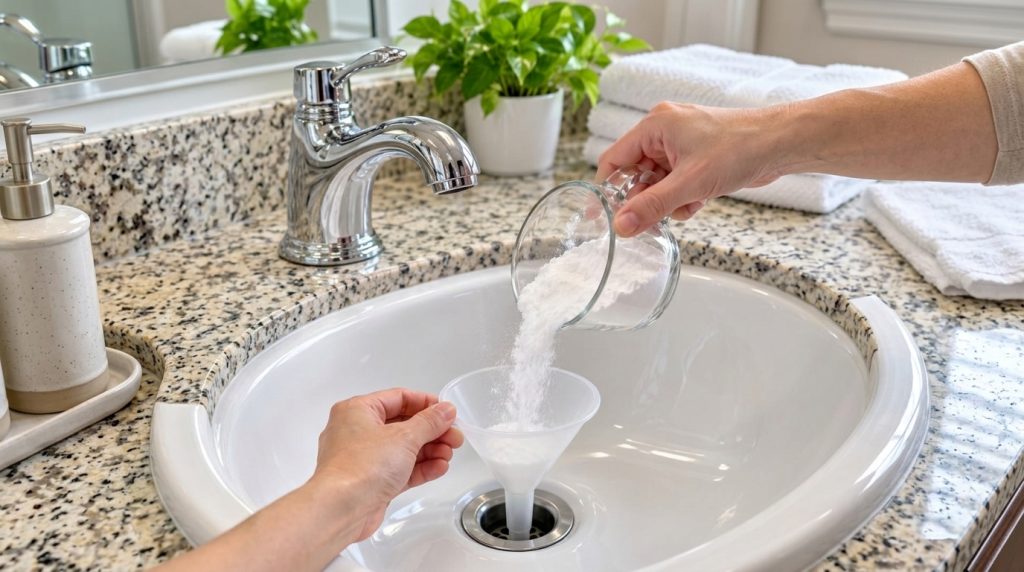
Pouring baking soda into your drain is the first step in this natural cleaning process. Pour 1 cup of baking soda directly into the clogged or slow drain. If you have a stubborn clog, you can try using 1.5 cups. A funnel can be very helpful here to ensure all the baking soda goes down the drain and doesn’t sit in the sink basin.
-
Follow with Vinegar (1 minute)
Carefully pour 1 cup of white vinegar down the drain after the baking soda. You’ll immediately notice a fizzing reaction, which is the baking soda and vinegar creating a mild acid that helps break down build-up.
-
Cover and Wait (30-60 minutes)
Quickly cover the drain with a rubber stopper or a wet rag to contain the chemical reaction within the pipes. Let it sit for at least 30 minutes, or up to an hour for more stubborn clogs. The longer it sits, the more time the reaction has to work on breaking down the grime.
-
Flush with Hot Water (5 minutes)
After the waiting period, remove the stopper. Slowly pour 4-8 cups of very hot (but not boiling) water down the drain. This will help flush away the loosened debris and any remaining baking soda and vinegar. Repeat this step if the drain is still running slowly.
-
Repeat if Necessary
For persistent clogs, you may need to repeat the entire process once or twice. If after two or three attempts the drain is still not clear, you might have a more serious blockage that requires professional attention.
Best Uses
- Bathroom Sinks: Excellent for tackling hair, soap scum, and toothpaste build-up.
- Bathtub Drains: Effective against hair and soap residue that often leads to slow drainage in tubs.
- Kitchen Sinks (Non-Disposal Side): Can help with minor grease and food particle clogs, but be cautious if you have a garbage disposal (see safety notes).
- Odor Removal: The fizzing action and subsequent flush helps neutralize unpleasant smells emanating from drains.
- Routine Maintenance: Use this method monthly or bi-monthly to prevent clogs from forming in the first place.
Surface Limitations: This method is generally safe for most plumbing materials including PVC, copper, and cast iron pipes. However, avoid using boiling water directly from a stovetop as it can soften or damage PVC pipes. Very old, corroded pipes might be sensitive to any chemical reaction, so consult a plumber if you have concerns about antique plumbing.
Safety Notes
- Ventilation is Key: Ensure good ventilation in the area when performing this cleaning, as the vinegar can produce strong fumes.
- Never Mix Chemicals: Absolutely never mix baking soda and vinegar with commercial drain cleaners, bleach, or ammonia. The combination can produce dangerous and toxic fumes.
- Eye Protection: While generally safe, consider wearing eye protection to prevent accidental splashes, especially if you’re dealing with a forceful reaction.
- Skin Protection: Wear gloves if you have sensitive skin, as prolonged contact with vinegar can cause irritation.
- Keep Away from Children and Pets: Always ensure children and pets are not present in the cleaning area and cannot access the ingredients or the treated drain.
- Test on Hidden Area: While this solution is mild, if you are unsure about its effect on a particular drain material, test a small, inconspicuous area first, although this is rarely an issue for drains themselves.
Expert Tips
- Consistency is Key: For best results, incorporate this DIY drain cleaning into your regular home maintenance schedule, perhaps once a month, to prevent major clogs from forming.
- Use Hot, Not Boiling Water: Very hot tap water or water heated in a kettle is ideal. Directly boiling water from a stovetop can potentially damage PVC pipes.
- Add Salt for Tougher Clogs: For very stubborn clogs, you can try adding 1/2 cup of coarse salt with the baking soda before adding the vinegar. The abrasive texture of the salt can help scour the pipe walls.
- Address Hair Clogs First: For bathroom drains, physically removing as much hair as possible with a drain snake or even tweezers before applying the baking soda and vinegar will significantly improve the solution’s effectiveness.
- Don’t Use on Full Blockages: This method is best for slow drains or minor clogs. A completely blocked drain will prevent the solution from reaching the clog effectively and may require a plunger or professional help.
- Consider Essential Oils for Scent: While the vinegar smell dissipates quickly, you can add a few drops of lemon or tea tree essential oil to the baking soda for a fresh scent boost, but this is purely for aroma and doesn’t enhance cleaning power.
Storage Instructions
Since the baking soda and vinegar drain cleaner is mixed fresh for each use, there’s no prepared solution to store. Instead, focus on properly storing the individual ingredients:
- Baking Soda: Store baking soda in its original box or an airtight container in a cool, dry place, away from moisture. It generally has a long shelf life, but it can lose its effectiveness over time, especially if exposed to humidity.
- White Vinegar: Store white vinegar in its original sealed bottle or an airtight glass container in a cool, dark pantry. Vinegar has an almost indefinite shelf life due to its acidity.
- Signs of Spoilage: Baking soda might clump or lose its fizzing power if it absorbs too much moisture. Vinegar might develop cloudiness or sediment, though it’s usually still safe to use for cleaning. Replace ingredients if they seem off or lose their characteristic reactions.
Frequently Asked Questions
Q: Can I use this on a garbage disposal?
A: Use with caution. While baking soda and vinegar are generally safe, avoid pouring large amounts of baking soda down a disposal if it’s already struggling, as it can temporarily thicken grime. For disposals, ice cubes, rock salt, and lemon peels are often better for cleaning and sharpening blades.
Q: How often should I clean my drains this way?
A: For maintenance, once a month is a good routine. For slow drains, you can do it weekly until the issue resolves, then switch to monthly prevention.
Q: Is this method safe for septic systems?
A: Yes, baking soda and vinegar are biodegradable and won’t harm your septic system or its beneficial bacteria, unlike many harsh chemical drain cleaners.
Q: What if the drain is still clogged after repeating the process?
A: If after 2-3 attempts the drain remains clogged, it likely indicates a more significant blockage (e.g., a foreign object, tree roots, or a complete collapse) that requires a plumber’s intervention.
Q: Can I use apple cider vinegar instead of white vinegar?
A: While apple cider vinegar has some of the same acidic properties, white vinegar is more acidic and thus more effective for cleaning. It’s also typically much cheaper.
Q: Does this method work on all types of clogs?
A: It works best on organic clogs like hair, soap scum, grease, and food particles. It’s not effective against hard objects, mineral deposits, or severe root intrusions.
Conclusion
Keeping your drains clear and odor-free doesn’t require harsh chemicals or expensive solutions. With just two simple household ingredients – baking soda and white vinegar – you can effectively tackle minor clogs, eliminate unpleasant smells, and maintain the health of your plumbing system.
This DIY natural drain cleaner is a testament to the power of simple, eco-friendly cleaning methods. It’s easy to make, safe for most pipes, and kind to your wallet and the environment. So, the next time you notice a slow drain, give this natural solution a try. You’ll be amazed at how effective it is!
Happy cleaning!