Welcome, fellow garden lovers! Pruning is an essential chore that keeps our plants healthy, productive, and looking their best. But let’s be honest, walking into a garden store and facing a wall of different pruning tools can feel a bit overwhelming, right? Bypass, anvil, loppers, snips—which one do you actually need?
Fear not! This ultimate guide is here to demystify the world of pruning tools. We’ll break down the different types, explain what they’re best used for, and share tips to help you make the right choice for your garden. Get ready to prune with confidence!
Why Pruning is So Important for Your Garden
Before we dive into the tools, let’s quickly remember why pruning is such a vital practice:
- Promotes Plant Health: Removing dead, diseased, or damaged branches prevents the spread of issues and encourages new, healthy growth.
- Enhances Flowering and Fruiting: Strategic pruning can direct a plant’s energy towards producing more blooms and a better harvest.
- Improves Air Circulation: Thinning out dense areas helps air flow, reducing the risk of fungal diseases.
- Maintains Shape and Size: Keep your plants tidy and within their desired space, perfect for garden design.
- Rejuvenates Older Plants: Sometimes, a good prune is all an older, overgrown plant needs to spring back to life.
Choosing the Right Pruning Tool for Every Task
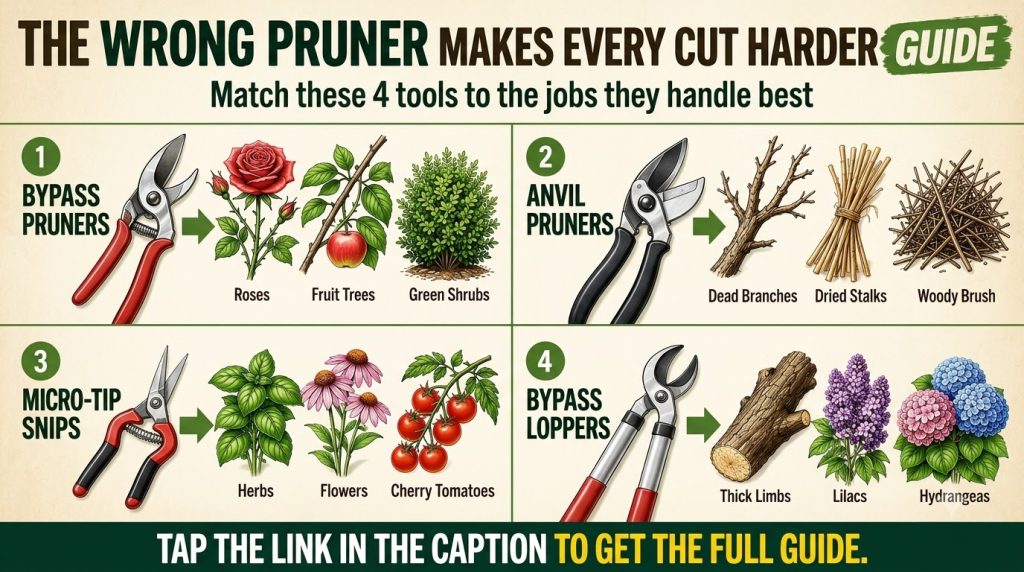
Every cut counts, and the right tool ensures a clean cut, which promotes faster healing for your plants. Here are the four essential types of pruners you should know:
1. Bypass Pruners
Think of bypass pruners as your garden’s scissors. They have two blades that bypass each other, creating a clean, scissor-like cut.
- Best For: Live stems, roses, fruit trees, shrubs, and any green, delicate growth up to about 3/4 inch in thickness.
- Why We Love Them: They make precise, clean cuts that minimize damage to plant tissue, promoting quick healing. This is crucial for maintaining plant health and preventing disease.
- When to Use: Ideal for deadheading flowers, shaping small shrubs, or cutting stems for arrangements.
2. Anvil Pruners
Anvil pruners feature a sharp blade that closes against a flat ‘anvil’ or plate. Unlike bypass pruners, they don’t have two cutting edges.
- Best For: Dead, woody branches, tough stems, and dried-out material.
- Why We Love Them: They provide more crushing power, making them excellent for removing tough, dead wood where a clean cut isn’t as critical for live tissue healing.
- When to Use: Clearing away old, woody growth from perennials, cutting back dead rose canes, or breaking down garden waste.
3. Micro-tip Snips (or Precision Snips)
These are the surgical tools of the gardening world! Micro-tip snips are small, lightweight, and incredibly precise.
- Best For: Herbs, delicate flowers, intricate deadheading, harvesting small fruits or vegetables, and precise shaping.
- Why We Love Them: Their fine tips allow for incredible accuracy, making it easy to reach tight spaces without damaging surrounding growth. Perfect for those delicate tasks.
- When to Use: Harvesting basil, snipping individual blooms, or grooming small houseplants.
4. Bypass Loppers
Loppers are like oversized bypass pruners, designed for two-handed operation and featuring long handles that provide extra leverage.
- Best For: Thicker live branches, usually up to 1.5 to 2 inches in diameter, on shrubs, small trees, and woody perennials.
- Why We Love Them: The long handles give you the power to make clean cuts through branches that hand pruners can’t handle. The bypass action ensures good healing for live wood.
- When to Use: Cutting back overgrown branches, tackling larger shrub maintenance, or pruning young trees.
General Pruning Tips for Success
- Know Your Plant: Research the specific pruning needs of your plants. Some bloom on old wood, others on new.
- Make Clean Cuts: Always use sharp tools to ensure clean cuts. Ragged cuts can invite disease.
- Cut at an Angle: When pruning branches, cut at a slight angle just above a bud or branch union to encourage water run-off and new growth in the desired direction.
- Sanitize Your Tools: Clean your pruners with rubbing alcohol or a bleach solution between plants, especially if dealing with diseased material, to prevent spreading pathogens.
- Safety First: Always wear appropriate gardening gloves and eye protection.
Maintain Your Tools, Prolong Their Life
Just like any good garden tool, your pruners need a little TLC to perform their best:
- Clean After Each Use: Remove sap, dirt, and debris. A stiff brush and warm soapy water work wonders.
- Sharpen Regularly: Dull blades tear rather than cut. Invest in a sharpening stone or take them to a professional.
- Oil Moving Parts: A few drops of lubricating oil (like WD-40 or mineral oil) on the pivot point will keep them moving smoothly and prevent rust.
- Store Properly: Keep your tools dry and protected from the elements to prevent rust and corrosion.
Ready to Prune Like a Pro?
With this guide, you’re now equipped with the knowledge to choose the perfect pruning tool for any job in your garden. Remember, the right tool not only makes the task easier but also ensures your plants receive the best care, leading to a healthier, more vibrant garden. So grab your newly identified pruners, step into your garden, and start shaping your green paradise with confidence! Happy gardening!