Potatoes have long been a versatile and beloved staple in diets worldwide. From comforting mashed potatoes to crispy roasted wedges, this humble tuber can transform into countless dishes. But with so many ways to prepare them, have you ever stopped to consider how each cooking method impacts their nutritional value? Understanding the differences between raw, baked, and fried potatoes can empower you to make more informed choices for your health and wellness journey.
Unpeeling Potato Nutrition: Raw, Baked, and Fried Comparisons!
While often categorized as a simple carb, potatoes, particularly with their skin, offer a good source of vitamins, minerals, and fiber. However, the way we prepare them dramatically alters their nutritional profile. Let’s dig into the details to see how.
Raw Potatoes: The Undisturbed Spud
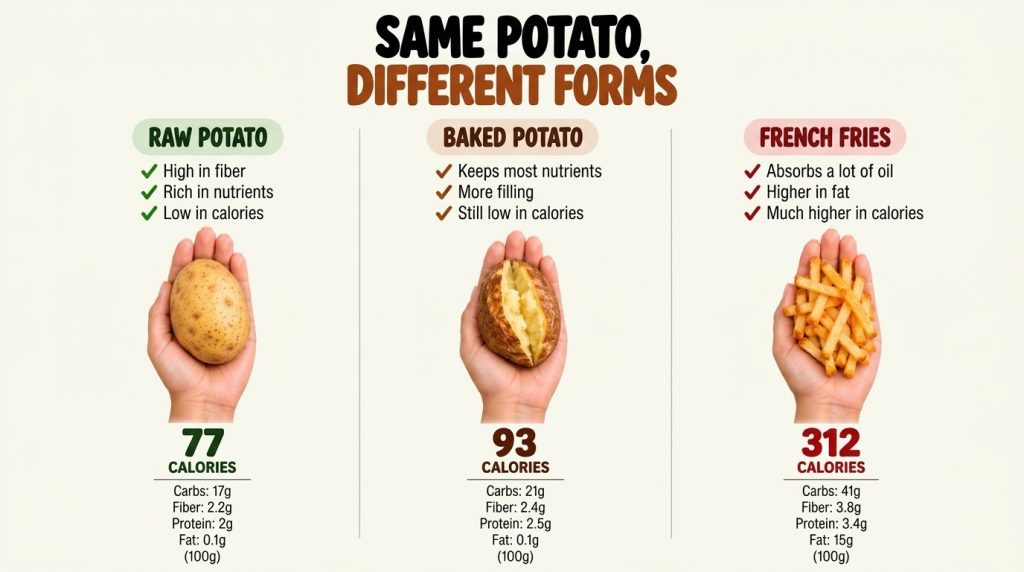
Though rarely consumed raw due to their starchy texture and a slightly bitter taste, raw potatoes contain a high concentration of Vitamin C, B vitamins, potassium, and resistant starch. Resistant starch acts like soluble fiber, potentially supporting digestive health and blood sugar management. However, raw potatoes also contain solanine, a natural glycoalkaloid, which can be toxic in very large amounts. For most people, cooking potatoes is the preferred and safer method of consumption.
Baked Potatoes: A Wholesome Choice
Baking is often considered one of the healthiest ways to prepare a potato. When baked, especially with the skin on, potatoes retain a significant amount of their fiber, potassium, and Vitamin C. A medium-sized baked potato (about 173g) can provide around 4 grams of fiber and over 25% of your daily Vitamin C needs. The key to keeping a baked potato healthy lies in its toppings. Opt for healthy choices like Greek yogurt, chives, salsa, or steamed vegetables instead of high-fat butter, cheese, or sour cream to maximize its benefits.
French Fries: The Indulgent Side
French fries are arguably one of the most popular potato preparations globally, but they also represent the most significant nutritional departure from their raw or baked counterparts. Frying potatoes in oil, especially at high temperatures, dramatically increases their calorie and fat content. This process can also lead to the formation of unhealthy compounds like trans fats (if hydrogenated oils are used) and acrylamide, a potential carcinogen, particularly when potatoes are cooked to a very crispy, brown state.
A typical serving of french fries often contains significantly more calories, fat, and sodium compared to a baked potato, while offering less fiber per gram due due to the removal of skin and the frying process. This makes french fries a food to enjoy in moderation as part of a balanced diet.
Side-by-Side: A Nutritional Showdown
To summarize the key differences:
- Calories and Fat: French fries typically have the highest calorie and fat content due to the oil absorption during frying. Baked potatoes, when prepared simply, are much lower in fat and calories. Raw potatoes are naturally low in both.
- Fiber: Baked potatoes with skin retain the most fiber, which is crucial for digestive health and satiety. French fries often lose some fiber content during processing and frying.
- Nutrient Density: Baked potatoes offer a good balance of vitamins and minerals. While raw potatoes are nutrient-dense, their consumption is limited. The nutritional value of french fries is often diminished by the cooking method and added ingredients.
- Sodium: French fries are typically heavily salted, contributing to a higher sodium intake compared to baked or raw potatoes.
Making Healthier Potato Choices
Enjoying potatoes doesn’t have to mean sacrificing your health goals. Here are some tips for incorporating them into a healthy lifestyle:
- Bake or Roast: Choose baking, roasting, or boiling as your primary cooking methods. They require less added fat.
- Keep the Skin On: The potato skin is packed with fiber and nutrients. Wash it thoroughly and eat it!
- Watch Your Toppings: Be mindful of what you add to your potatoes. Fresh herbs, spices, Greek yogurt, or a drizzle of olive oil are healthier choices than heavy creams or cheeses.
- Portion Control: Even healthy foods can contribute to weight gain if consumed in excess. Pay attention to serving sizes.
- Air Fry for Crispy Texture: If you crave crispy fries, consider an air fryer. It can achieve a similar texture with significantly less oil.
- Pair with Produce: Always balance your potato dishes with plenty of non-starchy vegetables and lean protein for a well-rounded meal.
The Bottom Line
Potatoes can absolutely be a part of a healthy and balanced diet. The main takeaway is that the preparation method profoundly impacts their nutritional profile. While indulging in french fries occasionally is fine, opting for baked or roasted potatoes more frequently, and being mindful of your toppings, can help you harness the full nutritional power of this versatile vegetable. Remember, balance and moderation are key to healthy eating.
Disclaimer: This article is for informational purposes only and does not constitute medical advice. Always consult with a qualified healthcare professional for any health concerns or before making any changes to your diet or health regimen.