Home Rescue Daily: Tackle Sofa Spills with This Gentle DIY Hack
There’s nothing quite like the panic that sets in when you witness a fresh liquid spill blooming across your beloved fabric sofa. Whether it’s coffee, juice, or a clumsy moment with a drink, a swift and effective response is key to preventing a permanent stain. But before you reach for harsh chemicals that could damage your upholstery, consider a gentle, homemade solution using everyday ingredients you likely already have on hand. This DIY hack is designed to help lift those pesky stains, leaving your furniture looking clean and fresh without the need for aggressive cleaners.
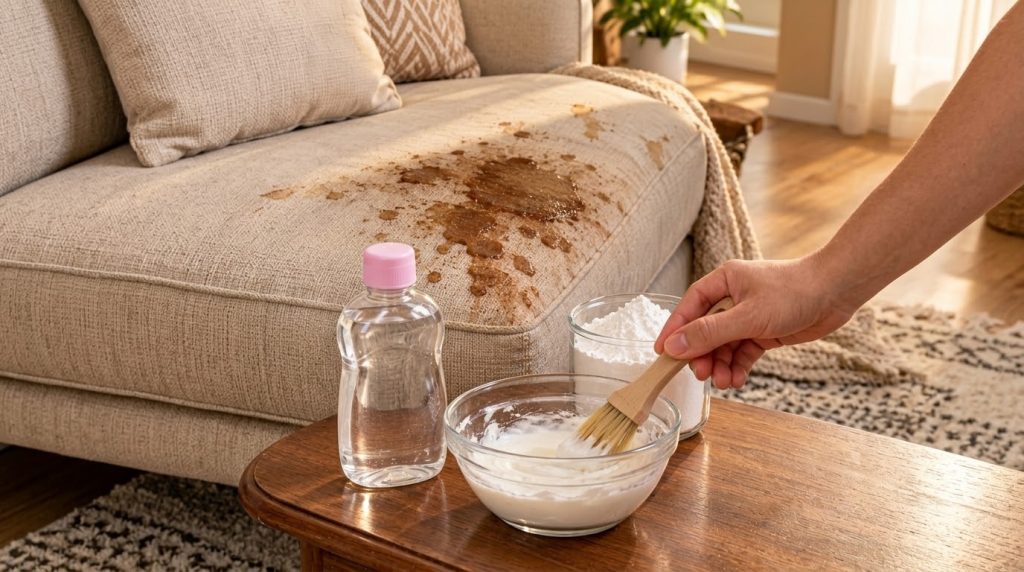
The Problem: Pesky Liquid Spills on Fabric Upholstery
Fabric sofas are cozy and inviting, but their absorbent nature makes them prone to soaking up liquid spills quickly. The faster a liquid penetrates the fibers, the harder it can be to remove, often leaving behind a noticeable mark. Many commercial stain removers can be harsh, potentially altering the fabric’s color, texture, or even leaving a chemical residue. Our goal is to lift the spill gently, preserving your sofa’s integrity and extending its lifespan.
The DIY Solution: Baby Oil and Cornstarch Paste
This simple yet effective hack leverages the absorbent power of cornstarch combined with the gentle conditioning properties of baby oil to tackle fresh liquid spills. It creates a mild paste that draws out moisture and helps dislodge the spill from the fabric fibers, all without introducing harsh chemicals.
Why This Works
- Cornstarch: This kitchen staple is an incredibly effective absorbent. When applied to a spill, it acts like a sponge, drawing out moisture and encapsulated particles from the fabric. As it dries, it binds to the spill, making it easier to remove.
- Baby Oil: While it might seem counterintuitive to use oil on a spill, baby oil in this context serves a few purposes. It helps to create a smooth, workable paste with the cornstarch, allowing for even application. More importantly, it can help gently lubricate the fabric fibers, aiding the cornstarch in encapsulating and lifting the spill without aggressive scrubbing. It also ensures the paste doesn’t dry out too rigidly, preventing potential damage to delicate fabrics when brushed away.
What You’ll Need
Ingredients:
- 1 tablespoon Cornstarch
- 1 teaspoon Baby Oil
Tools:
- Small bowl for mixing
- Spoon or small brush for stirring and applying
- Soft brush (like a toothbrush or an old soft-bristled cleaning brush)
- Vacuum cleaner with an upholstery attachment
- Clean, dry cloth
Step-by-Step Instructions: Tackling the Sofa Spill
Always perform a patch test on an inconspicuous area of your sofa first to ensure there’s no discoloration or adverse reaction to the mixture.
- Blot the Spill (Immediately!): As soon as a spill occurs, grab a clean, dry cloth or paper towel and blot the excess liquid. Do NOT rub, as this can push the spill deeper into the fibers. Continue blotting until no more liquid transfers to the cloth.
- Prepare the Paste: In your small bowl, combine 1 tablespoon of cornstarch with 1 teaspoon of baby oil. Stir well with a spoon or small brush until it forms a thick, consistent paste. Adjust the ratio slightly if needed to achieve a spreadable, non-drippy consistency.
- Apply the Paste: Gently dab a generous amount of the cornstarch and baby oil paste onto the affected area. Ensure the spill is completely covered with a layer of the paste. Avoid rubbing vigorously, as the goal is for the paste to draw the spill out.
- Let it Work Its Magic: Allow the paste to sit on the spill for at least 30 minutes, or longer if the spill was significant. For older or tougher marks, you might leave it for a few hours. The cornstarch needs time to fully absorb the moisture and bond with the spill.
- Brush Away the Dried Paste: Once the paste has completely dried and appears crumbly, use a soft brush to gently brush away the dried mixture. You should see the dried paste, along with the absorbed spill, lifting from the fabric.
- Vacuum the Residue: Use your vacuum cleaner with an upholstery attachment to thoroughly vacuum the area. This will remove any remaining cornstarch residue and ensure the fabric is clean and free of particles.
- Inspect and Repeat (If Necessary): Check the area. If a faint mark remains, you can repeat the process. For very stubborn marks, a second or third application might be needed.
Tips for Success and Safety Notes
- Act Fast: The key to successful stain removal is speed. The sooner you treat a fresh spill, the higher your chances of complete removal.
- Test First: Always, always test any cleaning solution on an inconspicuous area of your sofa (e.g., the back, under a cushion, or a hidden seam) to ensure it doesn’t cause discoloration or damage to your specific fabric.
- Don’t Over-Wet: Avoid saturating the fabric. Too much liquid can lead to water rings or mold growth within the cushion.
- Ventilate: Ensure good ventilation in the room, especially if you’re dealing with a larger spill, to aid in drying.
- Avoid Harsh Rubbing: Aggressive rubbing can spread the spill, damage fabric fibers, or embed the stain deeper. Gentle blotting and dabbing are always preferred.
- For Grease Stains: While this method is excellent for liquid spills, cornstarch is also a fantastic absorbent for fresh grease stains. For those, you might use cornstarch on its own first, then follow up if necessary.
This gentle, DIY solution using baby oil and cornstarch is a practical and budget-friendly way to tackle those unexpected fabric sofa spills. Give it a try the next time disaster strikes, and keep your furniture looking its best without resorting to harsh chemicals!
Don’t forget to tell us how this simple hack works for you!