Imagine a garden bursting with color and life, even as summer temperatures soar and rainfall is scarce. While it might seem like a dream, it’s an entirely achievable reality! Embracing low-water, or drought-tolerant, plants not only conserves a precious resource but also helps you create a resilient, vibrant landscape that thrives with less fuss. Whether you live in a region prone to dry spells or simply want to reduce your water footprint, selecting the right plants is your first step toward a beautiful, sustainable garden.
This guide will introduce you to nine remarkable flowers that bring cheerful beauty to any setting, proving that a water-wise garden doesn’t mean sacrificing splendor. You’ll gain practical insights into their care, helping you cultivate a thriving outdoor space that conserves water without compromising on gorgeous blooms.
The Art of Water-Wise Gardening
The core principle behind successful low-water gardening isn’t about neglecting your plants; it’s about smart watering and proper soil preparation. Drought-tolerant plants, once established, develop deep root systems that allow them to seek out moisture further underground, making them less reliant on frequent surface watering. The key is to provide thorough, infrequent watering during their establishment period, encouraging those deep roots. Excellent drainage is also paramount, as even drought-tolerant plants can suffer from ‘wet feet’ (roots sitting in soggy soil).
Key Principles:
- Deep, Infrequent Watering: Water deeply to encourage roots to grow down, then allow the soil to dry out between waterings.
- Amend Soil for Drainage: Incorporate organic matter like compost to improve soil structure and drainage, especially in heavy clay soils.
- Mulch Generously: A 2-4 inch layer of organic mulch helps retain soil moisture, suppress weeds, and regulate soil temperature.
- Proper Placement: Group plants with similar water needs together to optimize watering efficiency.
Meet Your Drought-Tolerant Allies
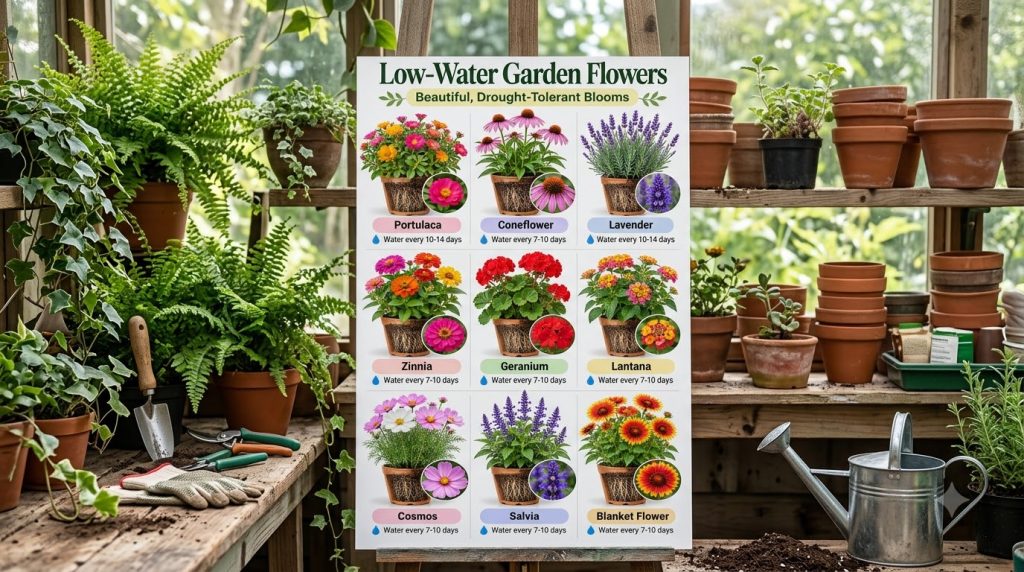
Here are nine fantastic flowers that will bring beauty and resilience to your low-water garden:
Lantana (Lantana camara)
Lantana is a true workhorse in the garden, admired for its continuous clusters of vibrant, multi-colored blooms. These tough plants are magnets for butterflies and hummingbirds.
- Hardiness: Perennial in USDA Zones 9-11; typically grown as an annual or houseplant in cooler climates.
- Plant Type: Shrubby perennial or annual.
- Exposure: Full sun (at least 6 hours direct sunlight).
- Height: 1-6 feet, depending on cultivar and growing conditions.
- Spread: 1-3 feet.
- Care Tip: Prune regularly to maintain shape and encourage more blooms. Be aware that some varieties can be invasive in warm, frost-free regions.
Coneflower (Echinacea purpurea)
A quintessential prairie plant, Coneflower is beloved for its iconic daisy-like flowers with prominent central cones. It’s incredibly resilient and a favorite of pollinators and seed-eating birds.
- Hardiness: Perennial in USDA Zones 3-9.
- Plant Type: Perennial.
- Exposure: Full sun to partial shade (prefers full sun).
- Height: 2-4 feet.
- Spread: 1.5-2 feet.
- Care Tip: Deadhead spent blooms to encourage reblooming, or leave some for birds in the fall.
Lavender (Lavandula angustifolia)
Known for its soothing fragrance and beautiful purple spikes, English Lavender is a classic choice for low-water gardens. It thrives in sunny, dry conditions and is perfect for culinary uses, aromatherapy, and attracting bees.
- Hardiness: Perennial in USDA Zones 5-9 (varies by species).
- Plant Type: Herbaceous perennial.
- Exposure: Full sun.
- Height: 1.5-2 feet.
- Spread: 2-3 feet.
- Care Tip: Plant in well-draining, even sandy, soil. Avoid heavy clay and overwatering, which can lead to root rot.
Yarrow (Achillea millefolium)
Yarrow is an adaptable perennial with flattened clusters of small flowers, often white, yellow, pink, or red. It’s tough, deer-resistant, and provides excellent habitat for beneficial insects.
- Hardiness: Perennial in USDA Zones 3-9.
- Plant Type: Herbaceous perennial.
- Exposure: Full sun.
- Height: 2-3 feet.
- Spread: 1-2 feet.
- Care Tip: Divide clumps every few years to maintain vigor and prevent overspreading.
Sedum (Hylotelephium spectabile, formerly Sedum spectabile)
Often called “Stonecrop,” Sedum is a succulent perennial celebrated for its fleshy leaves and late-season blooms that attract bees and butterflies when many other plants are fading.
- Hardiness: Perennial in USDA Zones 3-9.
- Plant Type: Succulent perennial.
- Exposure: Full sun.
- Height: 1.5-2 feet.
- Spread: 1.5-2 feet.
- Care Tip: Ensure extremely well-draining soil; wet conditions are its biggest enemy.
Gaillardia / Blanket Flower (Gaillardia pulchella or x grandiflora)
Blanket Flower delivers a burst of cheerful, daisy-like blooms in shades of red, orange, and yellow, often with contrasting tips. These long-flowering perennials provide continuous color from early summer until frost.
- Hardiness: Perennial in USDA Zones 3-10 (often short-lived but reseeds readily).
- Plant Type: Perennial.
- Exposure: Full sun.
- Height: 1-3 feet.
- Spread: 1-2 feet.
- Care Tip: Deadhead regularly to encourage more blooms and prolong the flowering season.
California Poppy (Eschscholzia californica)
The iconic state flower of California, this poppy offers delicate, cup-shaped blooms in vibrant oranges and yellows. It thrives on neglect and can self-sow vigorously, creating a beautiful meadow effect.
- Hardiness: Annual; perennial in USDA Zones 8-10.
- Plant Type: Annual (often reseeds).
- Exposure: Full sun.
- Height: 1-1.5 feet.
- Spread: 0.5-1 foot.
- Care Tip: Sow seeds directly in early spring or fall; they dislike transplanting.
Coreopsis (Coreopsis lanceolata)
Also known as “Tickseed,” Coreopsis is a cheerful, long-blooming perennial with bright yellow, daisy-like flowers. It’s incredibly reliable, low-maintenance, and attracts beneficial pollinators to your garden.
- Hardiness: Perennial in USDA Zones 4-9.
- Plant Type: Perennial.
- Exposure: Full sun.
- Height: 1.5-2 feet.
- Spread: 1-1.5 feet.
- Care Tip: Shear back spent flower stalks by about one-third after the first flush of blooms to encourage a second wave.
Portulaca / Moss Rose (Portulaca grandiflora)
Portulaca is a brilliant annual for hot, dry spots, featuring succulent leaves and jewel-toned flowers that resemble miniature roses. It’s perfect for rock gardens, containers, or spilling over edges.
- Hardiness: Annual; tender perennial in USDA Zones 10-11.
- Plant Type: Annual.
- Exposure: Full sun.
- Height: 0.5-1 foot (trailing).
- Spread: 1-2 feet.
- Care Tip: Ensure excellent drainage; these plants prefer lean, sandy soil and will rot in consistently wet conditions.
Common Mistakes to Avoid in Your Low-Water Garden
Even with drought-tolerant plants, a few missteps can hinder their success:
- Overwatering Established Plants: The most common mistake. Once established, these plants prefer deep, infrequent watering. Constantly damp soil can lead to root rot. Test the soil moisture with your finger before watering again; it should be dry several inches down.
- Poor Drainage: Heavy, compacted clay soil that holds water can suffocate roots. Amend your soil with organic compost or choose raised beds for optimal drainage.
- Inadequate Establishment Watering: While they are low-water, young plants need consistent moisture to develop robust root systems in their first season. Don’t withhold water immediately after planting.
- Planting in the Wrong Spot: Most of these plants demand full sun. Planting them in too much shade will result in leggy growth and sparse blooms.
- Forgetting About Mulch: Mulch is your best friend in a low-water garden. It dramatically reduces evaporation, keeping the soil cooler and moister.
Regional Considerations for Drought-Tolerant Gardening
While a plant’s USDA hardiness zone indicates its winter cold tolerance, “low-water” needs can still vary by region. For instance, a plant established in a cooler, humid climate (like parts of Zones 6-8 in the Northeast) might need less supplemental irrigation than the same plant in a hot, arid climate (like parts of Zones 7-9 in the Southwest) during peak summer, even with similar rainfall totals.
Always consider your local microclimate, soil type, and average rainfall. Consulting your local university extension service can provide tailored advice on soil amendments, watering schedules, and the best cultivars for your specific area. Pay attention to local frost dates for seasonal planting and allow new plants ample time to establish before expecting full drought tolerance.
Cultivate Beauty with Less Water
Building a garden filled with resilient, low-water flowers is a rewarding endeavor that benefits both you and the environment. These nine plants are just a starting point, offering a diverse palette of colors, textures, and forms that thrive with mindful care. By understanding their needs and avoiding common pitfalls, you can create a vibrant, sustainable garden that continues to bloom beautifully, even when the faucet stays off a little longer. Embrace the challenge, enjoy the beauty, and watch your garden flourish!