Potatoes are a staple food for many cultures worldwide, cherished for their versatility, affordability, and satisfying taste. From hearty baked potatoes to crispy fries, they can be prepared in countless ways. However, not all potato preparations are created equal, especially when it comes to their nutritional impact, particularly calorie content. Understanding these differences can help you make more informed choices for a balanced diet.
The Humble Potato: A Nutritional Overview
At its core, a plain potato is a nutritious vegetable. It’s a good source of vitamin C, vitamin B6, potassium, and fiber (especially with the skin on). When boiled or baked without added fats, potatoes can be a healthy component of a meal, providing energy and essential nutrients. However, the transformation from a whole potato to processed versions like chips or fries significantly alters its nutritional value.
Boiled Potatoes: The Pure Form
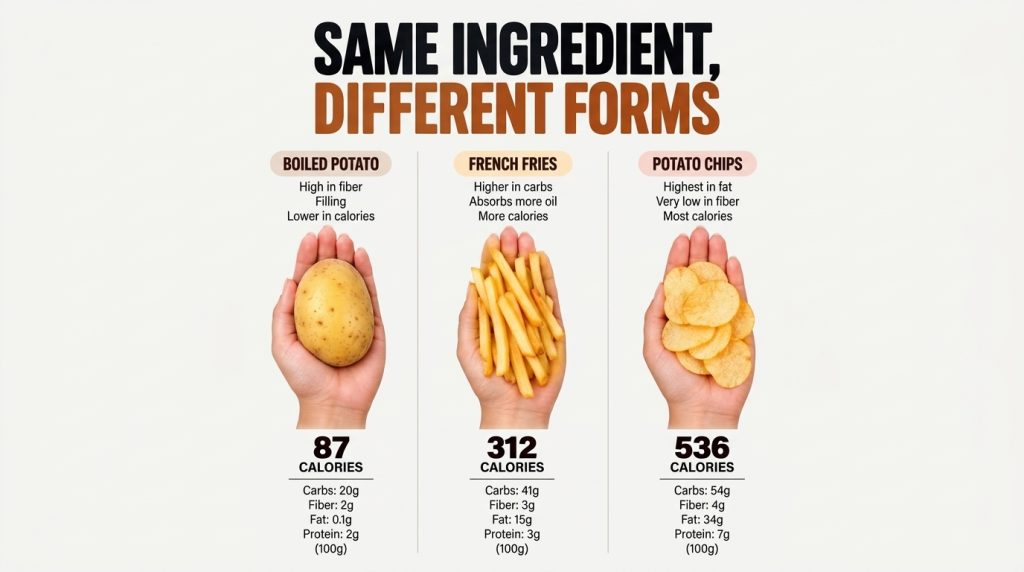
Consider a plain boiled potato. A 100-gram serving typically contains around 80-90 calories. These calories primarily come from carbohydrates, with minimal fat and a decent amount of protein and fiber. Boiled potatoes offer a good feeling of fullness and are easily digestible, making them a nutritious energy source. Their water content is high, contributing to satiety without a large caloric load.
French Fries: A Popular Indulgence
French fries are a beloved treat, but their preparation method dramatically changes their calorie count. When potatoes are cut into sticks and deep-fried, they absorb a significant amount of oil. This oil is calorie-dense, leading to a much higher caloric intake. A 100-gram serving of french fries can range from 250-350 calories, depending on the cooking oil, how long they are fried, and any added seasonings. This sharp increase is almost entirely due to the added fat content.
Potato Chips: The Calorie Champion
Potato chips take the caloric density even further. Thinly sliced potatoes are typically deep-fried until crispy, resulting in an even greater absorption of oil compared to french fries, relative to their weight. A 100-gram serving of potato chips can easily contain 500-550 calories or more. This makes them one of the most calorie-dense potato preparations. They also often contain high levels of sodium and sometimes artificial flavors, contributing to a less favorable nutritional profile compared to their raw counterparts.
Why the Drastic Difference?
The primary reason for the vast calorie difference lies in the method of cooking and the addition of fats. Frying, especially deep-frying, causes potatoes to absorb oils, which are concentrated sources of calories. A single gram of fat contains about 9 calories, while a gram of carbohydrate or protein contains about 4 calories. Therefore, even a small increase in fat content leads to a significant jump in overall calories.
Furthermore, the water content decreases substantially in fried and chipped potatoes, making the remaining product more calorically dense by weight. Think of it this way: a boiled potato is mostly water, while a chip is mostly potato solids and oil.
Making Healthier Potato Choices
Understanding these distinctions doesn’t mean you have to give up potatoes entirely. Here are some tips for enjoying potatoes in a health-conscious way:
- Opt for Baking or Boiling: When preparing potatoes at home, choose baking, boiling, steaming, or air-frying over deep-frying.
- Keep the Skin On: The skin is where much of the fiber and certain nutrients are concentrated.
- Mind Your Toppings: Be mindful of what you add to your potatoes. Butter, sour cream, and cheese can add significant calories and saturated fat. Consider lighter alternatives like herbs, spices, Greek yogurt, or a drizzle of olive oil.
- Portion Control: Even healthier potato preparations can contribute to calorie surplus if consumed in excessively large portions.
- Homemade Options: If you enjoy fries or chips, try making them at home using an air fryer or baking them with minimal oil to control ingredients and fat content.
Conclusion
Potatoes can be a nutritious and satisfying part of a healthy diet, but their caloric and nutritional value varies greatly depending on how they are prepared. While a plain boiled or baked potato offers a host of benefits, highly processed and fried versions like french fries and potato chips can quickly add a significant number of calories and unhealthy fats to your diet. By making conscious choices about preparation and portion sizes, you can continue to enjoy potatoes while supporting your wellness goals. Remember, this information is for educational purposes and is not a substitute for professional medical advice or treatment.