Did you know that some of the most beneficial nutrients for your garden might be going straight down the drain? We’re talking about the water you use to boil your everyday kitchen staples!
At Garden – L. Quyên, we’re all about smart, sustainable gardening practices that make your plants thrive without extra effort or expense. Repurposing cooking water is a fantastic way to give your garden a natural boost, reduce waste, and embrace a greener lifestyle. Let’s dive into how you can turn your kitchen discards into garden gold!
The Power of Repurposed Cooking Water
Before you pour that water down the sink, think about what it contains! As vegetables, pasta, or eggs cook, they release valuable vitamins and minerals into the water. This nutrient-rich liquid can be a gentle, natural fertilizer for your beloved plants, both indoors and out.
It’s important to remember one crucial rule: always let the water cool completely before using it on your plants. Hot water can shock and damage roots. Also, avoid using water that has salt, oils, or heavy seasonings, as these can be detrimental to plant health.
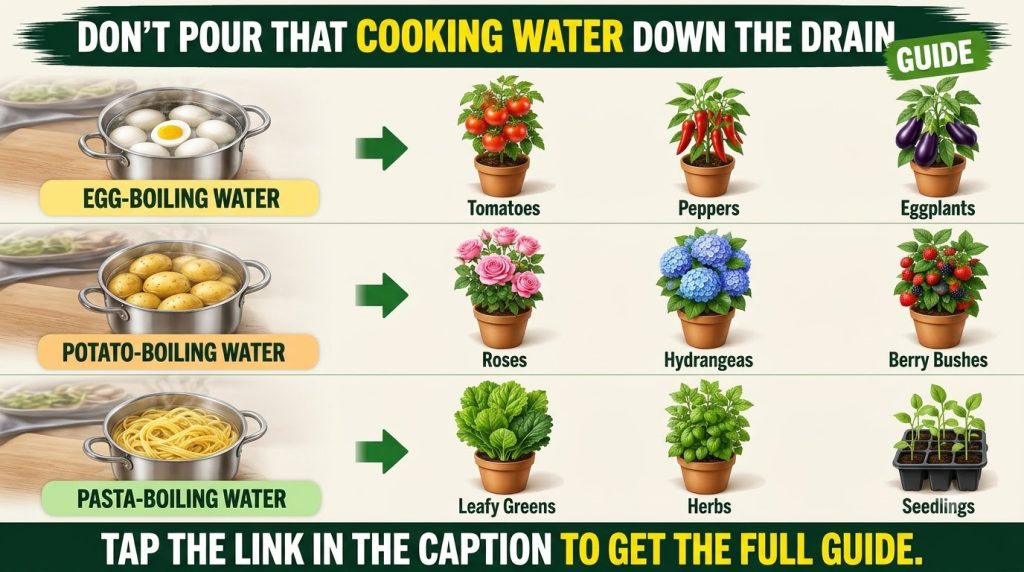
1. Egg Boiling Water: Calcium Boost for Stronger Plants
When you boil eggs, calcium from the eggshells leaches into the water. Calcium is vital for cell wall development, helping plants grow stronger and resist diseases like blossom end rot in tomatoes and peppers.
- Benefits: Provides calcium for strong cell walls, prevents blossom end rot, supports healthy growth.
- Best for:
- Vegetables: Tomatoes, peppers, eggplants, squash.
- Flowering Plants: Roses, hydrangeas (can sometimes influence blue color in acidic soil varieties).
- Fruiting Bushes: Berry bushes like blueberries (if your soil isn’t overly alkaline), strawberries.
2. Potato Boiling Water: Starch and Micronutrients for Vigorous Growth
Potato water is a hidden gem! It contains starches, potassium, and other micronutrients that can stimulate beneficial soil microbes and provide a slow-release nutrient source for your plants. The starches also act as a natural soil conditioner, improving soil structure.
- Benefits: Rich in starch and potassium, encourages beneficial soil microbes, acts as a mild fertilizer, improves soil texture.
- Best for:
- Leafy Greens: Lettuce, spinach, kale.
- Root Vegetables: Carrots, radishes (use sparingly as too much can attract pests).
- Herbs: Basil, mint, parsley.
- Seedlings: Provides a gentle start for young plants.
3. Pasta Boiling Water: Nourishment for Healthy Soil
Similar to potato water, pasta water is full of starches that can feed the microorganisms in your soil. These microbes play a critical role in breaking down organic matter and making nutrients available to your plants. It’s like giving your soil a healthy probiotic!
- Benefits: Contains beneficial starches for soil microbes, aids in nutrient absorption, supports overall soil health.
- Best for:
- Any plant that benefits from healthy soil: Most outdoor garden plants, including vegetables, flowers, and shrubs.
- Compost Piles: Can help accelerate the decomposition process in your compost bin.
- Indoor Plants: Use sparingly and observe how your specific plants react.
Tips for Using Cooking Water Wisely
- Cool it down: Always ensure the water is at room temperature before application.
- No salt or oil: Only use plain, unsalted, unoiled cooking water.
- Moderate application: Use as you would regular watering, but not every single time. Incorporate it into your routine a few times a month.
- Observe your plants: Pay attention to how your plants respond. Every garden is unique!
- Combine for a super boost: You can even combine different types of cooking water (cooled, unsalted, unoiled) for a broader spectrum of nutrients.
By incorporating these simple tips into your gardening routine, you’re not only making the most of your kitchen waste but also nurturing your plants in a natural and sustainable way. Happy gardening!