Before ‘upcycling,’ ‘slow living,’ and ‘mindful eating’ became popular buzzwords, our grandmothers were already masters of these sustainable, mindful, and healthy practices. They embodied a wisdom that wasn’t about trends, but about practical living, resourcefulness, and a deep connection to their homes and communities. It’s truly fascinating how many modern lifestyle movements are simply a rediscovery of the timeless traditions that grandmas worldwide embraced every day.
In this article, we’ll explore some of these enduring practices and see how Grandma’s ‘hacks’ can still enrich our lives today. You’ll learn how to integrate these simple, yet profound, habits into your routine for a healthier, more balanced existence. Get ready to tap into a wellspring of practical wisdom that never goes out of style!
Timeless Trends, Modern Names: Embracing Grandma’s Ways
Let’s dive into some specific examples where Grandma was truly ahead of her time, unknowingly practicing what we now label as modern movements.
Upcycling: Grandma’s Crafty Creations
Long before ‘upcycling’ meant turning old furniture into chic home decor, grandmas were master repairers and repurposers. A worn-out tablecloth became a set of cleaning rags, old clothes were patched or transformed into quilts, and glass jars found new life as storage containers. Nothing went to waste because everything had potential.
- Grandma’s approach: Reduce, reuse, repair, repurpose.
- Modern equivalent: Sustainable living, upcycling, DIY.
Slow Living: Savoring Life’s Simple Pleasures
Grandmas often lived at a different pace. Meals were prepared from scratch, often with ingredients from a garden. Sundays were for family and quiet reflection, not endless errands. There was an appreciation for the rhythm of nature and the joy found in everyday moments, a stark contrast to our fast-paced world.
- Grandma’s approach: Mindful presence, appreciation for natural rhythms, simple joys.
- Modern equivalent: Slow living, mindfulness, digital detox.
Mindful Eating: Appreciating Every Bite
Grandmas often cooked with love, and meals were sacred family time. There were no distractions from screens; conversations flowed, and food was savored. They intuitively understood the connection between food, family, and well-being, encouraging everyone to eat slowly and appreciate their meal.
- Grandma’s approach: Cooking from scratch, family meals, savoring food, giving thanks.
- Modern equivalent: Mindful eating, whole foods diet.
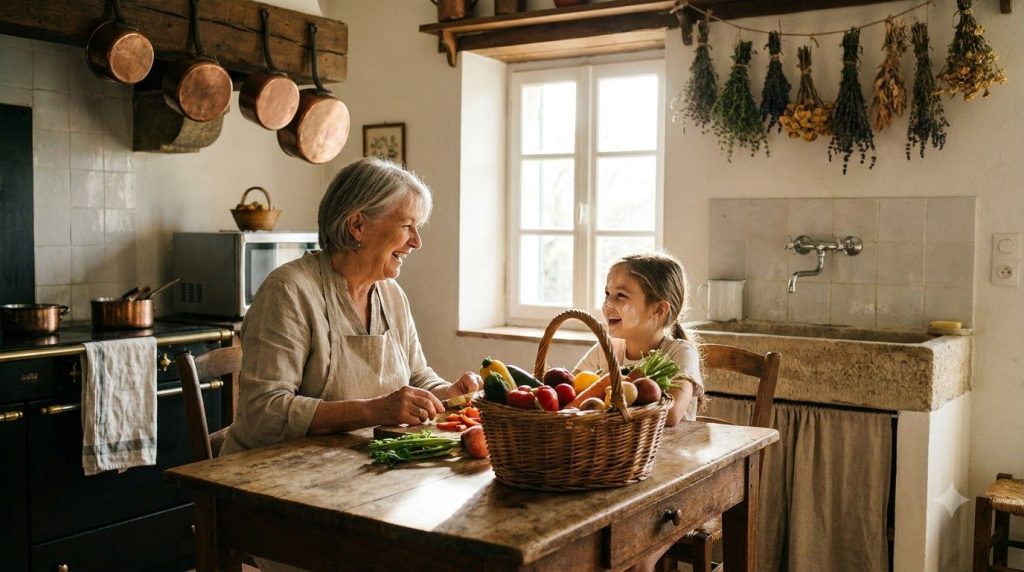
DIY & Homemade: The Art of Doing It Yourself
From homemade bread and preserves to knitted scarves and mended clothes, grandmas were the original DIY experts. This wasn’t just a hobby; it was a way of life that provided self-sufficiency, saved money, and often resulted in higher quality, healthier products than what could be bought.
- Grandma’s approach: Self-sufficiency, homemade quality, practical skills.
- Modern equivalent: DIY culture, artisan crafts, home economics revival.
Community & Connection: The Original Social Network
Grandmas understood the importance of community. Neighbors helped each other, families gathered regularly, and stories were shared. These deep social connections provided emotional support, a sense of belonging, and practical assistance that many of us long for in today’s increasingly isolated world.
- Grandma’s approach: Strong family bonds, neighborly support, community gatherings.
- Modern equivalent: Building local communities, support networks, mindful connections.
Why Grandma’s Wisdom Still Matters
The resurgence of these ‘grandma-approved’ practices isn’t just about nostalgia; it’s about seeking tangible benefits for our health, wallets, and the planet.
- Sustainability: By repairing, reusing, and creating from scratch, we reduce waste and lessen our environmental footprint.
- Well-being: Slowing down, savoring meals, and connecting with others can reduce stress and improve mental health.
- Healthier Choices: Cooking from whole ingredients means fewer processed foods and more control over what goes into our bodies.
- Cost Savings: DIY projects and mindful consumption can significantly reduce household expenses.
- Skill Building: Learning to sew, garden, or bake from scratch empowers us with valuable life skills.
Practical Tips: Embracing Grandma’s Ways Today
You don’t need to live in a farmhouse or abandon all modern conveniences to integrate Grandma’s wisdom. Here are some simple, actionable steps:
- Start a Mini-Garden: Even a few herbs on a windowsill or a tomato plant in a pot can connect you to your food source.
- Plan Your Meals: Reduce food waste and save money by planning your weekly menu and shopping list.
- Master One DIY Skill: Learn to mend a button, bake a simple bread, or make your own cleaning spray.
- Designate Tech-Free Meal Times: Enjoy meals with family or friends without screens, focusing on conversation and the food itself.
- Visit a Farmer’s Market: Support local growers and enjoy fresh, seasonal produce like Grandma did.
- Practice “Use It Up” Cooking: Get creative with leftovers and ingredients nearing their expiration date to minimize waste.
- Reconnect with Neighbors: Offer a helping hand, share a meal, or simply strike up a friendly conversation.
This content is for educational purposes only and should not be considered medical advice. Consult a qualified healthcare professional for personalized dietary recommendations.
FAQs About Timeless Habits
What is ‘slow living’ and how does it benefit me?
Slow living is a lifestyle focused on intentionally slowing down life’s pace. It emphasizes mindful practices, enjoying simple pleasures, and reducing busyness. Benefits may include reduced stress, improved mental clarity, and a deeper appreciation for life’s moments.
How can I practice mindful eating effectively?
Mindful eating involves paying full attention to your food – how it looks, smells, tastes, and feels. Eat slowly, chew thoroughly, and notice your body’s hunger and fullness cues. Avoid distractions like phones or TV during meals to truly savor the experience.
What are some easy DIY projects for beginners?
Simple DIY projects include making your own cleaning products (vinegar and baking soda), mending small holes in clothing, growing herbs, or repurposing glass jars for storage. Start small and build your skills gradually.
Why is community connection important for health?
Strong community ties are associated with better mental health, reduced feelings of loneliness, and even increased longevity. They provide a support system, a sense of belonging, and opportunities for shared experiences that enrich life.
How did grandmas typically reduce food waste?
Grandmas were experts at minimizing food waste by using every part of an ingredient (e.g., bone broth), planning meals carefully, cooking with leftovers, and preserving seasonal produce through canning or freezing. They saw value in everything.
Is upcycling truly sustainable, or just a trend?
Upcycling is inherently sustainable as it extends the life of items, reduces demand for new products, and diverts waste from landfills. While it’s a popular trend now, the practice of making new from old has always been a cornerstone of sustainable living.
How can I get my family involved in these timeless practices?
Involve your family by cooking together, starting a small garden project, having tech-free family meal times, or choosing one DIY project to tackle as a group. Make it fun and focus on the joy of creating and connecting.
Conclusion
Grandma’s wisdom offers a beautiful blueprint for a healthier, more meaningful life. By embracing practices like upcycling, slow living, mindful eating, and strong community connections, we not only honor the traditions of the past but also create a more sustainable and fulfilling future for ourselves and our families. These aren’t just old-fashioned habits; they are evergreen principles that continue to guide us toward a richer, more intentional way of living. So, what piece of Grandma’s wisdom will you rediscover today?