Give Your Gut the Love It Deserves
The saying goes, “you are what you eat,” and nowhere is this more true than when we talk about gut health. Your gut, often referred to as your “second brain,” plays a crucial role in everything from digestion and nutrient absorption to your immune system and even your mood. A thriving gut is a key component of overall wellness, and the good news is that supporting it can be delicious and straightforward!
At the heart of a healthy gut is a balanced microbiome – a complex community of trillions of bacteria and other microorganisms living in your intestines. To keep this community happy and working optimally, you need to provide it with the right fuel. This is where probiotics and prebiotics come into play.
Understanding Probiotics: The Good Guys
Probiotics are live microorganisms, often beneficial bacteria, that, when consumed in adequate amounts, can provide a health benefit to the host. Think of them as reinforcements for your gut’s existing good bacteria. They help maintain a healthy balance, especially after disruptions like illness or antibiotic use.
Key Probiotic-Rich Foods:
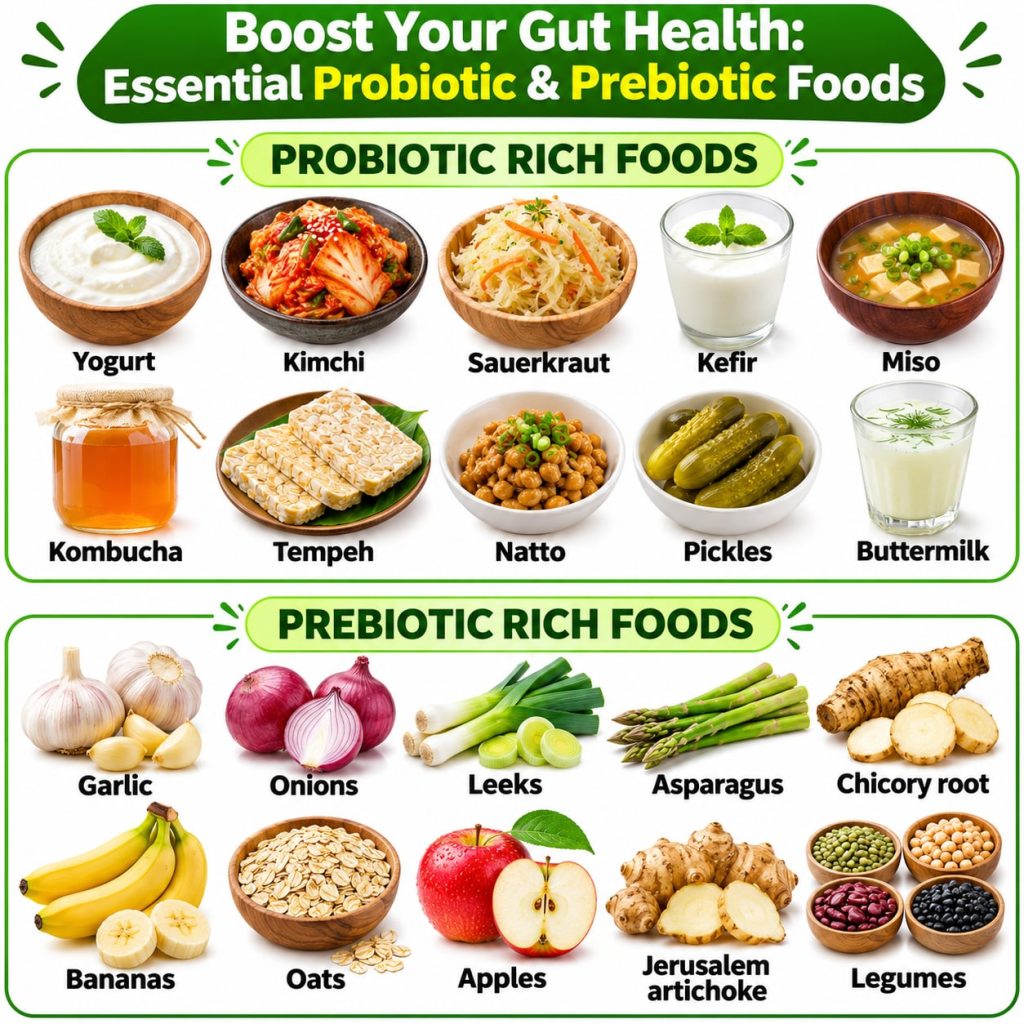
- Yogurt and Kefir: These fermented dairy products are excellent sources of probiotics. Look for labels that say “live and active cultures” to ensure you’re getting the beneficial bacteria.
- Kimchi: A traditional Korean side dish made of fermented vegetables, primarily napa cabbage, kimchi is bursting with probiotics and flavor.
- Sauerkraut: Fermented cabbage, popular in German cuisine, offers similar probiotic benefits to kimchi.
- Tempeh: A fermented soybean product, tempeh is a great plant-based source of probiotics and protein.
- Miso: A Japanese seasoning made from fermented soybeans, often used in soups and dressings.
Decoding Prebiotics: Food for Your Friends
While probiotics introduce beneficial microbes, prebiotics are non-digestible fibers that act as food for the good bacteria already living in your gut. They help these beneficial bacteria grow, thrive, and produce important short-chain fatty acids that contribute to gut health.
Essential Prebiotic-Rich Foods:
- Oats: A fantastic source of beta-glucan fiber, oats are a staple for promoting a healthy gut.
- Bananas: Especially slightly green ones, bananas contain resistant starch, a type of prebiotic fiber.
- Garlic and Onions: These aromatic vegetables contain fructans, a powerful prebiotic fiber that supports the growth of beneficial bifidobacteria.
- Asparagus: This spring vegetable is rich in inulin, another type of prebiotic fiber that helps foster a healthy gut microbiome.
- Apples: The pectin in apples can act as a prebiotic, promoting healthy gut bacteria.
The Power of Synergy: Probiotics and Prebiotics Together
For optimal gut health, it’s beneficial to consume both probiotics and prebiotics regularly. Probiotics introduce new beneficial bacteria, while prebiotics ensure that both these new arrivals and your existing good bacteria have plenty to eat. This dynamic duo creates a more robust and resilient gut microbiome, which can lead to improved digestion, enhanced immunity, and even better mood regulation.
Make Gut-Friendly Choices Every Day
Incorporating these essential probiotic and prebiotic foods into your daily diet is a simple yet effective way to nurture your gut. Whether it’s starting your day with probiotic-rich yogurt and prebiotic oats, adding kimchi to your lunch, or cooking with garlic and onions, every small choice contributes to a happier, healthier gut. Listen to your body, experiment with different foods, and discover your favorite gut-boosting combinations!