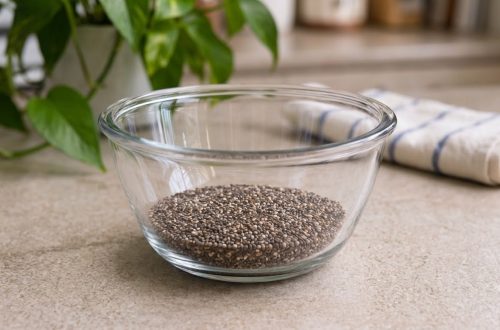
Craving a homemade bread that’s not only delicious but also packed with nutrition? Look no further than this incredible Healthy Lentil Bread recipe! This isn’t just any bread; it’s a wholesome, protein-rich loaf that brings a unique texture and earthy flavor to your table.
Perfect for sandwiches, toast, or simply enjoyed with a smear of butter, this lentil bread is surprisingly easy to make. The addition of cooked lentils not only boosts its nutritional profile, making it a fantastic source of plant-based protein and fiber, but also contributes to a wonderfully moist and satisfying crumb. Forget complicated baking – this recipe proves that healthy, homemade bread can be simple and incredibly rewarding.

Why You’ll Love This Healthy Lentil Bread Recipe
- Nutrient-Dense: Packed with plant-based protein and fiber from lentils, making it a truly wholesome choice.
- Delicious & Unique Flavor: The lentils add a subtle earthy flavor and delightful texture that’s a step above traditional bread.
- Surprisingly Easy: Despite its impressive appearance, this recipe uses straightforward bread-making techniques suitable for all skill levels.
- Versatile: Fantastic for sandwiches, toast, or as an accompaniment to soups and salads.
- Customizable: Easily adapt with your favorite herbs, seeds, or grains for different flavor profiles.
- Homemade Goodness: Enjoy the satisfaction and amazing aroma of freshly baked bread right in your own kitchen.
Ingredients for Healthy Lentil Bread
Here’s what you’ll need to bake a delicious loaf of this protein-rich bread:
- 1 cup (180 g) dried green or brown lentils, cooked and mashed
- 1 cup (240 ml) warm water (105-115°F / 40-46°C)
- 2 ¼ teaspoons (7 g) active dry yeast (one standard packet)
- 1 tablespoon (15 g) honey or maple syrup (optional, helps activate yeast)
- 1 ½ cups (180 g) whole wheat flour
- 1 ½ cups (180 g) all-purpose flour (plus more for dusting)
- 1 teaspoon (5 g) fine sea salt
- 2 tablespoons (30 ml) olive oil, plus extra for greasing
Ingredient Notes
- Lentils: Cook your lentils until very tender, then drain well and mash them thoroughly. This ensures they incorporate smoothly into the dough. Green or brown lentils work best for their texture and earthy flavor.
- Yeast: Ensure your water is the correct temperature – too hot will kill the yeast, too cold won’t activate it. If you’re unsure about your yeast, perform a “proof” test by letting it sit in the warm water with a pinch of sugar for 5-10 minutes. It should become foamy.
- Flour: The combination of whole wheat and all-purpose flour provides a good balance of nutrition and a tender crumb. You can experiment with different ratios, but all whole wheat might result in a denser loaf.
- Honey/Maple Syrup: This is food for the yeast and helps it activate. While optional, it can improve the rise, and a tiny amount won’t make the bread taste sweet.
Equipment You’ll Need
- Large mixing bowl
- Measuring cups and spoons
- Whisk
- Rubber spatula or wooden spoon
- Kitchen scale (optional, but recommended for accuracy)
- Clean kitchen towel or plastic wrap
- Loaf pan (8.5 x 4.5 inches or 9 x 5 inches)
- Wire cooling rack
How to Make Healthy Lentil Bread
Follow these steps to bake your wholesome lentil loaf:
Step 1: Prepare the Lentils
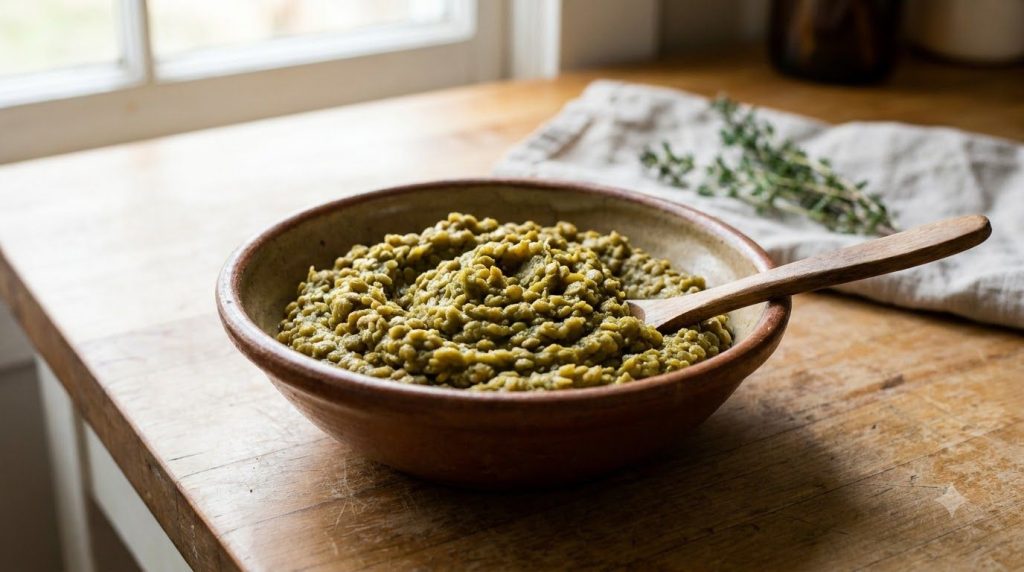
Cook the dried lentils according to package directions until very tender. Drain them thoroughly and mash them with a fork or potato masher until mostly smooth. Set aside to cool slightly.
Step 2: Activate the Yeast
In a large mixing bowl, combine the warm water, active dry yeast, and optional honey or maple syrup. Stir gently and let it sit for 5-10 minutes until the mixture becomes foamy. This indicates the yeast is active.
Step 3: Combine Dry Ingredients
In a separate medium bowl, whisk together the whole wheat flour, all-purpose flour, and salt. Make sure there are no lumps.
Step 4: Form the Dough
Add the mashed lentils and olive oil to the activated yeast mixture in the large bowl. Stir to combine. Gradually add the dry flour mixture to the wet ingredients, mixing with a wooden spoon or spatula until a shaggy dough forms. It might seem a little sticky, which is normal.
Step 5: Knead the Dough
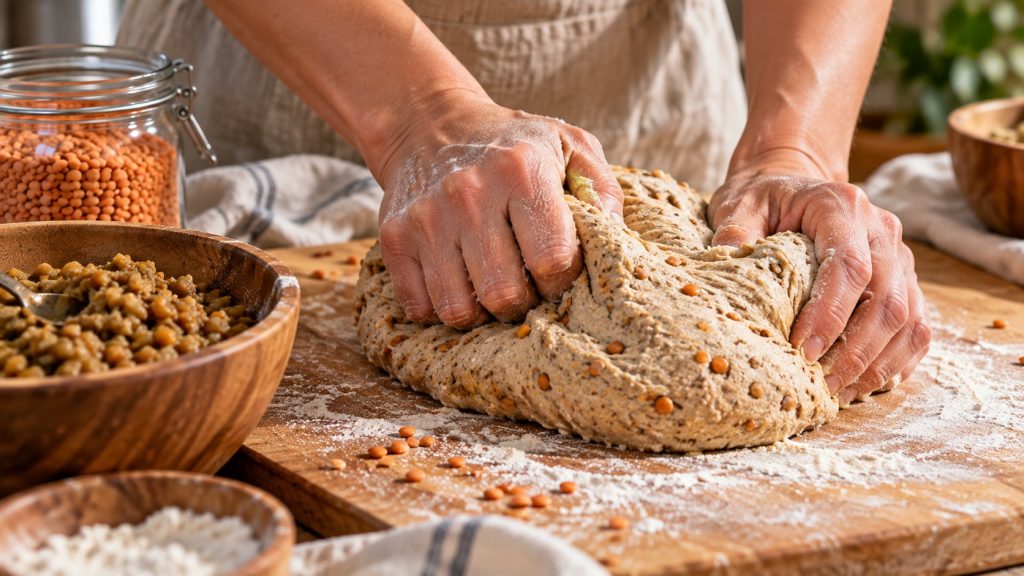
Turn the dough out onto a lightly floured surface. Knead for 8-10 minutes until the dough is smooth, elastic, and no longer excessively sticky. It should spring back slowly when poked. Add small amounts of flour only if the dough is too sticky to handle.
Step 6: First Rise (Bulk Fermentation)
Lightly grease the large mixing bowl with olive oil. Place the dough in the bowl, turning once to coat. Cover the bowl with a clean kitchen towel or plastic wrap and let it rise in a warm, draft-free place for 1 to 1.5 hours, or until it has roughly doubled in size. The exact time will depend on the temperature of your kitchen.
Step 7: Shape the Loaf
Gently punch down the risen dough to release the air. Turn it out onto a lightly floured surface. Shape the dough into a loaf that fits your loaf pan. You can do this by flattening it into a rectangle, then rolling it tightly from one short end to the other, pinching the seam closed.
Step 8: Second Rise (Proofing)
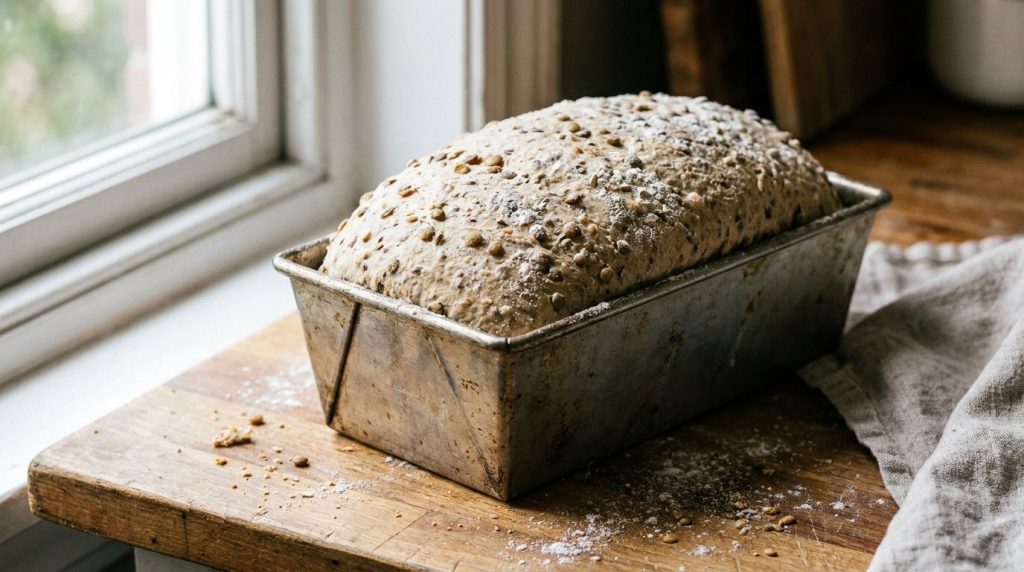
Grease your loaf pan with olive oil. Place the shaped dough seam-side down into the prepared pan. Cover loosely with a clean towel or plastic wrap and let it rise again in a warm place for another 30-45 minutes, or until it has risen about 1 inch (2.5 cm) above the rim of the pan.
Step 9: Bake the Bread
Preheat your oven to 375°F (190°C) during the last 15 minutes of the second rise. Once preheated and the bread has risen sufficiently, place the loaf pan into the oven. Bake for 30-35 minutes, or until the crust is golden brown and the internal temperature reaches 200-210°F (93-99°C) when measured with an instant-read thermometer.
Step 10: Cool
Once baked, carefully remove the bread from the oven. Let it cool in the pan for 5-10 minutes before turning it out onto a wire cooling rack to cool completely. Slicing warm bread can make it gummy, so patience is key for the best texture!
Pro Tips for the Best Results
- Mash Lentils Thoroughly: For a smoother crumb and even distribution, ensure your cooked lentils are well-mashed. Small lumps are okay, but large pieces can create air pockets.
- Don’t Rush the Rise: The rising time is crucial for flavor and texture. If your kitchen is cool, place the dough in a slightly warmer spot, like a slightly warmed (but turned off) oven, or near a sunny window.
- Check Yeast Freshness: Old or inactive yeast is a common cause of dense bread. Always proof your yeast first, especially if your packet has been open for a while.
- Avoid Over-Flouring: Too much added flour during kneading can lead to a dry, tough loaf. Resist the urge to add excess flour; a slightly sticky dough is often a good sign.
- Tap the Bottom: A perfectly baked loaf will sound hollow when tapped on the bottom. This is a good indicator, in addition to color and internal temperature.
- Cool Completely: Always let your bread cool completely on a wire rack before slicing. This allows the internal moisture to redistribute, preventing a gummy texture.
Common Mistakes to Avoid
- Using Water That’s Too Hot or Cold: This will kill or not activate the yeast, leading to a flat loaf. Stick to the recommended temperature range.
- Not Kneading Enough: Insufficient kneading won’t develop the gluten structure needed for a good rise and crumb. Your dough should be smooth and elastic.
- Over-Proofing: If dough rises for too long, it can collapse in the oven. Look for a visual cue of doubled in size, not necessarily an exact time.
- Slicing Too Soon: Patience is hard when warm bread smells amazing, but slicing too early traps steam and makes the bread dense and gummy.
Variations & Substitutions
- Add Seeds: Mix in 2-3 tablespoons of sunflower seeds, pumpkin seeds, or flax seeds to the dough for extra crunch and nutrition.
- Herbed Lentil Bread: Incorporate 1-2 tablespoons of dried herbs like rosemary, thyme, or oregano for a savory twist.
- Different Flours: While this recipe uses a mix, you can experiment with up to 50% spelt flour or even a small amount of rye flour for different flavors and textures.
- Garlic & Onion: Sauté a small amount of finely minced garlic or onion and add it with the mashed lentils for a more pungent flavor.
- Sweet Lentil Bread (Not for this recipe): For a different kind of loaf, you could adapt this concept with sweeter spices like cinnamon and a bit more sweetener, though this recipe is designed to be savory.
Serving Suggestions
This Healthy Lentil Bread is incredibly versatile:
- Toasted: A perfect base for avocado toast, eggs, or your favorite spread.
- Sandwiches: Its sturdy yet tender crumb holds up well to hearty sandwich fillings.
- Soup Companion: Serve thick slices alongside a warming bowl of minestrone, tomato soup, or a hearty lentil stew.
- With Cheese & Spreads: Enjoy with a good quality cheese, hummus, or a flavorful tapenade.
- As a Snack: A simple slice with a drizzle of olive oil and a sprinkle of sea salt makes a satisfying snack.
Storage & Reheating
- Refrigerator Storage: Store cooled lentil bread in an airtight container or bread bag at room temperature for up to 3-4 days. For longer freshness in warmer climates, you may store it in the refrigerator for up to a week, though it can dry out slightly.
- Freezer Suitability: This bread freezes beautifully! Once completely cool, slice the loaf and place slices in a freezer-safe bag or wrap the whole loaf tightly in plastic wrap, then foil. It will keep for up to 3 months.
- Reheating: Thaw frozen slices at room temperature or pop them directly into a toaster. For a whole loaf, thaw overnight and then warm in a 300°F (150°C) oven for about 10-15 minutes until warmed through.
FAQ
Can I use canned lentils for this recipe?
Yes, you can! Just be sure to drain them very well and rinse them thoroughly before mashing. Ensure they are plain, unseasoned lentils.
Is this lentil bread gluten-free?
No, this recipe uses whole wheat and all-purpose flour, which contain gluten. To make a gluten-free version, you would need to use a blend of gluten-free flours and a binder like xanthan gum, and specifically developed gluten-free lentil bread recipe.
Why didn’t my bread rise?
The most common reasons for a flat loaf are inactive yeast (check water temperature!), insufficient kneading, or over-proofing. Ensure your yeast is fresh and active.
Can I make this bread by hand?
Absolutely! The instructions provided are for hand-kneading. If you have a stand mixer with a dough hook, you can use it for 6-8 minutes on medium-low speed instead of hand kneading.
How do I know when the lentils are cooked enough?
Lentils should be very tender and easily mashed with a fork. If they are still firm, they need more cooking time.
Can I add other vegetables to the bread?
While this recipe focuses on lentils, finely grated carrots or zucchini (squeezed of excess moisture) could potentially be incorporated in small amounts for added nutrients, but this would alter the texture and moisture content of the dough.
Recipe Card
Healthy Lentil Bread
A wholesome, protein-rich homemade bread featuring tender mashed lentils, perfect for sandwiches or toast.
Ingredients:
- 1 cup (180 g) dried green or brown lentils, cooked and mashed
- 1 cup (240 ml) warm water (105-115°F / 40-46°C)
- 2 ¼ teaspoons (7 g) active dry yeast (one standard packet)
- 1 tablespoon (15 g) honey or maple syrup (optional)
- 1 ½ cups (180 g) whole wheat flour
- 1 ½ cups (180 g) all-purpose flour (plus more for dusting)
- 1 teaspoon (5 g) fine sea salt
- 2 tablespoons (30 ml) olive oil, plus extra for greasing
Instructions:
- Prepare the Lentils: Cook dried lentils until very tender. Drain thoroughly and mash until mostly smooth. Set aside.
- Activate the Yeast: In a large bowl, combine warm water, yeast, and optional honey/maple syrup. Stir and let sit 5-10 minutes until foamy.
- Combine Dry Ingredients: In a separate bowl, whisk whole wheat flour, all-purpose flour, and salt.
- Form the Dough: Add mashed lentils and 2 tbsp olive oil to the yeast mixture. Gradually add dry ingredients, mixing until a shaggy dough forms.
- Knead the Dough: Turn dough onto a lightly floured surface. Knead for 8-10 minutes until smooth and elastic.
- First Rise: Lightly oil a bowl, place dough in it, turn to coat. Cover and let rise in a warm place for 1-1.5 hours, or until doubled.
- Shape the Loaf: Gently punch down dough. On a floured surface, shape into a loaf to fit your pan.
- Second Rise: Grease loaf pan. Place shaped dough in pan. Cover loosely and let rise for 30-45 minutes, or until about 1 inch (2.5 cm) above the rim.
- Bake the Bread: Preheat oven to 375°F (190°C). Bake for 30-35 minutes, until golden brown and internal temperature is 200-210°F (93-99°C).
- Cool: Remove from oven. Cool in pan 5-10 minutes, then transfer to a wire rack to cool completely before slicing.
Notes:
Ensure lentils are very tender and well-mashed for the best texture. Resist cutting into the bread before it's fully cooled to prevent a gummy texture.
Storage:
Store at room temperature in an airtight container for 3-4 days. Freeze sliced for up to 3 months.
Nutrition:
Nutrition information is an estimate and may vary depending on the ingredients and brands used.