Eggs are a versatile and nutrient-packed staple, a go-to for quick meals and satisfying breakfasts. But knowing how to cook the perfect egg can transform a simple ingredient into a culinary delight. Whether you prefer a runny yolk, a jammy center, or a firm scramble, mastering different egg preparations opens up a world of delicious possibilities.
This guide will walk you through six classic ways to cook eggs, ensuring you achieve your desired texture and flavor every time. We’ll cover everything from the delicate Sunny Side Up to the hearty Hard Scramble, with clear instructions and essential tips.
The Art of Frying Eggs: Achieving Your Desired Yolk
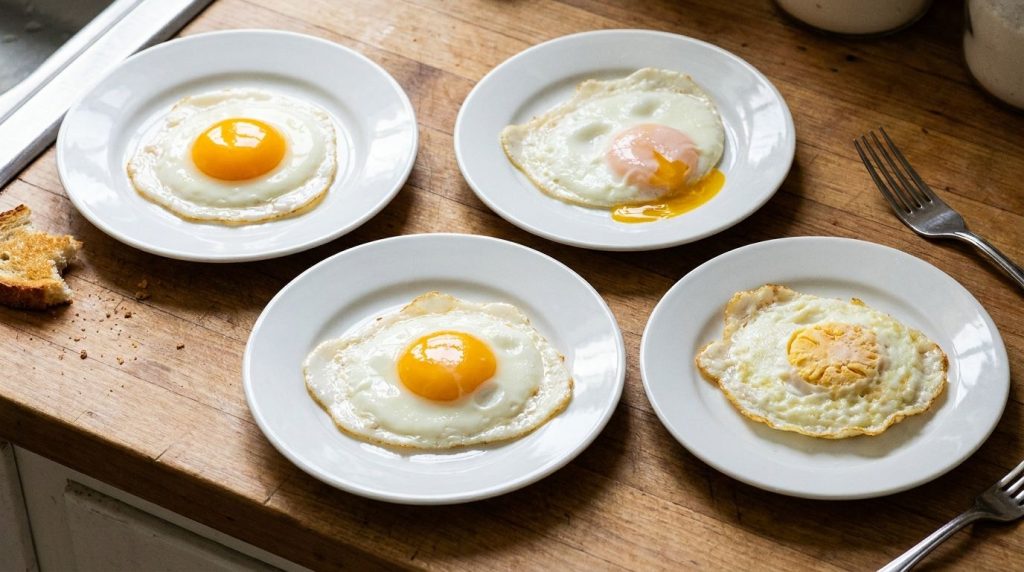
Fried eggs are a breakfast classic, offering a delightful interplay of set whites and a luscious yolk. The key to perfection lies in controlling the heat and timing to achieve your preferred yolk consistency.
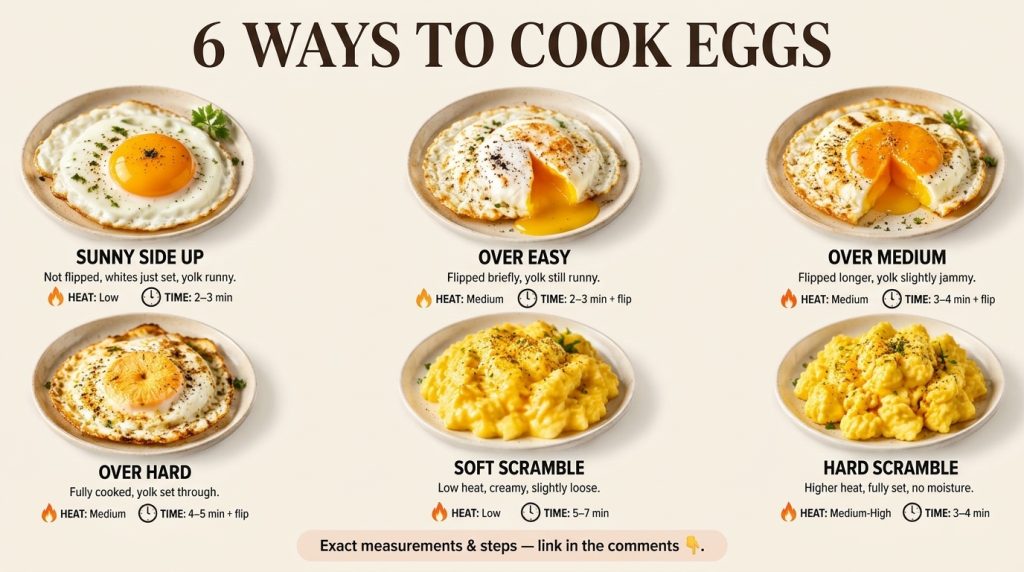
Sunny Side Up: The Golden Standard
With its vibrant, runny yolk and barely set whites, Sunny Side Up eggs are a feast for the eyes and the palate. They are excellent for dipping toast or adding richness to any dish.
Ingredients:
- 1-2 large eggs
- 1/2 teaspoon butter or olive oil
- Salt and black pepper, to taste
Instructions:
- Heat a non-stick skillet over medium-low heat. Add butter or oil and let it melt until shimmering, coating the pan.
- Carefully crack each egg directly into the pan, ensuring the yolks remain intact.
- Cook for 3-4 minutes, or until the whites are fully set and the edges are slightly crispy, but the yolk remains completely runny. Do not flip the egg.
- Season with salt and pepper immediately before serving.
Over Easy: A Runny Center
For those who love a runny yolk but prefer their whites fully cooked on both sides, Over Easy is the ideal choice. A quick flip seals the deal.
Ingredients:
- 1-2 large eggs
- 1/2 teaspoon butter or olive oil
- Salt and black pepper, to taste
Instructions:
- Heat a non-stick skillet over medium-low heat. Add butter or oil and let it melt until shimmering.
- Carefully crack each egg into the pan. Cook for 2-3 minutes, until the whites are mostly set around the edges but still a bit translucent near the yolk.
- Gently flip the eggs with a spatula. Cook for an additional 30 seconds to 1 minute, just until the second side of the white is set but the yolk remains very runny.
- Season with salt and pepper and serve immediately.
Over Medium: The Jammy Dream
If you enjoy a yolk that’s rich and gooey but not entirely liquid, Over Medium eggs deliver a perfectly jammy consistency. It’s a favorite for sandwiches and salads.
Ingredients:
- 1-2 large eggs
- 1/2 teaspoon butter or olive oil
- Salt and black pepper, to taste
Instructions:
- Heat a non-stick skillet over medium-low heat. Add butter or oil and let it melt.
- Crack eggs into the pan. Cook for 3-4 minutes, until the whites are set around the edges and opaque.
- Flip the eggs. Cook for 1 to 1.5 minutes on the second side, allowing the yolk to firm up slightly while retaining a soft, jammy center.
- Remove from heat, season, and serve.
Over Hard: Firm and Fully Cooked
For those who prefer no runny yolk at all, Over Hard eggs offer a firm, fully cooked center. They are perfect for chopping into salads or making egg sandwiches.
Ingredients:
- 1-2 large eggs
- 1/2 teaspoon butter or olive oil
- Salt and black pepper, to taste
Instructions:
- Heat a non-stick skillet over medium-low heat. Add butter or oil and let it melt.
- Crack eggs into the pan. Cook for 4-5 minutes, or until the whites are fully set. You may want to gently break the yolk with your spatula during this phase to ensure it cooks through.
- Flip the eggs. Cook for 2-3 minutes on the second side, or until the yolk is completely firm.
- Season and serve.
Mastering the Scramble: From Silky to Hearty
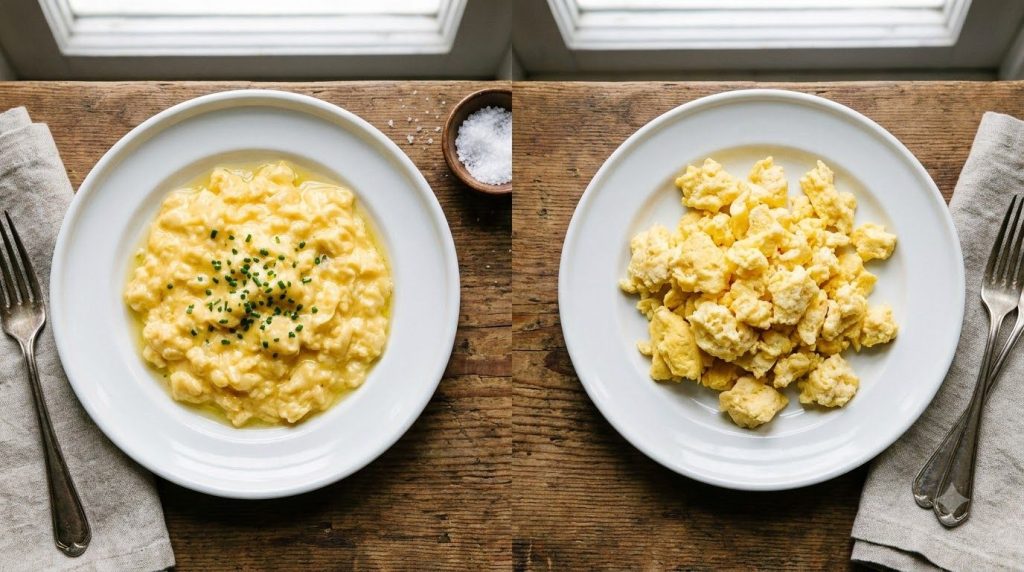
Scrambled eggs are incredibly versatile and can range from soft, custardy curds to fluffy, firm morsels. The secret lies in the heat and constant (or occasional) stirring.
Soft Scramble: Creamy and Delicate
Often considered the gourmet choice, soft scrambled eggs are cooked slowly over low heat with frequent stirring, resulting in small, moist, and tender curds. They are incredibly creamy and luxurious.
Ingredients:
- 2 large eggs
- 1 tablespoon milk, cream, or water (optional, for extra fluffiness)
- 1/2 teaspoon butter or olive oil
- Salt and black pepper, to taste
Instructions:
- In a bowl, whisk eggs with milk (if using), salt, and pepper until just combined; do not over-whisk.
- Heat a non-stick skillet over medium-low heat. Add butter or oil and let it melt until shimmering.
- Pour the egg mixture into the pan. Let it sit undisturbed for about 30 seconds until the edges just begin to set.
- Using a spatula, gently push the cooked egg from the edges towards the center, allowing the uncooked egg to flow underneath. Continue this process, stirring and folding slowly and constantly, for 3-5 minutes, until the eggs are mostly set but still appear moist and glossy.
- Remove from heat immediately to prevent overcooking, as they will continue to cook slightly from residual heat. Serve warm.
Hard Scramble: Fluffy and Filling
For a heartier, more substantial scramble, hard scrambled eggs are cooked at a slightly higher heat with less frequent stirring, creating larger, fluffier curds that are fully cooked through.
Ingredients:
- 2 large eggs
- 1 tablespoon milk, cream, or water (optional)
- 1/2 teaspoon butter or olive oil
- Salt and black pepper, to taste
Instructions:
- In a bowl, whisk eggs with milk (if using), salt, and pepper until combined.
- Heat a non-stick skillet over medium heat. Add butter or oil and let it melt.
- Pour the egg mixture into the pan. Let it cook for about 1 minute until the edges begin to set.
- Use a spatula to break up and fold the eggs, stirring occasionally, not constantly. Cook for 5-7 minutes, breaking the eggs into larger curds, until they are fully set and no liquid egg remains.
- Remove from heat and serve hot.
Tips for Achieving Perfect Eggs Every Time
- Freshness Matters: Fresher eggs generally hold their shape better and have firmer whites.
- Room Temperature Eggs: Taking eggs out of the fridge 15-30 minutes before cooking can lead to more even cooking.
- Non-Stick Pan: A good quality non-stick pan is crucial, especially for fried eggs, to prevent sticking and make flipping easier.
- Medium-Low Heat is Key: For most egg preparations, a lower heat allows for more control and prevents overcooking, resulting in a more tender texture.
- Don’t Overcrowd the Pan: Cook eggs in batches if necessary, giving them enough space to cook evenly.
- Season Generously: Salt and pepper enhance the flavor of eggs. Consider finishing with a sprinkle of fresh chives or a dash of hot sauce.
- Alternative Fats: While butter adds rich flavor, olive oil, coconut oil, or even avocado oil can be used for cooking eggs, offering different flavor profiles and health benefits.
High-Protein Breakfast Ideas Beyond the Basics
Eggs are an excellent source of protein, making them ideal for a filling and energizing breakfast. Here are some ways to incorporate these perfectly cooked eggs into your healthy breakfast ideas:
- Egg & Avocado Toast: Top whole-grain toast with mashed avocado and an Over Easy or Sunny Side Up egg.
- Breakfast Burrito/Bowl: Combine scrambled eggs with black beans, salsa, and cheese in a tortilla or a bowl with rice.
- Quick Egg Salad: Use hard-boiled or chopped Over Hard eggs mixed with Greek yogurt and herbs for a healthier sandwich filling.
- High-Protein Meal Prep: Hard Scrambled eggs or Over Hard eggs can be prepped in advance for quick additions to meals throughout the week.
Frequently Asked Questions About Cooking Eggs
What’s the best pan for cooking eggs?
A good quality non-stick skillet is generally recommended for cooking eggs, as it helps prevent sticking and makes cleanup easier. Cast iron can also work but requires proper seasoning and a bit more fat.
Can I add milk or water to scrambled eggs?
Yes, adding a tablespoon of milk, cream, or even water per two eggs can make your scrambled eggs fluffier and more tender. Milk and cream add richness, while water creates steam for a lighter texture.
How do I know if my fried egg is done without breaking the yolk?
For Sunny Side Up, the whites should be fully set and opaque. For Over Easy, Over Medium, and Over Hard, you’ll need to gently flip them. The duration you cook after flipping determines the yolk’s firmness. With practice, you’ll learn to gauge it by time and a slight jiggle of the pan.
Final Thoughts
Cooking the perfect egg is a culinary skill that improves with practice. By understanding the nuances of heat and time, and following these detailed recipes for various preparations, you can consistently achieve eggs that are just right for your taste. Experiment with different styles, add your favorite seasonings, and elevate your everyday breakfast into an ‘egg-cellent’ culinary experience. Happy cooking!
Medical Disclaimer
This article is intended for informational purposes only and does not constitute medical advice. Always consult with a qualified healthcare professional for any health concerns or before making any changes to your diet or health regimen.