Most people walk past it, dismissing it as a simple weed. Yet, this unassuming plant, often found sprouting in cracks in the pavement or thriving in your backyard, holds a surprising array of natural remedies that herbalists have valued for centuries. We’re talking about Plantain — not the banana-like fruit, but the leafy green ‘weed’ often known as Plantago major or Plantago lanceolata.
One small preparation mistake can ruin its potent qualities, but when properly harnessed, this everyday plant can become a go-to for common skin irritations, bites, and minor wounds. Are you ready to see this “weed” in a whole new light?
What It Is: The Power of Plantain
The Plantain plant is a widespread perennial herb, easily identified by its distinctive ribbed leaves that grow in a rosette pattern close to the ground. There are two main types commonly used: Broadleaf Plantain (Plantago major) and Ribwort Plantain (Plantago lanceolata), both offering similar beneficial properties. It’s often found in disturbed soil, lawns, gardens, and along pathways—truly “everywhere.”
Its historical uses range from soothing insect bites and stings to drawing out splinters, reducing inflammation, and aiding in wound healing. The secret lies in its natural compounds, including mucilage, tannins, and iridoid glycosides, which contribute to its demulcent (soothing), astringent (tightening), and anti-inflammatory effects.
Did You Know?
The name “Plantain” actually comes from the Latin word “planta,” meaning “sole of the foot,” referring to its common growth along well-trodden paths. It’s truly a plant that “follows man.”
Ingredients for a Simple Plantain Poultice
Making a basic Plantain poultice is incredibly straightforward, requiring just two primary ingredients:
- Fresh Plantain Leaves: Young, tender leaves are often preferred, but mature leaves work too.
- Water: For rinsing the leaves and optionally for a slight moistening if dry.
Approximate Measurements
- Leaves: 3-5 medium-sized fresh Plantain leaves, enough to cover the affected area.
- Water: A small splash if needed to help macerate (crush) the leaves, or to clean them.
Formula / Recipe: Instant Plantain Poultice
This “spit poultice” method is a quick, on-the-spot remedy. For a more hygienic version, you can use clean water.
Step-by-Step Method
- Identify and Harvest: Carefully identify Broadleaf or Ribwort Plantain. Harvest 3-5 fresh, healthy leaves, avoiding any that look diseased or have insect damage.
- Rinse: Rinse the leaves thoroughly under clean, cool water to remove any dirt, dust, or small insects.
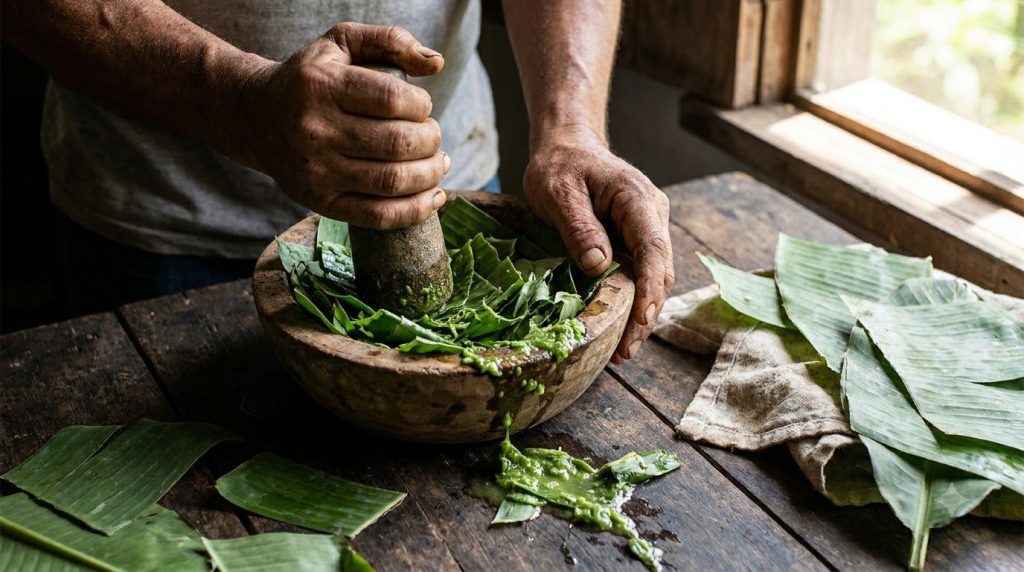
- Macerate: This is the crucial step. Fold the leaves together and chew them gently to break down the cell walls and release their juices. Alternatively, you can crush them with a mortar and pestle or by rolling them with a clean, hard object on a cutting board until a pulpy consistency is achieved. The goal is to create a moist “mash.”
- Apply: Place the chewed or crushed leaf material directly onto the affected skin area (e.g., insect bite, splinter site, minor cut).
- Secure: Cover the poultice with a clean bandage, gauze, or cloth to keep it in place.
How to Use
The Plantain poultice is best used for:
- Insect Bites and Stings: Reduces itching, swelling, and pain.
- Minor Cuts and Scrapes: Helps to cleanse and protect the wound, promoting healing.
- Splinters: Can help draw out foreign objects from the skin.
- Poison Ivy/Oak Rash: Soothes itching and inflammation.
How Often to Use
Change the poultice every 2-4 hours, or when it dries out. For persistent issues, reapply several times a day until symptoms subside.
How to Choose & Harvest Plantain
When foraging for Plantain, remember these tips:
- Location: Choose areas away from roadsides (car exhaust) and conventionally sprayed lawns (pesticides). Look for wilder, untraveled spots.
- Appearance: Select vibrant, healthy-looking leaves. Avoid yellowed, wilted, or damaged leaves.
- Sustainability: Harvest only a few leaves from each plant, allowing it to continue growing.
Storage
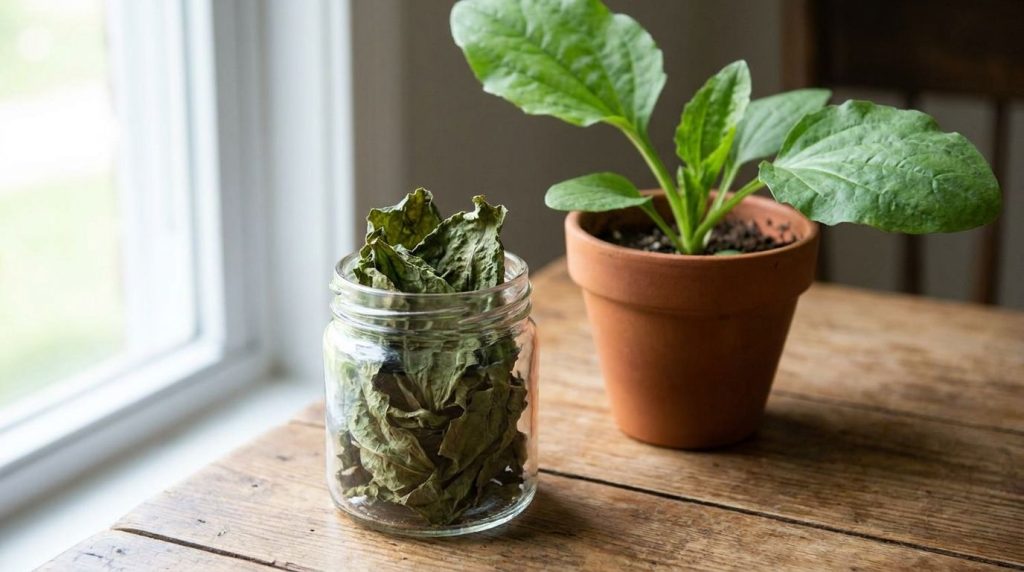
Fresh Plantain leaves are best used immediately. If you must store them briefly, wrap them in a damp paper towel and place them in a sealed bag in the refrigerator for up to 1-2 days. For longer storage, Plantain can be dried and stored in an airtight container for future use in teas or infused oils, though a fresh poultice is generally preferred for immediate topical relief.
Practical Tips
- Test a Small Area: If you have sensitive skin, test the poultice on a small, inconspicuous area first.
- Cleanliness is Key: Always use clean leaves and clean hands/tools when preparing.
- Consider a Cloth: For less messy application, you can crush the leaves inside a piece of clean gauze or thin cloth before applying.
Quick Tip: Fresh vs. Dried Plantain for Topical Use
| Feature | Fresh Plantain | Dried Plantain |
|---|---|---|
| Potency (topical) | Higher, direct enzymatic action | Lower for immediate poultice, good for infusions |
| Preparation | Crush/chew directly | Rehydrate with warm water for poultice; steep for tea/oil |
| Best Use | Immediate poultice for bites, stings, splinters, wounds | Teas, infused oils, salves for chronic issues or general skin care |
| Availability | Seasonal, foraged | Year-round, purchased or self-dried |
Common Mistakes
- Using Sprayed Plants: Harvesting from areas treated with pesticides can introduce harmful chemicals to your skin.
- Not Crushing Enough: If the leaves aren’t sufficiently broken down, the beneficial compounds won’t be released effectively.
- Leaving it on Too Long: While generally mild, prolonged application of a wet poultice can sometimes irritate very sensitive skin. Change it regularly.
- Ignoring Allergies: Assuming all natural remedies are safe for everyone without checking for individual sensitivities.
Cautions / Who Should Avoid It
Plantain is generally considered very safe for topical use. However:
- Allergies: If you have known allergies to other plants in the Plantaginaceae family, use with caution. Discontinue use if irritation occurs.
- Deep Wounds/Severe Injuries: This remedy is for minor issues. Always seek professional medical attention for deep cuts, severe burns, or infections.
- Internal Use: This article focuses solely on topical applications. Internal use of plantain for medicinal purposes should always be discussed with a qualified healthcare professional.
Quick Summary
- Best Preparation: Fresh poultice for immediate topical relief.
- Best Use-Case: Insect bites, minor cuts, scrapes, splinters, soothing rashes.
- Storage: Use fresh leaves immediately; dried leaves for long-term storage in airtight containers.
- When to Use: As soon as possible after a minor skin irritation or injury.
- What to Avoid: Sprayed plants, insufficient crushing, prolonged application without changing.
FAQ
Here are some common questions about using Plantain:
- Can I use dried Plantain leaves for a poultice?
While fresh leaves are best for an immediate poultice due to their moisture and active enzymes, you can rehydrate dried leaves with a little warm water to make a paste. - How long does a Plantain poultice last on the skin?
It should be changed every 2-4 hours, or once it starts to dry out, to maintain effectiveness and hygiene. - Is it safe for children?
Yes, for minor topical issues like insect bites, it is generally considered safe for children. Always supervise and ensure no internal consumption. - Can I make Plantain oil or salve?
Absolutely! Infusing dried or wilted fresh Plantain leaves in a carrier oil (like olive or almond oil) creates an excellent base for salves or topical oils for ongoing skin care. - What part of the Plantain plant is best to use?
The leaves are primarily used for topical remedies. The seeds are also used in other forms but are not typically part of a poultice. - When should I avoid using Plantain?
Avoid it if you have a known allergy, for deep or infected wounds that require medical attention, or if the plant was harvested from a contaminated area.
You may also like: DIY Herbal Infused Oils for Everyday Remedies
Read more: Natural Remedies for Itchy Insect Bites
Conclusion
The humble Plantain, often dismissed as a common weed, is a powerful ally in natural first aid. Learning to identify and properly use this accessible plant empowers you with a simple, effective remedy for everyday skin woes. Next time you see it growing by the wayside, remember its hidden healing potential and consider giving this “weed” the respect it deserves.