Are you a true connoisseur of classic television? Do the golden years of TV police dramas still hold a special place in your heart? Many shows from the late 1960s captured the imagination of audiences, but only a select few achieved iconic status. Today, we’re putting your knowledge to the test with a challenge that separates the true fans from the casual watchers.
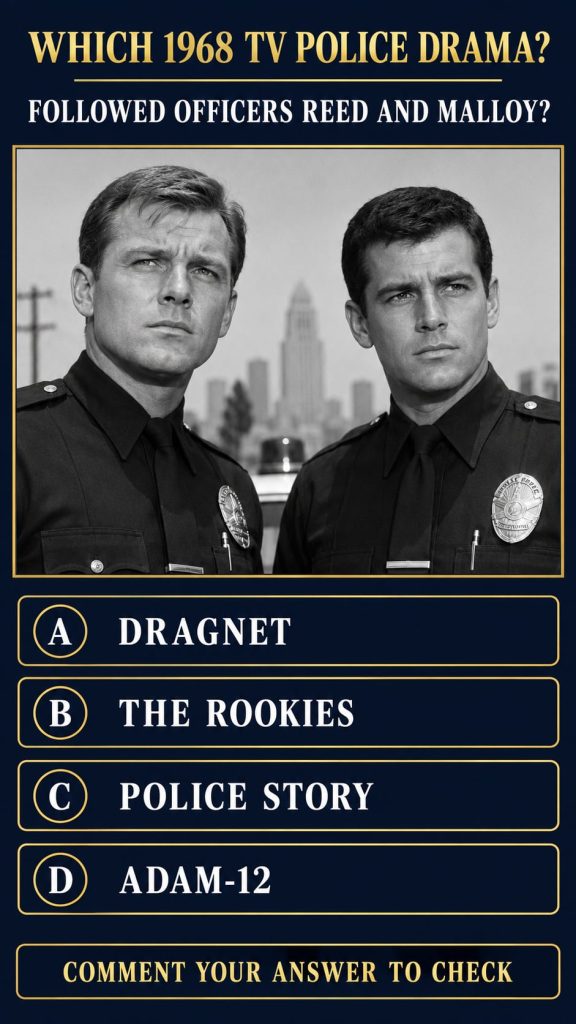
Think back to 1968, a pivotal year for television and society. Among the burgeoning landscape of crime fighters, two LAPD officers became household names, patrolling the streets and tackling everyday police work with a compelling sense of realism. Their names were Reed and Malloy, and their patrol car, “Adam-12,” became almost as famous as they were. But can you recall the name of the groundbreaking show that brought their stories to life?
The Golden Age of TV Police Dramas
The late 1960s and early 1970s saw a boom in police procedural dramas. Moving beyond earlier, more theatrical crime shows, this era embraced a more realistic approach, often showcasing the day-to-day grind of police officers. These shows aimed to portray law enforcement in a more authentic light, dealing with everything from petty crimes to serious felonies, all while navigating the complexities of their personal lives. This was a stark contrast to some of the more action-oriented or stylized detective series of previous decades.
Meet Reed and Malloy: An Unforgettable Duo
The magic of this particular drama lay in its two central characters. Officer Pete Malloy, played by Martin Milner, was the seasoned, stoic senior officer, always by the book but with a deep understanding of human nature. His younger, more idealistic partner, Officer Jim Reed, played by Kent McCord, was eager to learn the ropes. Their dynamic, a blend of mentorship and camaraderie, was the heart of the show. Audiences tuned in not just for the crimes, but for the nuanced relationship between these two men.
Their patrol car, designated “Adam-12,” was essentially a third character. The calls they responded to, the citizens they encountered, and the procedures they followed were all presented with a documentary-style feel, a hallmark of producer Jack Webb’s work. Webb, famous for “Dragnet,” brought his signature commitment to accuracy and detail to this new venture, making “Adam-12” a benchmark for police procedurals.
The Show Revealed: It’s “Adam-12”!
For those who guessed it, the iconic 1968 police drama featuring officers Reed and Malloy was indeed “Adam-12”! Debuting on September 21, 1968, the series ran for seven seasons, concluding in 1975. Created by Robert A. Cinader and Jack Webb, the show quickly gained popularity for its portrayal of the everyday challenges faced by police officers. It eschewed the car chases and shootouts often depicted in other shows, instead focusing on the less glamorous, but equally vital, aspects of law enforcement.
“Adam-12” was celebrated for its authenticity, often using actual LAPD policies, procedures, and even real police radio calls as inspiration. This dedication to realism made it a valuable educational tool for aspiring officers and gave the public a rare glimpse into the realities of police work, fostering a deeper understanding and appreciation for the dedication of law enforcement.
Why “Adam-12” Endures
Even decades later, “Adam-12” remains a touchstone for classic television. Its influence can be seen in countless police dramas that followed, many of which adopted a similar procedural format. The show’s commitment to telling human stories within a professional context, its grounded characters, and its historical accuracy continue to resonate with viewers. It’s more than just a police show; it’s a piece of television history that captured the spirit of an era.
Did “Adam-12” play a significant role in your childhood or did you discover it later? Share your favorite memories or episodes in the comments below!