Unexpected Fizz and Foam: The Surprising Kitchen Chemistry of Cola and Dish Soap
Ever found yourself staring at everyday household items and wondering what would happen if you mixed them? The kitchen, often the heart of culinary creations, can also be a fascinating laboratory for impromptu home experiments. Today, we’re diving into a captivating reaction that often sparks curiosity: what happens when ordinary cola meets dish soap?
While this particular combination isn’t a miraculous cleaning hack (we’ll explain why!), it offers a fantastic glimpse into basic household chemistry. Get ready to observe a surprisingly vigorous reaction that’s more about foam and fizz than spotless surfaces!
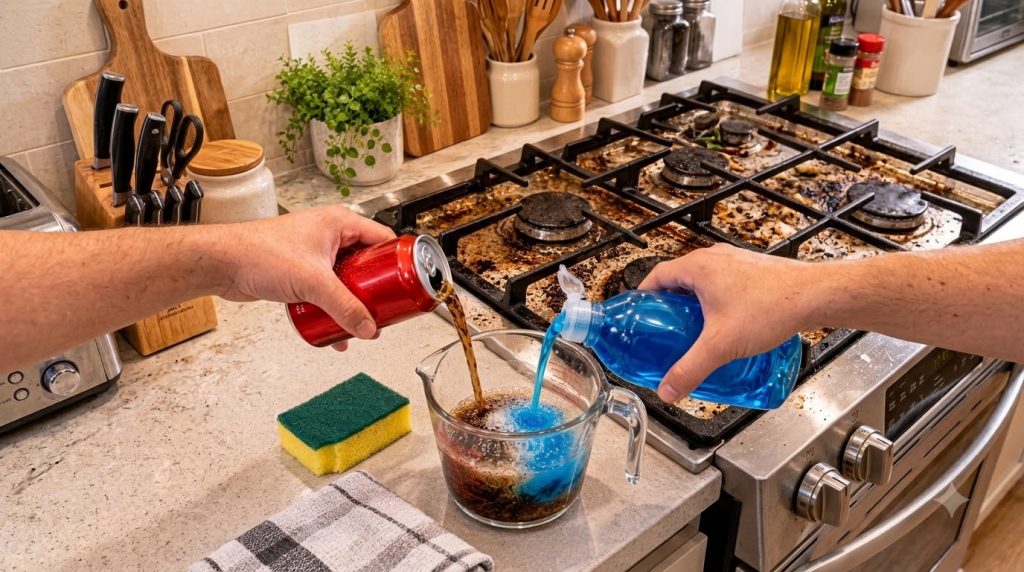
The Curious Combination: Cola and Dish Soap
On their own, both cola and dish soap are incredibly common household items, each with a distinct purpose. Cola, a carbonated beverage, is known for its sweet taste and fizzy effervescence, thanks to dissolved carbon dioxide. Dish soap, on the other hand, is a powerful degreaser, designed to break down oils and lift food particles from dishes, primarily due to its surfactant properties.
But what happens when these two seemingly unrelated liquids are brought together? Prepare for a surprisingly dramatic display of foam!
What You’ll Need for Your Kitchen Chemistry Experiment
Gathering your supplies for this simple demonstration is easy, as you likely already have them at home.
- Cola: Any brand of regular cola will work. Diet soda might produce a slightly different reaction due to artificial sweeteners, but the core principle remains.
- Dish Soap: Blue liquid dish soap (or any color) is ideal. The color contrast with the cola makes the reaction more visually striking.
- Clear Glass or Container: A tall, clear glass, measuring cup, or vase allows for the best observation of the reaction and foam production.
- Protective Surface: A tray or an easily wiped-down counter area to catch any overflow, as the foam can rise quickly.
Step-by-Step Experiment Guide
This experiment is quick and straightforward:
- Set Up Your Area: Place your clear glass on a protective surface or in a sink to contain any potential mess.
- Pour the Cola: Fill your glass about halfway with cola.
- Add the Dish Soap: Slowly pour a small amount (about a tablespoon or two) of liquid dish soap directly into the cola.
- Observe: Watch closely as the dish soap comes into contact with the carbonated beverage. You’ll notice an immediate and rapid eruption of foam!
The Science Behind the Suds and Fizz
So, why does this happen? It’s all about surface tension and dissolved gases:
- Carbonation in Cola: Cola is carbonated, meaning it contains dissolved carbon dioxide gas under pressure. When the bottle or can is opened, the pressure drops, and the CO2 slowly escapes as bubbles.
- Surfactants in Dish Soap: Dish soap contains molecules called surfactants (surface-active agents). These molecules have a unique structure: one end is attracted to water (hydrophilic), and the other end is repelled by water but attracted to oil or air (hydrophobic).
- The Foaming Reaction: When you add dish soap to cola, the surfactants immediately go to work. They reduce the surface tension of the water in the cola. This allows the dissolved carbon dioxide gas to escape much more rapidly and efficiently. Instead of small, controlled bubbles, the CO2 gets trapped within the surfactant molecules, creating a huge volume of stable foam. It’s like releasing all the soda’s fizz at once, but with the added help of the soap creating countless tiny bubbles.
Is This a Cleaning Hack? (Important Clarification!)
Despite the dramatic reaction, it’s crucial to understand that this combination is NOT a practical or effective cleaning hack. While cola is mildly acidic and dish soap is a degreaser, mixing them this way doesn’t create a super-cleaner.
- Ineffective for Cleaning: The primary outcome is foam. This foam doesn’t possess enhanced cleaning properties; it’s simply a rapid release of gas. You’d be left with a sticky, soapy mess that would require more cleaning than if you had used the ingredients separately.
- Not for Specific Problems: If you have a specific cleaning challenge, it’s always better to use ingredients known for their cleaning capabilities in tested and recommended ways (e.g., vinegar for descaling, baking soda for scrubbing, or commercial cleaners).
Safety Notes and Responsible Experimentation
While this is a harmless experiment, general safety practices are always good to follow:
- Adult Supervision: If children are participating, ensure adult supervision.
- Eye Protection: While not strictly necessary for this low-risk experiment, it’s always a good habit when doing any chemistry.
- Ventilation: Perform in a well-ventilated area, though no harmful fumes are produced.
- Cleanup: Be prepared for a bit of a sticky, bubbly mess. Have a cloth or paper towels handy for easy cleanup.
- Do Not Consume: Do not drink the mixture! It’s an experiment, not a beverage.
Exploring the reactions of everyday items can be a fun way to spark curiosity about the world around us. So, go ahead, try this simple kitchen chemistry experiment, and marvel at the unexpected fizz and foam! What other surprising mixes have you tried in your home?