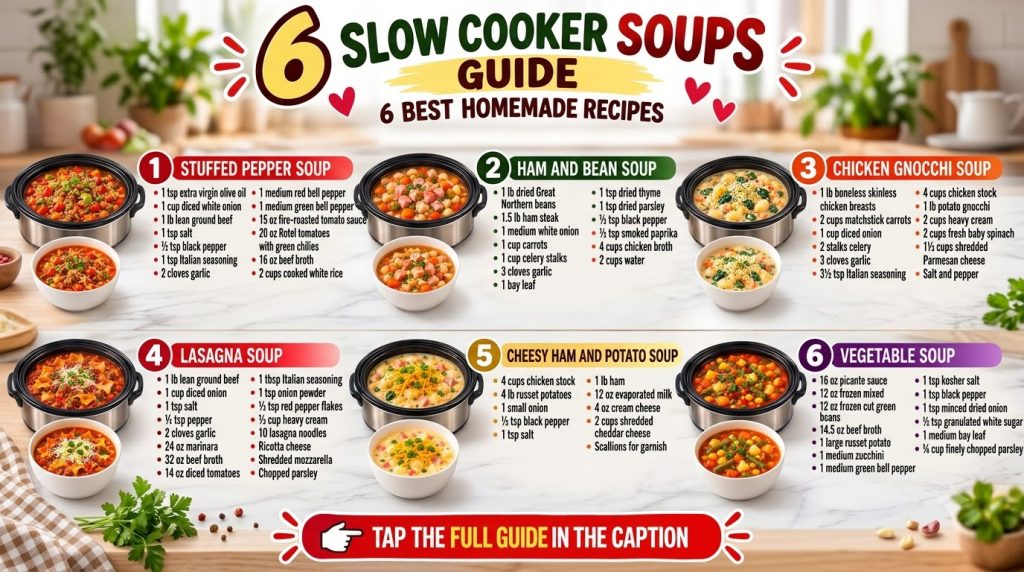
When the days get shorter and the chill sets in, there’s nothing quite like a warm bowl of soup to bring comfort and joy. And what if we told you that creating that perfect bowl could be incredibly easy? Enter the humble slow cooker, your best friend for hands-off, flavor-packed meals. This guide, inspired by our collection of 6 Slow Cooker Soups, will show you how to unlock the magic of effortless, hearty, and often internationally-inspired meals.
From creamy classics to robust, savory broths, a slow cooker can transform simple ingredients into a delightful meal while you go about your day. Imagine coming home to the aroma of a perfectly cooked dinner, ready to be ladled into bowls. That’s the promise of slow cooker soups! They are not just meals; they’re an invitation to cozy comfort, offering a diverse array of flavors to satisfy every craving.
Why You’ll Love Slow Cooker Soups
- Effortless Preparation: Most of the work is just chopping and adding ingredients. Your slow cooker does the rest!
- Deep Flavor Development: Low, slow cooking allows flavors to meld beautifully, creating incredibly rich and complex soups.
- Hands-Off Cooking: Set it and forget it! Free up your time for other tasks or relaxation while dinner cooks itself.
- Budget-Friendly: Often, less expensive cuts of meat and pantry staples shine in the slow cooker.
- Meal Prep Dream: Yields large batches perfect for lunches or dinners throughout the week.
- Versatile & Customizable: Easily adapt recipes with your favorite vegetables, proteins, and seasonings.
The Magic of Slow Cooker Soups: What You’ll Generally Need
While specific ingredients will vary for each soup, here’s a general idea of what makes a fantastic slow cooker soup:
- Aromatic Base: Onions, garlic, celery, and carrots form the backbone of many delicious soups.
- Protein: Chicken (thighs or breasts), beef (chuck roast, stew meat), pork (shoulder), lentils, or beans are excellent choices.
- Vegetables: Potatoes, sweet potatoes, corn, peas, green beans, spinach, kale, and bell peppers add nutrition and texture.
- Liquid: Broth (chicken, beef, vegetable), crushed tomatoes, tomato sauce, or coconut milk.
- Seasonings: Herbs (fresh or dried), spices, salt, and pepper are essential for flavor.
- Thickeners (Optional): Flour, cornstarch, or puréed vegetables can create a richer texture.
Equipment You’ll Need
- A 4-quart or larger slow cooker (crock-pot)
- Cutting board and sharp knife
- Measuring cups and spoons
- Large spoon or ladle
How to Master Slow Cooker Soups
While each soup has its nuances, the general process for making delightful slow cooker soups is wonderfully straightforward:
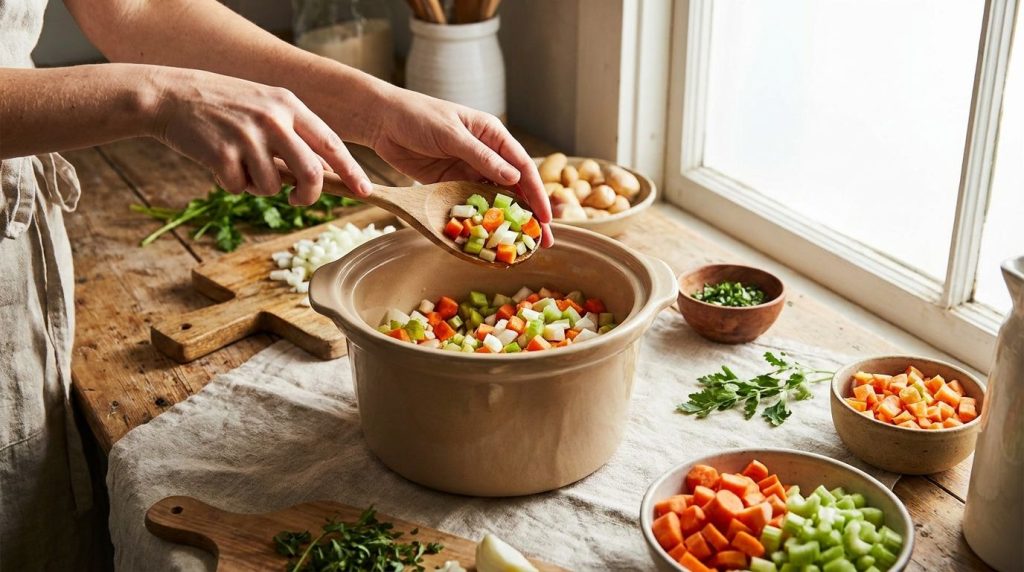
- Prepare Ingredients: Chop all vegetables and proteins to roughly uniform sizes. This ensures even cooking.
- Layer & Load: Place tougher, root vegetables (like carrots, potatoes) at the bottom of the slow cooker as they take longer to cook. Add proteins, then softer vegetables and aromatics.
- Add Liquid & Seasonings: Pour in your broth, tomatoes, or other liquids until ingredients are mostly submerged. Stir in your chosen herbs and spices.
- Set & Forget: Cover the slow cooker and cook on low for 6-8 hours or on high for 3-4 hours, or until meat is tender and vegetables are soft. Cooking times can vary slightly depending on your slow cooker and the ingredients.
- Final Touches: In the last 30 minutes to an hour, you might add dairy (like milk, cream, or cheese) or quick-cooking vegetables (like spinach) to prevent them from curdling or becoming mushy.
- Serve: Stir well, taste, and adjust seasonings if needed. Ladle into bowls and garnish with fresh herbs, a dollop of sour cream, or crusty bread.
Pro Tips for the Best Slow Cooker Soups
- Don’t Overfill: Fill your slow cooker no more than two-thirds to three-quarters full to prevent overflow and ensure even cooking.
- Brown Your Meat (Optional but Recommended): For beef or pork, a quick sear in a skillet before adding to the slow cooker adds depth of flavor and a beautiful crust.
- Dairy Last: Add milk, cream, or cheese in the last 30 minutes of cooking to prevent curdling.
- Fresh Herbs at the End: Stir in delicate fresh herbs like cilantro or parsley just before serving to preserve their vibrant flavor and color.
- Taste and Adjust: Always taste your soup before serving and adjust salt, pepper, or other seasonings as needed. A squeeze of lemon or a dash of hot sauce can brighten flavors.
- Consider Thickening: If you prefer a thicker soup, stir in a cornstarch slurry (equal parts cornstarch and cold water) during the last 30 minutes of cooking.
Common Mistakes to Avoid
- Lifting the Lid Too Often: Each time you lift the lid, heat escapes, and it adds about 20-30 minutes to the cooking time. Resist the urge to peek!
- Adding Too Much Liquid: Slow cookers retain moisture well. Start with slightly less liquid than you think you need; you can always add more later.
- Overcooking Delicate Ingredients: Add tender vegetables like spinach, peas, or pasta during the last hour or so to prevent them from becoming mushy.
- Not Seasoning Properly: Slow cooking can mellow flavors, so don’t be shy with seasonings, but taste before adding more salt, as liquids reduce.
Exploring International Slow Cooker Soups
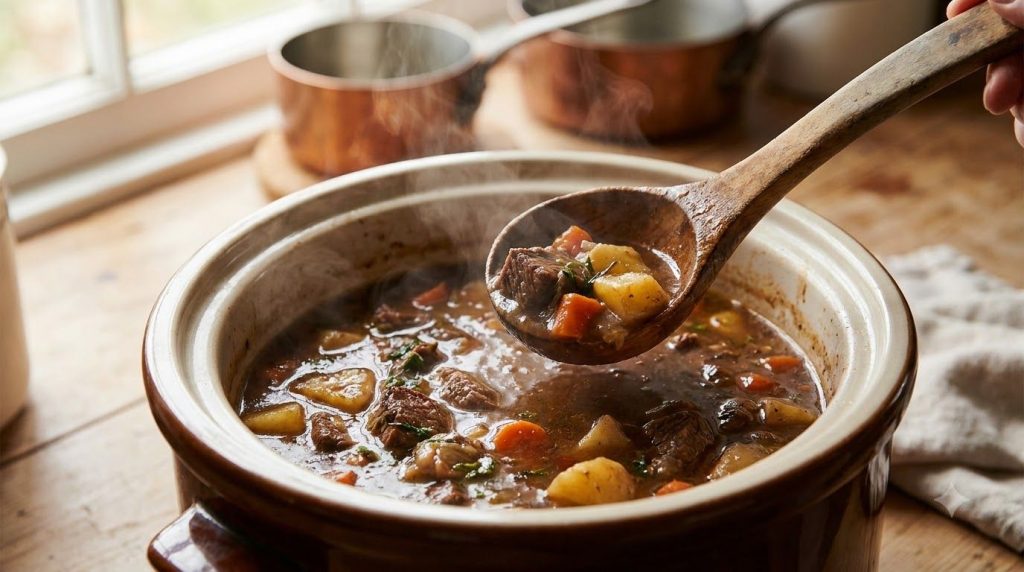
The slow cooker is an incredibly versatile tool for exploring global flavors. While we don’t have the specific recipes from the International Food Book right here, imagine the possibilities! You could create a vibrant Thai Coconut Curry Soup, a hearty Italian Minestrone, a robust Mexican Tortilla Soup, or a comforting French Onion Soup base. The key is to embrace the aromatic spices and distinct ingredients of different cuisines.
- Asian-Inspired: Use ginger, garlic, soy sauce, star anise, and coconut milk.
- Mediterranean Flair: Think oregano, basil, bay leaves, olives, and crushed tomatoes.
- Latin American: Incorporate cumin, chili powder, cilantro, and various beans.
- European Comforts: Utilize root vegetables, hearty meats, and classic herbs like thyme and rosemary.
Serving Suggestions
A bowl of slow cooker soup is often a meal in itself, but a few simple additions can elevate the experience:
- Crusty Bread: Perfect for soaking up every last drop.
- Garnishes: Fresh herbs (parsley, cilantro, dill), a dollop of sour cream or Greek yogurt, shredded cheese, croutons, or a swirl of olive oil.
- Side Salad: A light, crisp green salad provides a refreshing contrast.
- Sandwiches: A grilled cheese or a half-sandwich makes for a classic pairing.
Storage & Reheating
One of the best things about slow cooker soups is how well they store and reheat, making them perfect for meal prep!
- Refrigerator Storage: Allow soup to cool completely before transferring to airtight containers. It will keep well in the refrigerator for 3-4 days.
- Freezer Suitability: Most slow cooker soups freeze beautifully. Transfer cooled soup to freezer-safe containers or heavy-duty freezer bags, leaving about an inch of headspace. It can be frozen for up to 3 months. Avoid freezing soups with pasta or cream unless specified, as these can change texture upon thawing.
- Reheating Method: Thaw frozen soup in the refrigerator overnight. Reheat on the stovetop over medium-low heat, stirring occasionally, until heated through. You can also reheat individual portions in the microwave. Add a splash of broth or water if it seems too thick.
FAQ About Slow Cooker Soups
Q: Can I put raw meat directly into a slow cooker?
A: Yes, absolutely! Raw meat can be placed directly into the slow cooker with other ingredients. While browning meat first can add flavor, it’s not strictly necessary for safety or success.
Q: Do I need to pre-cook vegetables before adding them to the slow cooker?
A: No, most vegetables like carrots, potatoes, and celery do not need to be pre-cooked. They will soften beautifully during the slow cooking process. Softer vegetables like mushrooms or spinach can be added later to prevent them from becoming too mushy.
Q: How do I prevent my soup from being too watery?
A: Slow cookers are very efficient at retaining moisture, so you generally need less liquid than if you were cooking on the stovetop. Start with the recommended amount, and if it’s still too thin at the end, you can thicken it with a cornstarch slurry or by puréeing a portion of the soup.
Q: Can I double a slow cooker soup recipe?
A: You can often double recipes, but be mindful of your slow cooker’s capacity. Do not fill it more than two-thirds to three-quarters full. You may also need to increase cooking time slightly, especially on the low setting.
Q: What’s the difference between cooking on high and low?
A: Cooking on ‘low’ takes longer (typically 6-8 hours) and results in more tender meat and vegetables, as well as a deeper melding of flavors. Cooking on ‘high’ is faster (typically 3-4 hours) but can sometimes result in tougher meat if cooked too long, and flavors may not be as developed. For most soups, ‘low’ is preferred for optimal texture and taste.
Q: Can I use frozen vegetables in slow cooker soups?
A: Yes, frozen vegetables are convenient and work well in slow cooker soups. There’s no need to thaw them beforehand. They may release a bit more liquid, so you might adjust your broth accordingly.
RECIPE CARD: Slow Cooker Soup Base (Conceptual Guide)
This conceptual recipe card provides a general framework for making a wide variety of slow cooker soups, emphasizing the core principles.
Recipe Name: Slow Cooker Soup Base
Short Description: A versatile foundation for creating countless comforting slow cooker soups, focusing on general principles rather than a specific recipe. Adapt with your favorite proteins, vegetables, and seasonings for endless possibilities!
Prep Time: 15-20 minutes (estimated)
Cook Time: 6-8 hours on Low, or 3-4 hours on High (estimated)
Total Time: 3 hours 15 minutes – 8 hours 20 minutes
Servings: 6-8 servings (varies)
Course: Main Course
Cuisine: Global / Comfort Food
Cooking Method: Slow Cooking
Ingredients:
- 1-2 lbs (450-900g) protein of choice (e.g., chicken thighs, beef stew meat, lentils)
- 2-3 cups (approx. 300-450g) mixed hearty vegetables (e.g., chopped carrots, celery, potatoes)
- 1 large onion, chopped
- 2-4 cloves garlic, minced
- 4-6 cups (960-1440ml) broth (chicken, beef, or vegetable)
- 1 (14.5 oz / 411g) can diced tomatoes (optional, for tomato-based soups)
- 1-2 tbsp (15-30ml) olive oil (for optional browning)
- 1-2 tsp dried herbs (e.g., Italian seasoning, thyme, oregano), or 1 tbsp fresh
- Salt and black pepper to taste
- Optional additions: quick-cooking greens (spinach, kale), cream, fresh parsley/cilantro for garnish
Instructions:
- (Optional) If browning meat, heat olive oil in a large skillet over medium-high heat. Sear protein on all sides until browned. Transfer to the slow cooker.
- Layer hardy vegetables (carrots, celery, potatoes, onions) at the bottom of the slow cooker. Add minced garlic.
- Add the protein (if not already added).
- Pour in the broth and diced tomatoes (if using). Stir in dried herbs, salt, and pepper. Ensure most ingredients are submerged.
- Cover and cook on LOW for 6-8 hours, or on HIGH for 3-4 hours, until meat is tender and vegetables are soft.
- During the last 30-60 minutes of cooking, if desired, stir in quick-cooking greens like spinach or kale until wilted, or add any dairy such as cream or milk.
- Taste and adjust seasonings as needed.
- Serve hot, garnished with fresh herbs if desired.
Notes:
This recipe provides a flexible template. Adjust protein, vegetables, and seasonings to match your desired soup profile. For best results, avoid lifting the lid during cooking. If the soup is too thin, create a cornstarch slurry (1 tbsp cornstarch + 1 tbsp cold water) and stir it in during the last 30 minutes of cooking.
Storage:
Store cooled soup in an airtight container in the refrigerator for 3-4 days or freeze for up to 3 months. Reheat gently on the stovetop or in the microwave.
Nutrition: Nutrition information is an estimate and may vary depending on the ingredients and brands used.
