Is your shower head looking dull, or worse, is the water flow uneven and weak? That’s likely the work of limescale, those stubborn mineral deposits left behind by hard water. Before you think about replacing your shower head, consider a simple, cost-effective DIY cleaning solution.
This easy scrub can transform your shower head from grimy to gleaming, restoring its shine and improving water pressure with just a few common household items. It’s a practical fix that can save you money and enhance your daily shower experience.
What You’ll Need
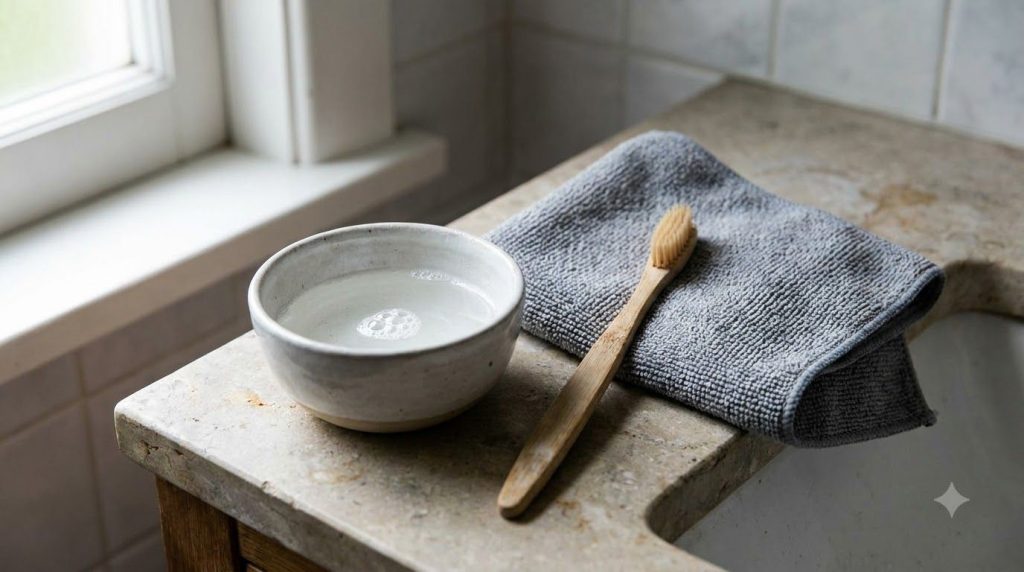
- 1 cup white vinegar
- 1 cup warm water
- A few drops of liquid dish soap (optional, but helps with general grime)
- An old toothbrush
- Microfiber cloth or soft sponge
- Small bowl or plastic bag
Why This DIY Can Be Useful
The star of this DIY is white vinegar. Its natural acidity, primarily acetic acid, makes it an excellent choice for dissolving mineral deposits like limescale. Unlike harsh chemical cleaners, vinegar offers a more natural and generally safer option for household cleaning. When combined with a little dish soap, which helps cut through grease and grime, you get a powerful yet gentle cleaning agent that can break down buildup and leave surfaces sparkling.
How to Make It
- In your small bowl, combine 1 cup of white vinegar with 1 cup of warm water.
- Add a few drops of liquid dish soap to the mixture. This is optional but can help tackle any greasy residue.
- Stir gently to combine the ingredients.
How to Use It
- Prepare the Area: If possible, remove your shower head. If not, don’t worry, you can still clean it in place.
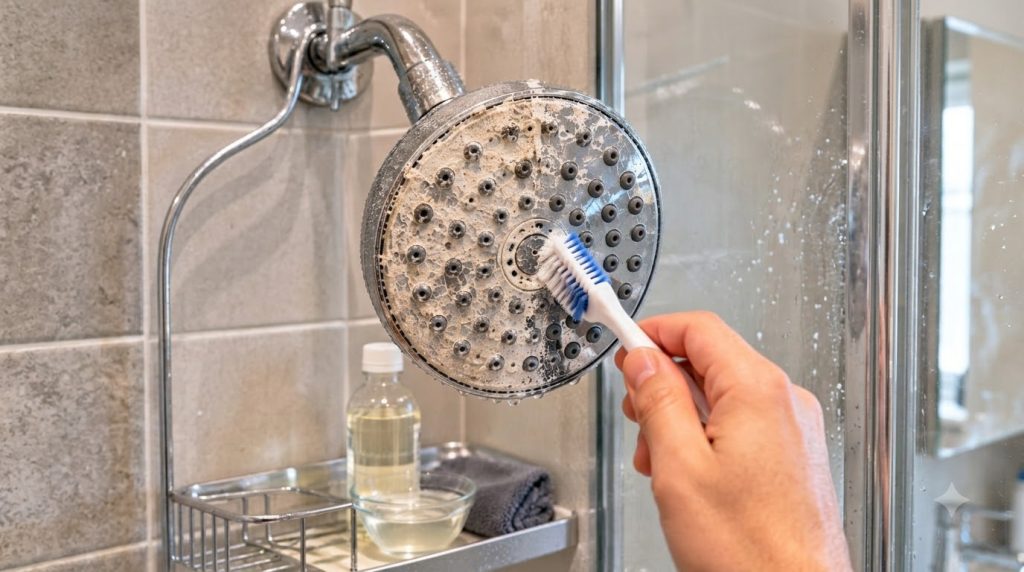
- Apply the Solution: Dip your old toothbrush into the vinegar solution.
- Scrub Away: Vigorously scrub the nozzles and the entire surface of the shower head, paying extra attention to areas with visible limescale buildup.
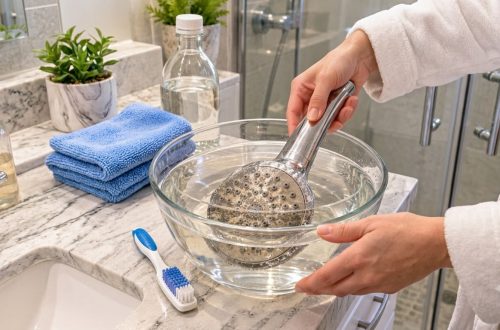
- For Stubborn Buildup: If the limescale is particularly heavy, you can let the solution sit for a while. If your shower head is removable, you can fully immerse it in the solution in a bowl. If it’s fixed, fill a plastic bag with the solution and secure it around the shower head with a rubber band, ensuring the affected areas are submerged.
- Let It Soak: Allow the shower head to soak for at least 30 minutes, or up to a few hours for very heavy deposits.
- Final Scrub and Rinse: After soaking, give it another good scrub with the toothbrush. Then, remove the bag (if used) and turn on the shower to flush out any loosened mineral deposits.
- Wipe Dry: Use your microfiber cloth or soft sponge to wipe down the shower head, removing any remaining residue and polishing it to a shine.
What to Expect
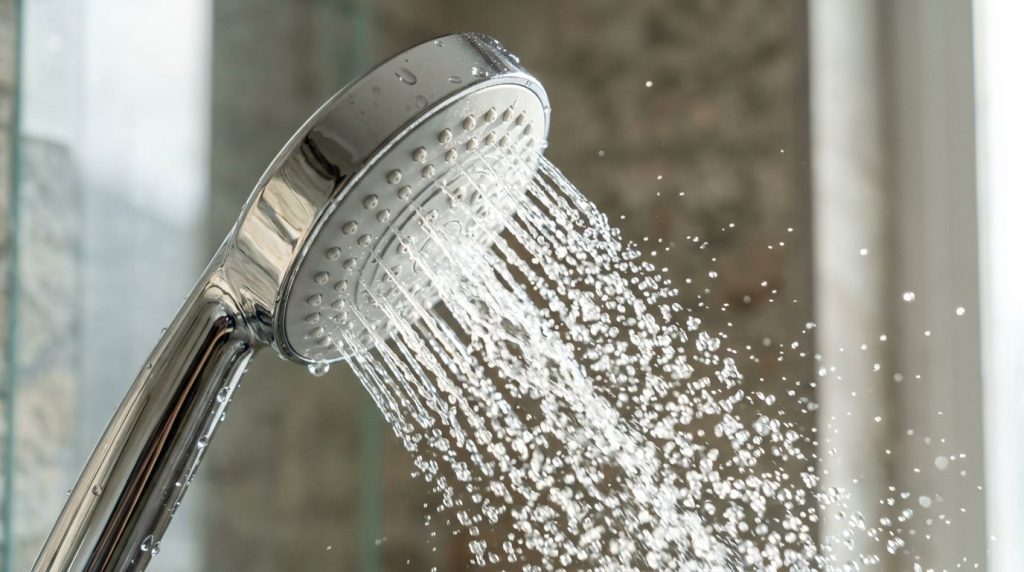
You can expect a noticeably cleaner and shinier shower head. The vinegar solution should effectively dissolve most of the limescale, leading to improved water flow and pressure. While it may not make an old, heavily damaged shower head look brand new instantly, it will significantly reduce mineral buildup and restore much of its original luster and function. For very old and stubborn stains, a second application or longer soaking time might be necessary.
Helpful Tips
- Regular Maintenance: To prevent heavy buildup, aim to clean your shower head with this method once a month or every other month, depending on your water hardness.
- Toothpick for Nozzles: For individual clogged nozzles, a toothpick or a sewing needle can help dislodge stubborn bits of limescale after soaking.
- Warm Water Boost: Using warm water in your solution can sometimes help vinegar work a little faster, but cold water is also effective.
- Alternative Tools: If you don’t have an old toothbrush, a stiff-bristled scrub brush or even a coarse sponge can work for scrubbing larger surfaces.
Important Notes / Safety
- Ventilation: Ensure good ventilation in your bathroom while cleaning, as the vinegar fumes can be strong.
- Eye Protection: Avoid direct contact with eyes. If contact occurs, rinse thoroughly with water.
- Surface Compatibility: While generally safe for chrome, always test on an inconspicuous spot first if your shower head has a special finish (e.g., bronze, brushed nickel) to ensure the vinegar doesn’t cause any discoloration or damage.
- Rinse Thoroughly: Always rinse the shower head thoroughly with clean water after cleaning to remove all traces of the vinegar solution and loosened deposits. Prolonged exposure to acid can potentially etch certain finishes over time.