Welcome, fellow garden enthusiasts! Are you ready to unlock one of the most fundamental secrets to a thriving vegetable patch? Today, we’re diving deep—quite literally—into the world of vegetable root depths. Understanding how far your plant roots reach into the soil can transform your gardening practices, leading to healthier plants, better harvests, and more efficient resource use. It’s an essential piece of knowledge for any gardener looking to move beyond guesswork and cultivate a truly flourishing garden.
Knowing the root depth of your vegetables helps in everything from watering schedules to companion planting, and even deciding which plants are best for containers versus in-ground beds. Let’s explore why this is so important and how you can use this knowledge to your advantage!
Why Root Depth Matters for Your Garden
Imagine your garden as a complex ecosystem where every plant is vying for water and nutrients. The roots are their lifeline, anchoring them and drawing sustenance from the soil. Different vegetables have different root architectures, designed to access resources at various levels. Here’s why understanding these depths is crucial:
- Efficient Watering: Shallow-rooted plants need more frequent, lighter watering, while deep-rooted plants benefit from less frequent, deep soaks. This prevents overwatering some and underwatering others.
- Nutrient Access: Roots extract nutrients from the soil. Knowing their depth helps you apply fertilizers more effectively, ensuring nutrients reach where they’re needed most.
- Companion Planting: Combining plants with different root depths can reduce competition for resources, allowing them to grow harmoniously and even benefit each other.
- Soil Preparation: For deep-rooted plants, ensure your soil is loose and well-amended to considerable depths. For shallow-rooted ones, focus on the top few inches.
- Container Gardening: This knowledge is paramount for choosing the right pot size. A deep-rooted plant in a shallow container will never thrive.
Exploring Different Root Depth Categories
Vegetables can generally be categorized into three main root depth groups: shallow, medium, and deep. Some even venture into very deep territory!
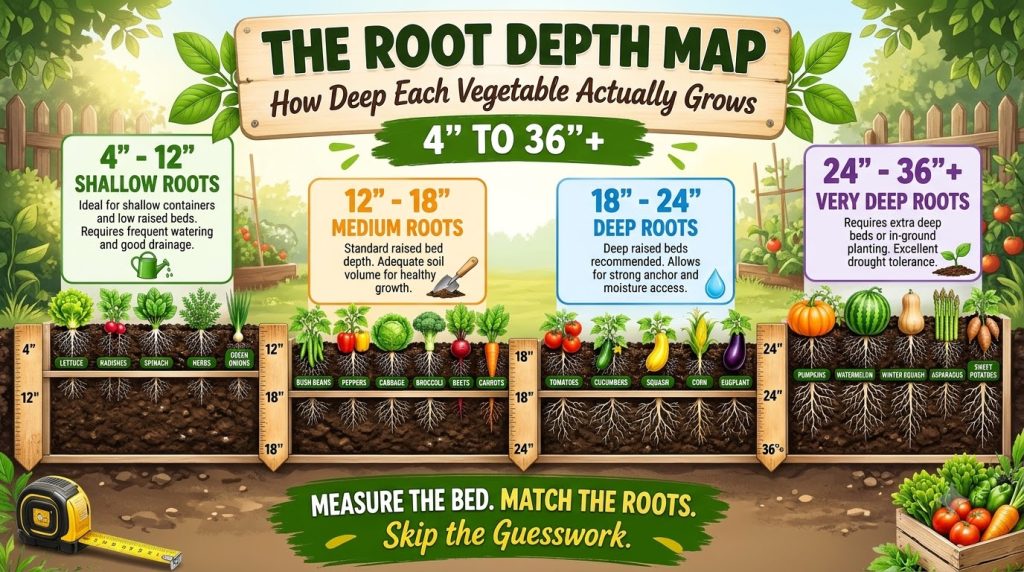
Shallow-Rooted Vegetables (Typically 4-12 inches)
These plants have root systems that stay relatively close to the surface. They are often quick growers and are excellent choices for containers or raised beds where soil depth might be limited.
- Examples: Lettuce, spinach, radishes, most herbs, green onions, bok choy, many varieties of kale.
- Care Tips: These plants require consistent moisture in the topsoil. Mulching is highly beneficial to retain moisture and keep soil temperatures stable.
Medium-Rooted Vegetables (Typically 12-24 inches)
This category includes a wide range of popular garden vegetables. Their roots go deeper than shallow varieties, allowing them to tap into a larger volume of soil for water and nutrients.
- Examples: Bush beans, peas, Swiss chard, corn, broccoli, cabbage, most peppers, eggplants, squash, cucumbers.
- Care Tips: Water deeply but less frequently than shallow-rooted plants. Ensure good drainage to prevent root rot, especially during heavy rains.
Deep-Rooted Vegetables (Typically 24-36+ inches)
These are the champions of soil exploration, sending their roots down far into the earth. This makes them more resilient to dry spells once established, but they require deeply prepared soil.
- Examples: Tomatoes (especially indeterminate varieties), pole beans, carrots (long varieties), parsnips, sweet potatoes, watermelons, pumpkins, asparagus.
- Care Tips: Deep soil preparation is key; break up any hardpans. Water thoroughly to encourage roots to grow downwards. Consider their space requirements, both above and below ground.
Putting Root Depth Knowledge into Practice
Now that you know the basics, how can you apply this in your garden?
- Garden Layout: When planning your garden beds, group plants with similar watering needs and root depths together. This makes irrigation more efficient.
- Soil Amendment: For deep-rooted vegetables, consider ‘double-digging’ or improving soil structure to a greater depth. For all plants, good compost improves soil health, regardless of root depth.
- Crop Rotation: Rotating your crops helps to prevent nutrient depletion in specific soil layers and reduces pest and disease build-up. Follow deep-rooted crops with shallow-rooted ones to help rejuvenate different soil profiles.
- Container Choices: Always match your container size to the mature root depth of your plant. A large tomato plant needs a much deeper pot than a head of lettuce.
Conclusion
Understanding vegetable root depths is a simple yet powerful tool that can significantly improve your gardening success. It empowers you to make smarter decisions about watering, soil preparation, and plant placement, leading to healthier plants and more bountiful harvests. So, take this knowledge, observe your plants, and watch your garden flourish like never before! Happy gardening!