Natural Cleanse for Your Cutting Board
Is your beloved wooden cutting board looking a little worse for wear? Over time, even the most cherished kitchen tools can accumulate stubborn stains and lingering odors from daily meal prep. Instead of reaching for harsh chemicals, you might be surprised to find an effective, natural solution right in your pantry.
This simple DIY method uses common baking soda to help lift stains and neutralize smells, leaving your cutting board refreshed and ready for its next culinary task. It’s an easy, affordable, and practical way to maintain a hygienic prep space without fuss.
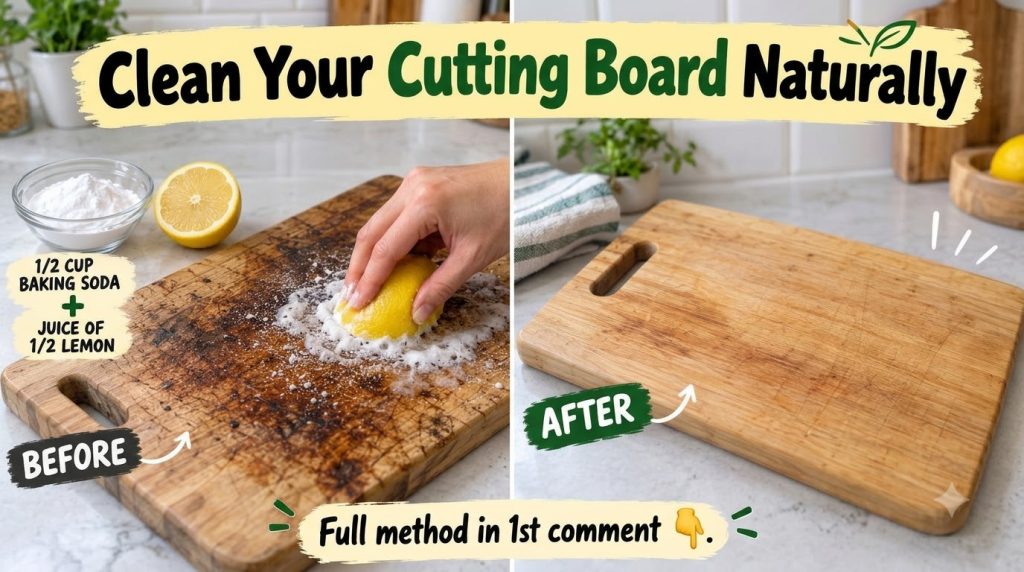
What You’ll Need
- Baking Soda: A generous amount for sprinkling
- Water: For rinsing
- Soft-bristled brush or cleaning cloth: To gently scrub
Why This DIY Can Be Useful
Baking soda, scientifically known as sodium bicarbonate, is a true workhorse in natural cleaning. Its mild abrasive texture makes it excellent for gently scrubbing away surface grime and stains without damaging the wood.
More importantly, baking soda is a natural deodorizer. It works by absorbing acidic and alkaline odor molecules, effectively neutralizing bad smells rather than just masking them. This makes it particularly useful for cutting boards that can hold onto odors from garlic, onions, or other strong-smelling foods.
How to Use It
- Lightly Dampen the Board: If your cutting board is dry, lightly dampen the surface with a bit of water. This helps the baking soda adhere better.
- Sprinkle Generously: Sprinkle a liberal amount of baking soda directly onto the stained or odorous areas of your wooden cutting board. Make sure to cover the problematic spots thoroughly.
- Let It Sit: Allow the baking soda to sit on the board for at least 10-15 minutes. For tougher stains or stronger odors, you can let it sit for a few hours, or even overnight.
- Gently Scrub: Using a soft-bristled brush or a cleaning cloth, gently scrub the baking soda into the board. Work in the direction of the wood grain to avoid scratching. You should see the stains starting to lift and the odors diminishing.
- Rinse Thoroughly: Rinse the cutting board thoroughly under running water to remove all traces of baking soda and loosened grime.
- Dry Completely: Pat the board dry with a clean towel and then allow it to air dry completely standing on its edge. Ensuring it dries completely helps prevent warping and mildew.
What to Expect
You can expect a noticeable reduction in surface stains and a significant neutralization of odors. Your cutting board will feel fresher and look cleaner, making it a more pleasant and hygienic surface for food preparation. For very deep-set or old stains, a single application may not remove them entirely, but it will certainly improve their appearance.
Helpful Tips
- For Extra Power: For really stubborn stains, after sprinkling the baking soda, squeeze a bit of lemon juice directly over it. The fizzing reaction between baking soda and lemon juice can create an even stronger cleaning action.
- Regular Maintenance: Make this a regular part of your cutting board care routine, especially after preparing foods that leave strong odors or colors.
- Re-Oil Your Board: After a deep clean, it’s a good idea to re-oil your wooden cutting board with food-grade mineral oil or a beeswax/oil blend. This helps to condition the wood and protect it from moisture.
Important Notes / Safety
- Avoid Soaking: Never soak wooden cutting boards in water, as this can cause them to warp, crack, or harbor bacteria. Always rinse quickly and dry promptly.
- Rinse Well: Ensure all baking soda is completely rinsed off the board before use.
- Gentle Scrubbing: Always use a soft brush or cloth to avoid scratching or damaging the wood surface.