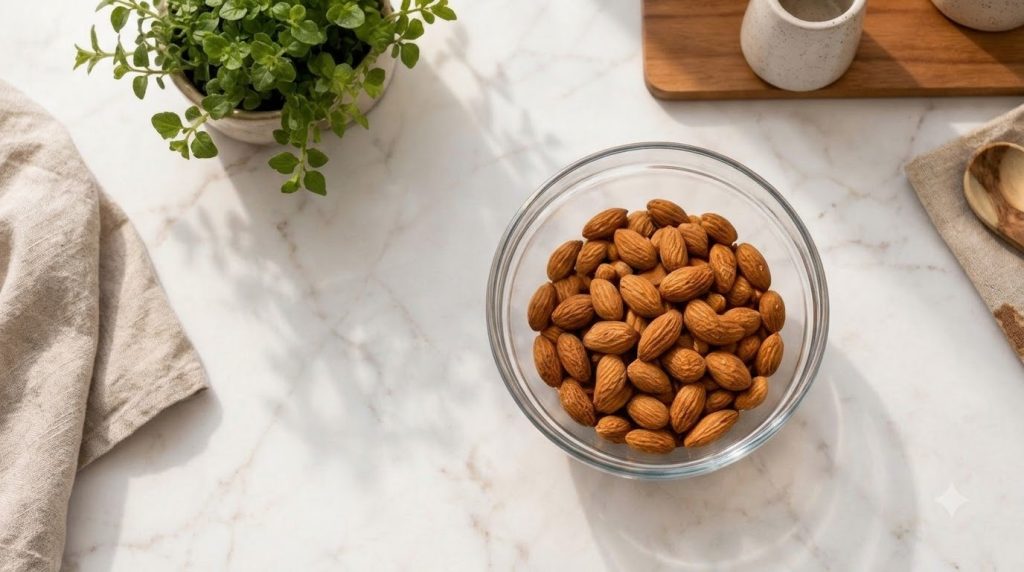
Healthy Homemade Almond Milk & Pulp Cookies
Say goodbye to store-bought cartons and hello to the freshest, creamiest almond milk you’ve ever tasted! This recipe isn’t just about making delicious homemade almond milk; it’s also about embracing a wonderful zero-waste philosophy by transforming the leftover almond pulp into irresistible, healthy almond pulp cookies. It’s a two-for-one deal that your taste buds and your wallet will thank you for!
These homemade almond delights offer a subtly sweet and nutty flavor that’s truly unparalleled. The almond milk is wonderfully smooth and versatile, while the almond pulp cookies are soft, chewy, and packed with wholesome goodness. You’ll be amazed at how easy it is to create these nutritious treats right in your own kitchen.
Making your own almond milk and then baking with the pulp is a simple process, perfect for beginner home cooks. It’s a fantastic way to enjoy a sustainable and nutritious treat that’s ideal for breakfast, a guilt-free snack, or even a light dessert. Your family will adore these homemade almond pulp cookies, and you’ll love knowing exactly what goes into them.
This recipe is an absolute gem for anyone looking to incorporate more plant-based options into their diet or simply wanting to reduce food waste. Get ready to impress yourself with these delightful and healthy homemade almond delights!
Why You’ll Love This Recipe
- Zero Waste Cooking: Make almond milk and use the pulp for cookies!
- Budget-Friendly: More economical than buying both almond milk and specialty cookies.
- Fresh & Flavorful: Homemade taste is far superior to store-bought.
- Family Favorite: Kids and adults alike will enjoy these healthy snacks.
- Beginner Friendly: Simple steps make this accessible for all skill levels.
- Nutritious Treat: Packed with wholesome ingredients for a guilt-free snack.
- Dairy-Free Delight: Perfect for those with lactose intolerance or a vegan lifestyle.
Ingredients
For the Homemade Almond Milk
- 1 cup raw almonds: Unblanched, preferably organic. Soaking them overnight makes them easier to blend and digest.
- 4 cups filtered water: For blending.
- 1-2 tablespoons maple syrup or honey (optional): For a touch of sweetness. Adjust to your preference.
- 1/2 teaspoon vanilla extract (optional): Enhances the flavor.
- Pinch of salt (optional): Balances the sweetness and brings out the nutty flavor.
For the Almond Pulp Cookies
- 1 cup almond pulp: Leftover from making almond milk. Make sure it’s well-squeezed.
- 1/2 cup all-purpose flour: Or use a gluten-free blend for a gluten-free option.
- 1/4 cup granulated sugar: Or coconut sugar for a refined sugar-free alternative.
- 1/4 cup unsalted butter, melted: Or coconut oil for a dairy-free/vegan version.
- 1 large egg: Or a flax egg (1 tbsp ground flaxseed + 3 tbsp water, let sit 5 min) for vegan.
- 1/2 teaspoon baking powder: Helps the cookies rise slightly.
- 1/4 teaspoon salt: Enhances flavor.
- 1/2 cup chocolate chips (optional): Or chopped nuts, dried cranberries for variations.
Kitchen Equipment
- High-speed blender
- Nut milk bag or fine-mesh sieve with cheesecloth
- Large mixing bowl
- Measuring cups and spoons
- Baking sheet
- Parchment paper or silicone baking mat
- Whisk or spatula
Step-by-Step Instructions
Part 1: Making Homemade Almond Milk
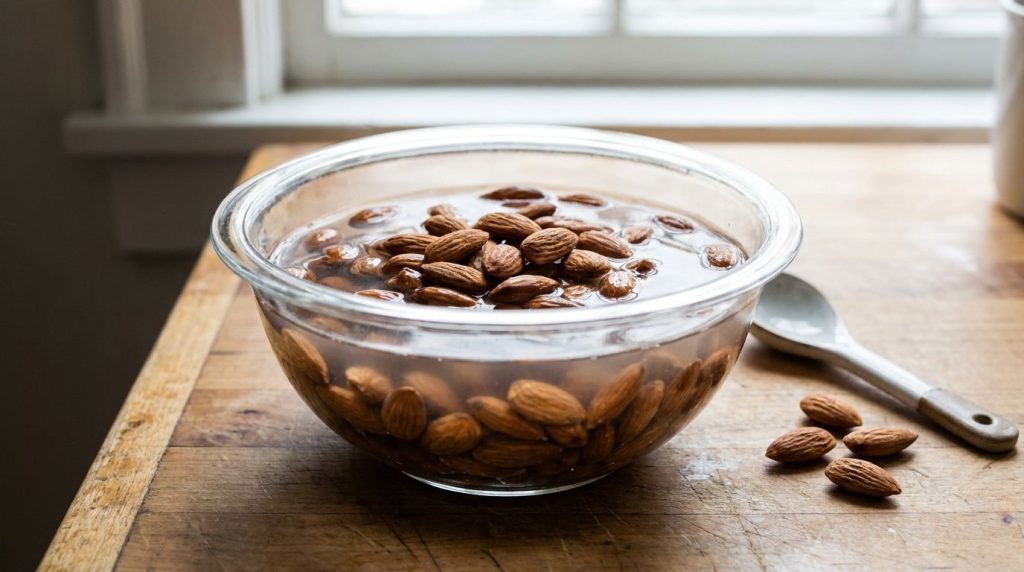
- Soak the Almonds: Place raw almonds in a bowl and cover with water. Let them soak overnight (8-12 hours) at room temperature. Drain and rinse them thoroughly before use.
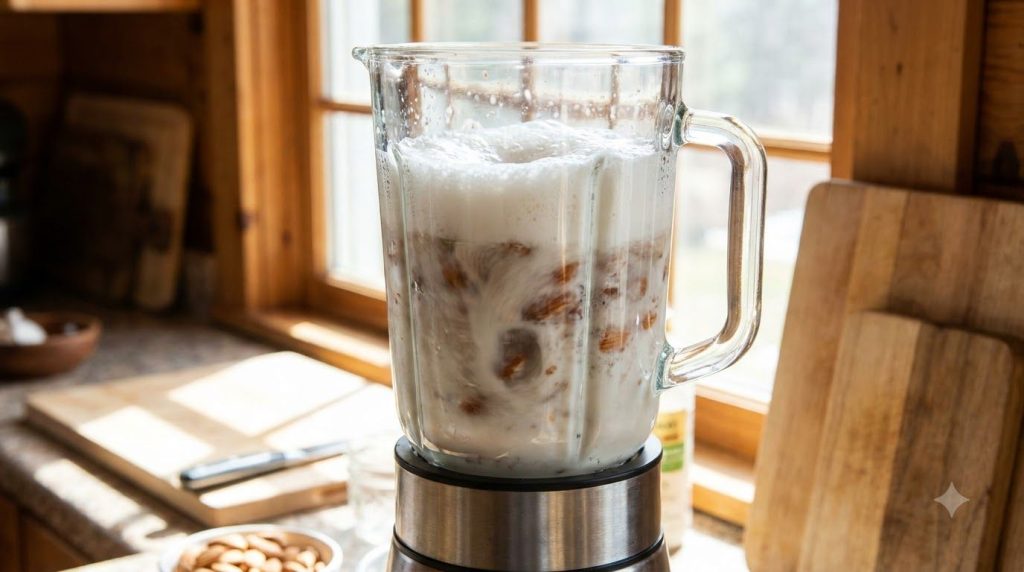
- Blend: Transfer the soaked and rinsed almonds to a high-speed blender. Add 4 cups of fresh filtered water, along with optional maple syrup/honey, vanilla, and a pinch of salt. Blend on high for 1-2 minutes until creamy and smooth.
- Strain: Place a nut milk bag over a large bowl, or line a fine-mesh sieve with cheesecloth. Pour the almond mixture into the bag/sieve.
- Squeeze: Gather the top of the nut milk bag and squeeze firmly to extract all the liquid into the bowl. Be patient to get every last drop! This liquid is your fresh almond milk.
- Store: Pour the homemade almond milk into a clean glass jar or bottle. Store in the refrigerator.
Part 2: Baking Almond Pulp Cookies
- Preheat & Prep: Preheat your oven to 350°F (175°C). Line a baking sheet with parchment paper or a silicone baking mat.
- Combine Wet Ingredients: In a large mixing bowl, whisk together the melted butter (or coconut oil), egg (or flax egg), and granulated sugar until well combined and smooth.
- Add Dry Ingredients: Stir in the almond pulp, all-purpose flour, baking powder, and salt. Mix until just combined. Be careful not to overmix. If using, fold in the chocolate chips now.
- Form Cookies: Drop spoonfuls of dough onto the prepared baking sheet, leaving about 2 inches between each cookie. Gently flatten them slightly with the back of a spoon or your fingers, as they won’t spread much.
- Bake: Bake for 12-15 minutes, or until the edges are lightly golden brown and the centers are set.
- Cool: Let the cookies cool on the baking sheet for a few minutes before transferring them to a wire rack to cool completely.

Expert Tips
- Don’t Skip Soaking: Soaking almonds not only makes them easier to blend but also helps break down phytic acid, improving nutrient absorption.
- Squeeze Thoroughly: For the creamiest almond milk and driest pulp (best for cookies), squeeze that nut milk bag with all your might!
- Sweetener Control: When making almond milk, start with less sweetener and add more to taste. You can always add more later, but you can’t take it away.
- Drying the Pulp (Optional): If your almond pulp feels very wet, you can spread it on a baking sheet and bake it at 200°F (95°C) for 30-60 minutes, or until it’s drier, before making cookies. This can result in crispier cookies.
- Cookie Consistency: The almond pulp cookie dough might be a bit crumbly. If it’s too dry, add a tiny bit more melted butter or a splash of non-dairy milk. If too wet, a tablespoon of flour.
Variations
- Spiced Almond Pulp Cookies: Add 1/2 teaspoon of cinnamon or a pinch of nutmeg to the cookie dough for a warm, comforting flavor.
- Lemon Zest Cookies: Incorporate 1 teaspoon of fresh lemon zest into the cookie dough for a bright, citrusy twist.
- Nut Butter Swirl: After forming the cookies, create a small indentation and dollop a tiny bit of almond or peanut butter in the center before baking.
- Coconut Almond Cookies: Mix in 1/4 cup of shredded unsweetened coconut to the cookie dough for extra texture and flavor.
- Vegan & Gluten-Free: Use coconut oil instead of butter, a flax egg instead of a chicken egg, and a 1:1 gluten-free flour blend for the cookies.
- Savory Pulp Crackers: Instead of sweet cookies, season the pulp with herbs and spices, flatten it thinly, and bake until crispy for crackers!
What to Serve With
Your homemade almond milk is perfect on its own, in coffee, smoothies, or over cereal. The almond pulp cookies are fantastic alongside:
- A tall glass of your freshly made homemade almond milk
- A hot cup of coffee or herbal tea
- Fresh fruit salad for a light dessert
- A bowl of creamy Greek yogurt
- As a wholesome after-school snack for kids
Storage
- Homemade Almond Milk: Store in an airtight container or bottle in the refrigerator for up to 3-5 days. It may separate, so give it a good shake before each use.
- Almond Pulp: If you’re not making cookies right away, store the squeezed almond pulp in an airtight container in the refrigerator for up to 2-3 days, or freeze it for up to 1 month.
- Almond Pulp Cookies: Store cooled cookies in an airtight container at room temperature for up to 3-4 days, or in the refrigerator for up to a week. For longer storage, freeze baked cookies in a freezer-safe bag for up to 2 months. Reheat gently in the microwave or oven if desired.
Frequently Asked Questions
Q: Do I have to soak the almonds?
A: While technically you can make almond milk without soaking, soaking significantly improves the creaminess, digestibility, and overall flavor of the milk. It also makes blending much easier.
Q: Can I use blanched almonds?
A: Yes, you can use blanched almonds. The milk will be slightly lighter in color, and the pulp will be softer, but it will still work well.
Q: What else can I do with almond pulp?
A: Besides cookies, almond pulp can be used in granola, energy bites, crackers, added to oatmeal, or even used in savory dishes like veggie burgers. It’s quite versatile!
Q: Why is my almond milk separating?
A: Separation is completely normal for homemade almond milk! It’s because there are no stabilizers like in store-bought versions. Just shake it well before serving.
Q: Can I make the cookies gluten-free?
A: Absolutely! Simply swap the all-purpose flour for a 1:1 gluten-free baking blend. Make sure your other ingredients are also certified gluten-free.
Q: My almond pulp cookies are too crumbly. What went wrong?
A: This often happens if the almond pulp was too dry, or if there wasn’t enough binder. Try adding a tablespoon more melted butter or a tiny bit of non-dairy milk to the dough to help it come together.
Q: Can I reduce the sugar in the cookies?
A: Yes, you can certainly reduce the sugar to your preference, or substitute with natural sweeteners like mashed banana or unsweetened applesauce, though this might slightly change the texture.
Nutrition
Please note that nutritional information for homemade recipes can vary widely based on exact ingredients and portion sizes. The values below are approximate per serving of almond milk (1 cup) and per cookie (based on 12 cookies).
- Almond Milk (1 cup, unsweetened):
- Calories: ~40-60
- Protein: ~1-2g
- Fat: ~3-5g
- Carbs: ~1-2g
- Fiber: ~0-1g
- Sugar: ~0-1g
- Sodium: ~10-20mg
- Almond Pulp Cookie (1 cookie, approximate):
- Calories: ~90-120
- Protein: ~2-3g
- Fat: ~5-7g
- Carbs: ~10-15g
- Fiber: ~1-2g
- Sugar: ~5-8g
- Sodium: ~50-70mg
Nutritional information is an estimate and may vary.
Conclusion
There’s truly nothing quite like the satisfaction of creating something wonderful from scratch, especially when it helps you cut down on waste! These healthy homemade almond milk and almond pulp cookies are a delicious testament to the simple joys of home cooking. You’ll love the fresh taste, the wholesome ingredients, and the smart use of every part of the almond.
Don’t wait any longer to try this fantastic recipe. Whip up a batch for your family and enjoy the delicious rewards. We𠆝 love to hear how it turns out for you, so please leave a comment below and share your experience! And while you’re here, why not explore more of our easy, family-friendly recipes?

