When it comes to managing blood sugar, your food choices matter immensely. Every bite can impact how your body processes glucose, affecting your energy levels, mood, and long-term health. Fruits, while naturally sweet, offer a wide range of nutrients, but not all fruits are created equal when you’re watching your blood sugar.
This article dives into a common dilemma: fresh berries versus dried fruit. We’ll explore their nutritional profiles, how they impact your blood sugar, and which option is generally the better choice for a healthy lifestyle. Understanding these differences can empower you to make smarter, more informed decisions for stable blood sugar and overall well-being.
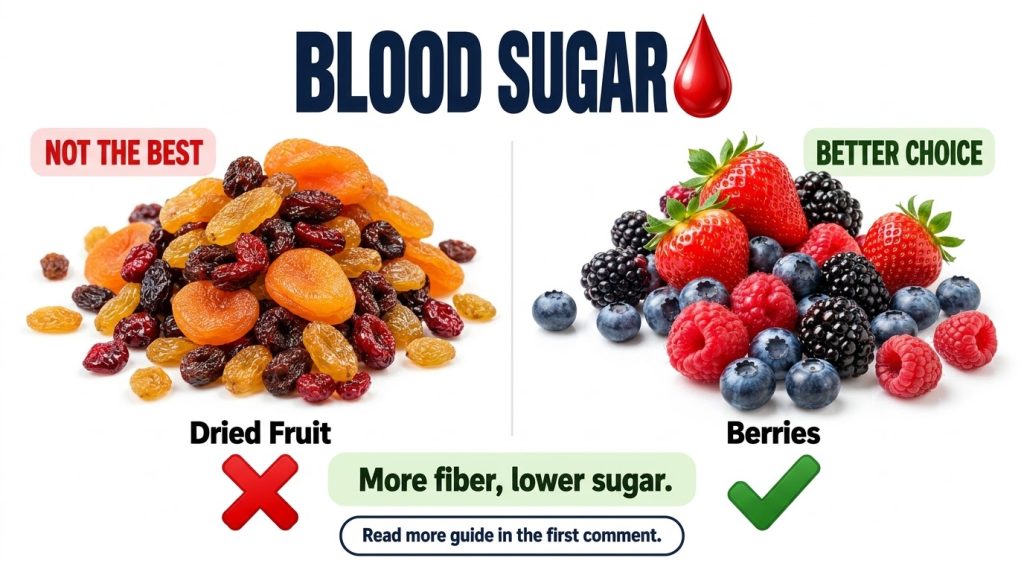
Nutrition Comparison: Berries vs. Dried Fruit
Let’s take a closer look at how fresh berries and dried fruits stack up nutritionally. While both offer vitamins and minerals, their sugar and fiber content can vary dramatically, which is crucial for blood sugar management.
Key Differences in Nutritional Profile (Approximate per 1/2 cup serving)
| Nutrient | Mixed Berries (fresh) | Mixed Dried Fruit (e.g., raisins, cranberries) |
|---|---|---|
| Calories | ~40-60 | ~180-220 |
| Protein | ~1g | ~2g |
| Carbs | ~10-15g | ~45-55g |
| Sugar | ~5-10g (natural) | ~35-45g (natural, often added) |
| Fiber | ~3-5g | ~2-4g |
| Main Nutrients | Vitamin C, K, Manganese, Antioxidants | Potassium, Iron, Vitamin K, Antioxidants |
| Best Benefit | Low glycemic impact, high antioxidants | Energy boost, some minerals |

Calories
When dried, fruits lose their water content, which concentrates their sugars and, consequently, their calories. A small handful of dried fruit can contain as many calories as a much larger portion of fresh berries.
Sugar Content
This is where the biggest difference lies. Fresh berries contain natural sugars, but their high water and fiber content help to dilute these sugars, slowing their absorption. Dried fruits, on the other hand, have a much higher concentration of sugar per serving, often with added sugars in commercially processed varieties. This can lead to a quicker and more significant spike in blood sugar.
Fiber
Fiber is a superstar for blood sugar management. It helps slow down the digestion and absorption of sugars, preventing rapid spikes. Fresh berries are excellent sources of dietary fiber. While dried fruits also contain fiber, the amount per calorie is often lower than in their fresh counterparts, and the concentrated sugars can outweigh the fiber’s benefits for blood sugar control.
Vitamins & Minerals
Both fresh and dried fruits offer valuable vitamins and minerals. Berries are particularly rich in Vitamin C, Vitamin K, and manganese, along with powerful antioxidants. Dried fruits retain many of their original nutrients, like potassium, iron, and some B vitamins, but some heat-sensitive vitamins, like Vitamin C, may be reduced during the drying process.
Impact on Blood Sugar
Due to their higher fiber and water content, fresh berries generally have a lower glycemic index (GI) and glycemic load (GL) compared to dried fruits. This means they cause a slower, more gradual rise in blood sugar, which is ideal for maintaining stable levels. Dried fruits, with their concentrated sugars and often lower fiber density, can cause a faster and higher blood sugar response.
Portion Size Considerations
Because dried fruits are so calorie-dense and sugar-concentrated, it’s very easy to overeat them. A small portion of dried fruit (like 1/4 cup) can equal the sugar content of a larger portion of fresh fruit (like 1 cup of berries). Mindful portion control is essential if you choose to include dried fruit in your diet.
Taste & Versatility
Fresh berries offer a refreshing, often tart-sweet flavor and can be enjoyed raw, in smoothies, with yogurt, or baked into healthy dishes. Dried fruits have a chewy, intensely sweet flavor, making them suitable for trail mixes, baking, or as a quick energy boost. Both have their culinary places, but for daily healthy eating, versatility with minimal blood sugar impact is key.

The Winner: Fresh Berries for Stable Blood Sugar
For individuals focusing on blood sugar management, fresh berries are generally the superior choice. Their high fiber content, lower sugar concentration, and abundant antioxidants make them a fantastic addition to almost any diet. They provide sweetness and nutrition without causing significant blood sugar spikes.
Practical Tips for Enjoying Fruits Mindfully
- Prioritize Fresh Berries: Make berries your go-to fruit for snacks, breakfast, and desserts. Enjoy them plain, in smoothies, or mixed into oatmeal and yogurt.
- Watch Dried Fruit Portions: If you enjoy dried fruit, treat it as an occasional treat rather than a staple. Stick to very small portions (e.g., 1-2 tablespoons) and choose varieties without added sugar.
- Combine with Protein/Fat: When eating fruit, especially dried fruit, pair it with a source of protein or healthy fat (like nuts, seeds, or Greek yogurt). This can further help slow down sugar absorption.
- Read Labels Carefully: For dried fruits, always check the ingredient list for added sugars.
- Stay Hydrated: Drinking water throughout the day supports overall metabolic health and can help manage blood sugar.
FAQs
Are all fruits bad for blood sugar if you have diabetes?
No, not all fruits are bad. Many fruits, especially those high in fiber and water like berries, apples, and oranges, can be part of a blood sugar-friendly diet. Portion size and combination with other foods are key.
How much dried fruit is okay to eat?
For blood sugar management, dried fruit should be consumed sparingly and in very small portions, perhaps 1-2 tablespoons at a time, and ideally paired with protein or healthy fats to mitigate blood sugar spikes.
Do berries have a low glycemic index?
Yes, most berries (strawberries, blueberries, raspberries, blackberries) have a low glycemic index, meaning they cause a slower and lower rise in blood sugar compared to high-GI foods.
Can eating too many berries cause a blood sugar spike?
While berries are generally good for blood sugar, eating excessively large quantities of any food can impact blood sugar. However, due to their fiber and water content, it’s much harder to overeat berries to the point of a significant spike compared to dried fruit.
What are some other blood sugar-friendly fruit options?
Besides berries, other great choices include apples, pears, oranges, grapefruit, kiwi, and peaches. Focus on whole, fresh fruits with the skin on for maximum fiber.
Is fruit juice as good as whole fruit?
No, fruit juice typically removes the beneficial fiber, leading to a faster and more concentrated sugar absorption that can spike blood sugar more quickly than whole fruit. It’s best to choose whole fruits over juice.
Conclusion
When navigating sweet choices for stable blood sugar, fresh berries emerge as a clear winner over dried fruits. Their rich fiber content, lower sugar concentration, and hydrating qualities make them an excellent choice for a healthy diet. While dried fruits can be enjoyed in moderation, prioritizing fresh, whole foods like berries will offer greater benefits for maintaining balanced blood sugar levels and promoting overall health.
Ready to explore more delicious and healthy food options? Check out our other articles for creative recipes and insightful nutrition guides!
This content is for educational purposes only and should not be considered medical advice. Consult a qualified healthcare professional for personalized dietary recommendations.

