Ever dreamt of duplicating your favorite plant, or starting a whole new garden without breaking the bank? Plant propagation is your answer! It’s the art and science of creating new plants from existing ones, and the two most common methods are through cuttings or by starting from seed. Understanding which method is best for which plant can save you time, effort, and lead to a more bountiful garden. Let’s dive into the fascinating world of plant propagation!
Why Propagate Your Plants?
There are many wonderful reasons to get into plant propagation:
- Expand Your Collection: Easily get more of your favorite plants without buying new ones.
- Share the Joy: Propagate plants to share with friends, family, or fellow gardening enthusiasts.
- Save Money: Growing from cuttings or seeds is often much cheaper than buying mature plants.
- Preserve Rare Varieties: Help keep unique or heirloom plants going.
- Learning Experience: It’s incredibly rewarding to watch a new plant grow from a tiny piece or seed!
Method 1: Growing from Cuttings
Taking cuttings involves snipping a piece from an existing plant and encouraging it to grow roots. This method creates a clone of the parent plant, meaning it will have the exact same characteristics. It’s often quicker than growing from seed for many plants, leading to a mature plant sooner.
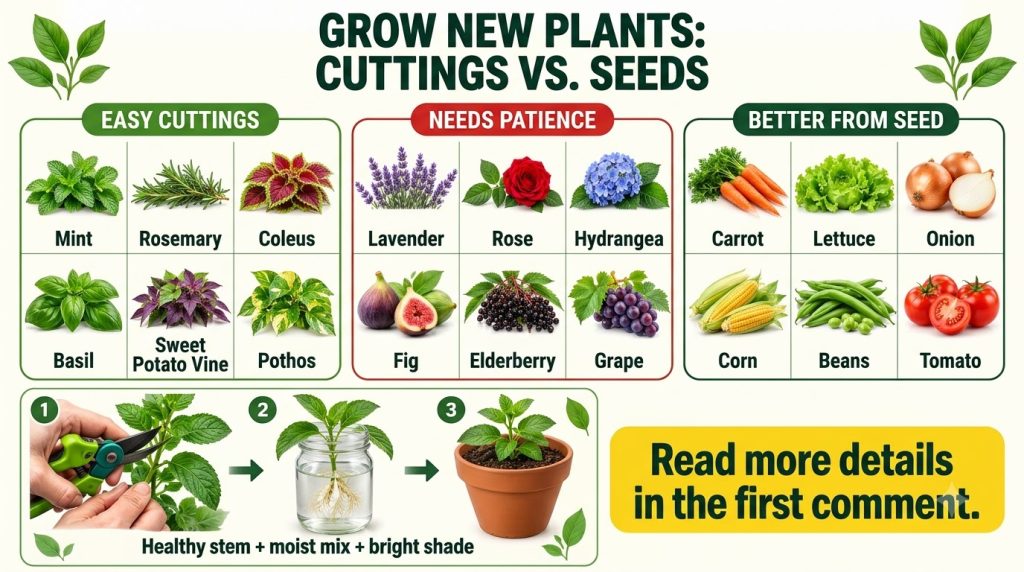
Easy Cuttings: Start Here!
Some plants are incredibly forgiving and root easily from cuttings, making them perfect for beginners. You can often root these in just a glass of water!
- Pothos: A classic houseplant, almost foolproof.
- Philodendron: Similar to Pothos, they root quickly from stem nodes.
- Coleus: Known for their vibrant foliage, they root rapidly.
- Rosemary: Aromatic herb that does well from soft stem cuttings.
- Lavender: Propagate from soft or semi-hardwood cuttings for more fragrant bushes.
- Geraniums: Easy to root from stem cuttings, perfect for expanding your flower beds.
Quick Guide to Taking Easy Cuttings:
- Select a Healthy Stem: Choose a non-flowering stem about 4-6 inches long with several leaves.
- Make a Clean Cut: Use sharp, clean pruners or scissors to cut just below a ‘node’ (where leaves attach to the stem).
- Prepare the Cutting: Remove any leaves from the bottom inch or two of the stem to prevent rot.
- Rooting Medium: Place the cutting in a glass of clean water, ensuring nodes are submerged, or directly into moist seed-starting mix or perlite.
- Wait for Roots: Place in indirect light and change the water every few days. Roots should appear within a few weeks.
- Plant in Soil: Once roots are about 1-2 inches long, gently transplant into a small pot with potting soil.
Cuttings That Need a Little More Patience
Some plants require a bit more attention and a longer rooting period. Don’t be discouraged if these take a few extra weeks!
- Ficus (e.g., Fiddle Leaf Fig, Rubber Plant): These can take weeks, sometimes months, to root. They often benefit from rooting hormone and higher humidity.
- Monstera: While popular, Monstera cuttings can be slower and require good humidity to prevent leaf loss.
- Hydrangeas: Propagate from softwood cuttings in late spring/early summer. They often do best in a moist potting mix under cover to maintain humidity.
- Hoya: Known for their waxy leaves, Hoyas can be slow to root but are very rewarding.
For these plants, using a rooting hormone, providing bottom heat (with a heat mat), and maintaining high humidity (a plastic bag over the pot can help) can significantly increase your success rate.
Method 2: Growing from Seeds
Growing from seeds is the most fundamental way to start new plants. It’s often necessary for annuals, many vegetables, and specific flower varieties. Seeds carry the genetic information to create a new plant, but unlike cuttings, there can be slight variations from the parent plant if it’s not a pure open-pollinated variety.
Plants Better from Seed: Where Seeds Shine
Some plants are simply easier, more reliable, or only grow from seeds. This is especially true for many vegetables and annual flowers.
- Carrots & Radishes: These root vegetables are always grown directly from seed in the garden bed.
- Tomatoes & Peppers: Starting these from seed indoors gives them a head start before transplanting.
- Sunflowers: Large, easy-to-handle seeds that sprout readily.
- Beans & Peas: Fast-growing legumes perfect for direct sowing.
- Corn: Best sown directly into the garden.
- Many Annual Flowers (e.g., Marigolds, Zinnias): Produce abundant blooms from seeds.
Quick Guide to Starting Seeds:
- Choose Quality Seeds: Opt for fresh seeds from reputable sources for better germination rates.
- Use Seed-Starting Mix: This fine, sterile medium is ideal for delicate seedlings.
- Plant at Proper Depth: Follow package instructions; a general rule is to plant seeds at a depth equal to their diameter.
- Keep Consistently Moist: Water gently to avoid dislodging seeds. A spray bottle can be helpful.
- Provide Warmth & Light: Most seeds germinate best with consistent warmth. Once sprouted, seedlings need plenty of light to prevent legginess.
- Harden Off: Before transplanting outdoors, gradually acclimate seedlings to outdoor conditions over 7-10 days.
Choosing the Right Propagation Method
When deciding between cuttings and seeds, consider these factors:
- Plant Type: Some plants simply prefer one method over the other.
- Time & Patience: Cuttings can be faster for some plants, while seeds require patience from germination to maturity.
- Desired Outcome: Cuttings guarantee an exact replica; seeds might introduce slight variations.
- Availability: Do you have an existing plant to take cuttings from, or are seeds your only option?
- Scale: If you need many plants, seeds are often more efficient. If you just want a few more of a specific plant, cuttings work well.
Whether you’re snipping a stem or sowing a tiny seed, the act of plant propagation connects you deeper to the natural world. It’s a rewarding journey that expands your garden, shares beauty, and nurtures your green thumb. So grab your pruners or a packet of seeds, and start growing new life today!
What are your favorite plants to propagate? Share your successes and tips in the comments below!