Did you know that *when* you eat is almost as important as *what* you eat? While focusing on nutritious foods is always a top priority, understanding the best times to fuel your body can truly amplify your well-being. Strategic meal timing can play a supportive role in your digestion, energy levels, and even your mood throughout the day. Ready to discover how to optimize your daily nutrition with simple, mindful eating habits?
Why Meal Timing Matters for Your Wellness Journey
Our bodies operate on an internal clock, known as the circadian rhythm, which influences various bodily functions, including metabolism, digestion, and hormone regulation. Eating at consistent, optimal times can help support these natural rhythms, leading to several potential benefits:
- Improved Digestion: Giving your digestive system regular breaks between meals can help it function more efficiently.
- Stable Energy Levels: Regular fuel intake helps maintain steady blood sugar, preventing energy crashes and dips.
- Better Metabolism Support: Eating at consistent times may help your body process food more effectively.
- Enhanced Nutrient Absorption: When your digestive system is working optimally, it’s better equipped to absorb vital nutrients from your food.
Your Daily Guide to Optimal Meal Times
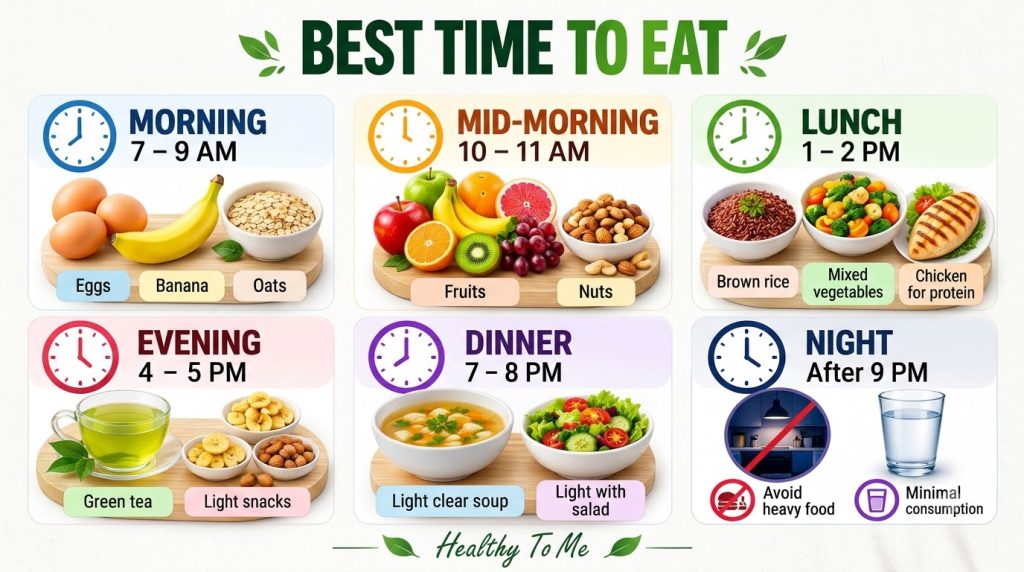
While everyone’s schedule and body are unique, here’s a general guide to help you structure your eating times for better well-being. Think of these as friendly suggestions to explore and adapt to your own lifestyle.
Morning Fuel: Breakfast (7:00 AM – 8:00 AM)
Kickstart your day with a nourishing breakfast within an hour or two of waking. This helps to break your overnight fast and refuel your body. Aim for a balance of complex carbohydrates, protein, and healthy fats.
- Ideas: Oatmeal with berries and nuts, scrambled eggs with whole-grain toast and avocado, a fruit smoothie with spinach and plant-based protein.
Mid-Morning Boost: Snack (10:00 AM – 11:00 AM)
If you have a longer gap until lunch, a small, healthy snack can bridge the hunger gap and keep your energy steady.
- Ideas: A handful of almonds, an apple with a tablespoon of peanut butter, Greek yogurt, or a small piece of fruit.
Nourishing Lunch (12:00 PM – 1:00 PM)
Make lunch your substantial meal of the day, providing sustained energy for your afternoon activities. Focus on lean protein, whole grains, and plenty of colorful vegetables.
- Ideas: A large salad with grilled chicken or chickpeas, a whole-grain wrap with hummus and veggies, or a bowl of lentil soup with a side of brown rice.

Afternoon Refresh: Snack (3:00 PM – 4:00 PM)
To combat the common afternoon energy slump, a light and refreshing snack can make a big difference. This helps prevent overeating at dinner.
- Ideas: A small fruit like a banana, a cup of green tea, a rice cake with a thin spread of avocado, or some sliced cucumber.
Light Evening Meal: Dinner (6:00 PM – 7:00 PM)
Aim to have your dinner a few hours before bedtime, ideally before 7:00 PM. A lighter meal in the evening can support better digestion and a more restful night’s sleep.
- Ideas: Baked fish with steamed vegetables, a light vegetable soup, a small portion of brown rice with stir-fried tofu, or a simple chicken and veggie sauté.
Late Night Nudge (If Needed): Very Light (Before 9:00 PM)
If you genuinely feel hungry before bed, opt for something very light and easy to digest to avoid disrupting your sleep. It’s often best to avoid eating heavy meals close to bedtime.
- Ideas: A small glass of warm herbal tea, a few slices of banana, or a tiny portion of unsweetened applesauce.

Tips for Incorporating Healthy Meal Timing
- Listen to Your Body: These are guidelines, not strict rules. Pay attention to your hunger and fullness cues.
- Consistency is Key: Try to eat at similar times each day to help regulate your body’s internal clock.
- Plan Ahead: Meal prepping or having healthy snacks readily available can make adhering to a schedule much easier.
- Stay Hydrated: Sometimes thirst can be mistaken for hunger. Drink plenty of water throughout the day.
- Don’t Skip Meals: Skipping meals, especially breakfast, can lead to overeating later and disrupt your energy levels.
Embrace Your Wellness Journey
Optimizing your meal times doesn’t have to be complicated. By making small, mindful adjustments to *when* you eat, alongside *what* you eat, you can support your body’s natural rhythms and enhance your overall well-being. Experiment with these tips and find what works best for you to feel more energized, balanced, and vibrant every day!