Imagine stepping into your garden, plucking fresh herbs, and knowing that each plant is not only contributing to your culinary adventures but also helping its neighbors thrive. This isn’t just a gardener’s dream; it’s the magic of companion planting! When you strategically pair certain herbs with other plants, you unlock a symphony of benefits, from enhanced growth and flavor to natural pest deterrence and improved soil health. It’s a time-honored tradition that turns your garden into a balanced, resilient ecosystem.
Whether you’re tending a sprawling backyard plot, a compact raised bed, or even a collection of containers on a sunny patio, understanding which herbs grow well together can transform your gardening experience. It’s about creating synergistic relationships that maximize your harvest and minimize common garden challenges. Ready to cultivate a smarter, more productive herb garden? Let’s explore some winning combinations that will elevate your meals and nurture your plants.
The Art and Science of Companion Planting Herbs
Companion planting is a horticultural strategy where different plants are grown close together for mutual benefit. For herbs, these benefits are particularly pronounced. Many aromatic herbs release compounds that can confuse pests, deterring them from nearby vegetables. Others attract beneficial insects like pollinators and predatory wasps, which help control harmful populations. Some herbs can even improve the flavor of neighboring plants, while others contribute nutrients to the soil or provide physical support.
When selecting companions, consider each plant’s needs for sunlight, water, and soil type to ensure all partners can flourish. Grouping plants with similar requirements simplifies care and promotes overall plant vigor. It’s a holistic approach to plant care that reduces the need for synthetic inputs and builds a more sustainable, vibrant garden.
Winning Herb Pairings for Your Garden
Let’s dive into some specific herb combinations that work wonders, offering practical tips for growing each one successfully.
Basil & Its Best Buds
Basil (Ocimum basilicum) is a beloved annual herb, known for its sweet, peppery aroma and essential role in Mediterranean cuisine. It’s a sun-loving plant that thrives in rich, well-draining soil.
- Sunlight: 6-8 hours of direct sun daily.
- Soil: Moist, fertile, well-draining.
- Watering: Consistent moisture, but avoid soggy roots.
- Hardiness: Annual in most USDA Zones (grown outdoors in Zones 2-11 during warm months).
- Mature Size: 1-2 feet tall and wide.
Companions for Basil:
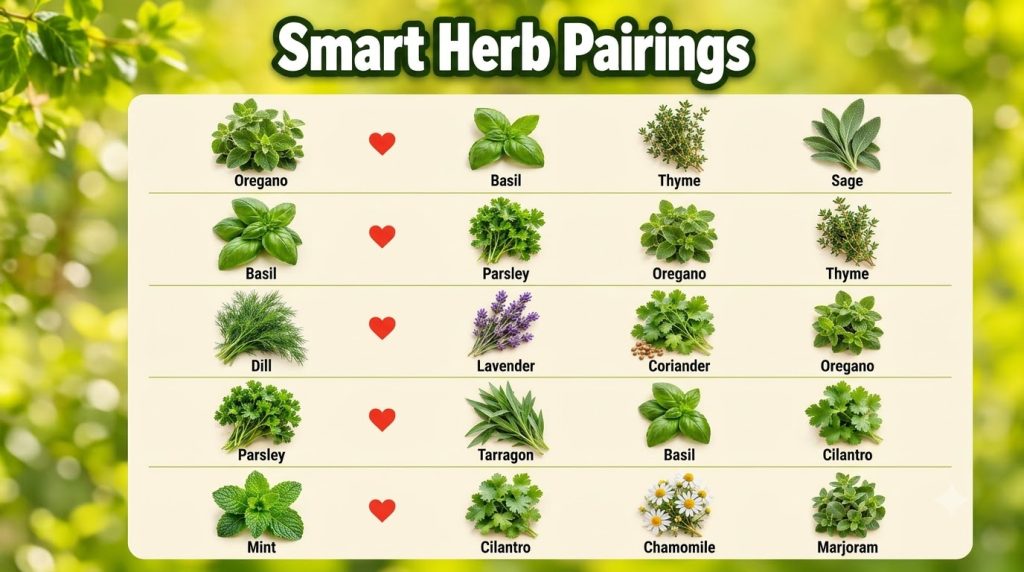
- Tomato: This classic pairing is more than just culinary. Basil is believed to repel tomato hornworms and flies, while some gardeners claim it enhances the flavor of tomatoes. Plant basil at the base of your tomato plants, ensuring good airflow.
- Parsley: Both parsley and basil enjoy similar growing conditions, making them natural neighbors. Parsley (Petroselinum crispum) can act as a living mulch, helping to keep the soil cool and moist around basil.
- Chamomile: This delightful herb (Matricaria chamomilla) is known to attract beneficial insects and is thought by some to improve the growth and flavor of nearby plants. Plant chamomile near basil to encourage a healthy garden ecosystem.
Care Tip: Pinch off basil flower buds as they form to encourage bushier growth and extend the harvest of flavorful leaves.
Dill: A Friend to Many
Dill (Anethum graveolens) is a delicate, feathery annual herb with a distinctive, slightly anisy flavor. It’s an excellent attractant for beneficial insects and a great companion for a range of vegetables.
- Sunlight: Full sun (at least 6 hours).
- Soil: Well-draining, moderately fertile.
- Watering: Regular, especially during dry spells.
- Hardiness: Annual in most USDA Zones (2-11), self-sows readily.
- Mature Size: 2-3 feet tall.
Companions for Dill:
- Cabbage & Broccoli: Dill attracts parasitic wasps and hoverflies, which prey on common brassica pests like cabbage worms and aphids. Plant dill nearby but give it enough space so it doesn’t shade out your young brassicas.
- Lettuce: Growing dill near lettuce can be beneficial as dill’s aromatic foliage may deter slugs and other pests that target leafy greens. Plus, their growth habits complement each other, with dill growing upright and lettuce spreading horizontally.
Care Tip: Allow some dill plants to flower and go to seed to provide a continuous food source for beneficial insects and encourage self-seeding for future harvests.
Mint: A Vigorous Companion
Mint (Mentha spp.) is a highly aromatic perennial herb, famous for its refreshing scent and taste. While wonderfully versatile, mint is known for its vigorous, sometimes invasive, spreading habit, making container gardening or root barriers essential for many growers.
- Sunlight: Partial shade to full sun.
- Soil: Moist, rich, well-draining.
- Watering: Consistent moisture.
- Hardiness: Perennial in USDA Zones 3-11.
- Mature Size: 1-2 feet tall, spreads indefinitely if not contained.
Companions for Mint:
- Tomato: Similar to basil, mint can help repel common tomato pests. However, due to mint’s aggressive spreading, it’s often best to plant mint in a pot near your tomatoes rather than directly in the garden bed.
- Cabbage: Mint’s strong aroma can deter cabbage worms and flea beetles. Again, consider planting mint in a separate container nestled among your cabbage plants to manage its growth.
- Kale: As a robust leafy green vegetable, kale also benefits from mint’s pest-repelling properties. Using mint in containers around your kale plants can help protect them from common garden nuisances.
Care Tip: Always plant mint in a confined space, like a bottomless pot sunk into the ground or a dedicated container, to prevent it from overwhelming your garden.
Rosemary: A Resilient Protector
Rosemary (Salvia rosmarinus) is a woody perennial herb, cherished for its piney aroma and culinary versatility. It’s a Mediterranean native, preferring drier conditions and full sun.
- Sunlight: Full sun (at least 6-8 hours).
- Soil: Well-draining, sandy or loamy.
- Watering: Drought-tolerant once established; water sparingly.
- Hardiness: Perennial in USDA Zones 7-10 (can be overwintered indoors in colder zones).
- Mature Size: 2-6 feet tall and wide, depending on cultivar.
Companions for Rosemary:
- Cabbage: Rosemary’s strong scent can deter cabbage moths and other brassica pests, making it a valuable companion for your cabbage patch.
- Sage: Both rosemary and sage (Salvia officinalis) enjoy similar growing conditions – full sun and well-draining soil – making them natural partners. Their strong aromas create a protective barrier against various insects.
- Carrot: Planting rosemary near carrots is thought to deter carrot rust flies. The aromatic presence can confuse pests looking for their target plants.
Care Tip: Avoid overwatering rosemary, especially in humid climates, as it is susceptible to root rot. Allow the soil to dry out completely between waterings.
Thyme: Low-Growing Support
Thyme (Thymus vulgaris) is a low-growing, spreading perennial herb with tiny, aromatic leaves. It’s an excellent groundcover and a robust companion plant that tolerates poor soil and dry conditions.
- Sunlight: Full sun.
- Soil: Well-draining, lean to moderately fertile.
- Watering: Drought-tolerant once established.
- Hardiness: Perennial in USDA Zones 5-9.
- Mature Size: 6-12 inches tall, spreads 1-2 feet.
Companions for Thyme:
- Radish: Growing thyme near radishes can help deter flea beetles and other pests that bother root vegetables. Thyme’s low-growing habit also acts as a living mulch, helping to keep soil cool and suppress weeds.
- Broccoli: Thyme attracts beneficial insects, which can help control pests on broccoli. Its dense growth can also help to suppress weeds around the larger brassica plants.
- Strawberry: Thyme is often planted near strawberries to help deter slugs and other pests, while its low profile doesn’t compete for light. It’s a lovely pairing that adds beauty and utility to the edible landscape.
Care Tip: After flowering, lightly prune thyme to maintain a compact, bushy shape and encourage new growth. This also prevents it from becoming woody.
Common Mistakes to Avoid in Companion Planting
While companion planting is incredibly beneficial, a few missteps can hinder its effectiveness:
- Ignoring Plant Needs: Even good companions need similar light, water, and soil conditions. Don’t force a shade-lover next to a sun-worshipper.
- Overcrowding: Ensure adequate spacing. Plants still need air circulation to prevent fungal diseases, and roots need room to grow without competing too intensely for nutrients.
- Not Knowing Your Pests: Understand which pests are common in your area and which companion plants specifically target them. General pest deterrence is good, but targeted solutions are better.
- Planting Aggressive Spreaders Uncontained: Herbs like mint can quickly take over. Always use containers or root barriers for such vigorous plants, even when companion planting.
- Expecting Miracles: Companion planting is a tool in your gardening arsenal, not a magic bullet. It enhances pest control and plant health but doesn’t eliminate the need for regular garden observation and care.
Regional and Seasonal Considerations for Herb Gardens
The success of your herb garden and companion plantings will vary across the United States. In colder USDA Zones (3-5), many perennial herbs benefit from winter protection or container growing so they can be brought indoors. Annual herbs like basil and dill are best sown after all danger of frost has passed, usually in late spring, allowing enough time to mature before autumn’s chill.
Gardeners in warmer Zones (9-11) can often grow perennial herbs year-round, but might need to provide afternoon shade for some plants during intense summer heat. Pay attention to local frost dates, soil temperature, and specific microclimates in your garden. Consulting your local university extension service can provide tailored advice for your region, ensuring you select the best varieties and planting times for your unique conditions.
Cultivating a Harmonious Herb Garden
Embracing companion planting for your herbs is a delightful way to deepen your connection with your garden. By understanding the natural synergies between different plants, you can create a more resilient, productive, and fragrant space. Not only will your garden flourish, but the fresh, flavorful herbs you harvest will elevate your culinary creations to new heights. So go ahead, experiment with these smart pairings, observe how your plants respond, and enjoy the delicious rewards of a truly harmonious herb garden!