Do you dream of a kitchen garden brimming with lush, vibrant parsley, but instead find yourself facing thin, leggy stems and sparse leaves? You’re not alone! Many gardeners experience the frustration of weak parsley plants. But don’t worry, achieving parsley perfection is easier than you think. With a few simple tweaks to your gardening routine, you can transform your struggling herbs into robust, bountiful plants ready for endless culinary adventures.
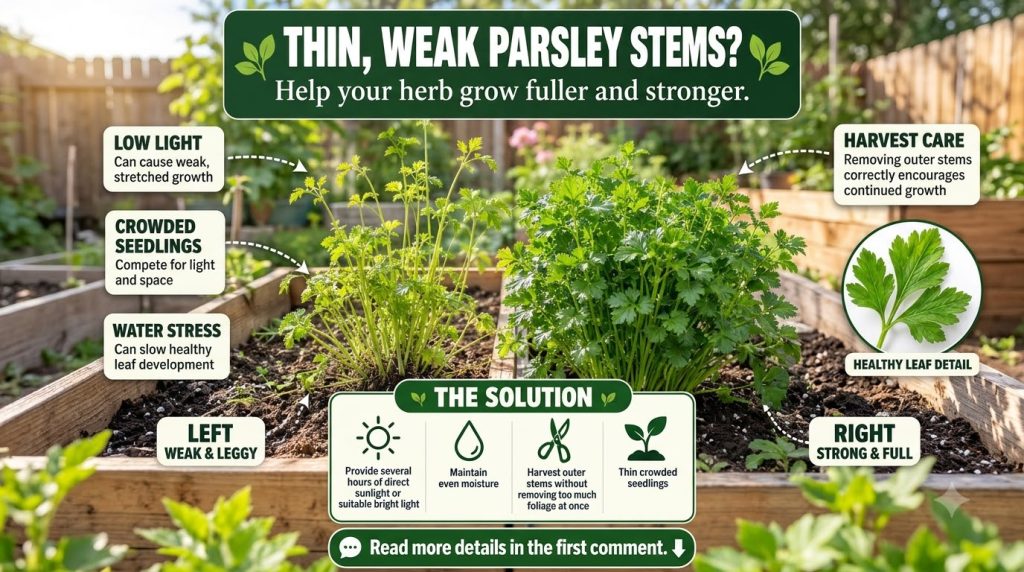
Understanding Common Parsley Problems
To cultivate strong and full parsley, it’s crucial to understand what might be holding it back. Often, the issues stem from a few common mistakes that are easily corrected:
1. Low Light Conditions
Parsley, like many herbs, loves sunshine. If your parsley plant looks stretched out, pale, and spindly with long spaces between the leaves, it’s a classic sign of insufficient light. Plants will reach and stretch for light, leading to leggy growth that lacks vigor and density.
2. Crowded Seedlings
When sowing parsley seeds, it’s tempting to sprinkle them generously. However, too many seedlings in one spot create intense competition for nutrients, water, and light. This competition results in each plant struggling, leading to weak, underdeveloped stems and sparse foliage.
3. Water Stress (Under or Overwatering)
Parsley prefers consistently moist, but not waterlogged, soil. Both extremes of watering can be detrimental. Underwatering causes the plant to wilt and can stunt its growth, while overwatering can lead to root rot, suffocating the roots and preventing them from absorbing essential nutrients.
The Solution: Cultivating Fuller, Stronger Parsley
Now that we know the common culprits, let’s dive into the easy solutions that will help your parsley thrive:
1. Provide Ample Sunlight
Parsley needs at least 6 hours of direct sunlight per day to grow strong and bushy. Choose a sunny spot in your garden or a south-facing window if growing indoors. If natural light is limited, consider using a grow light to supplement.
2. Proper Spacing and Thinning
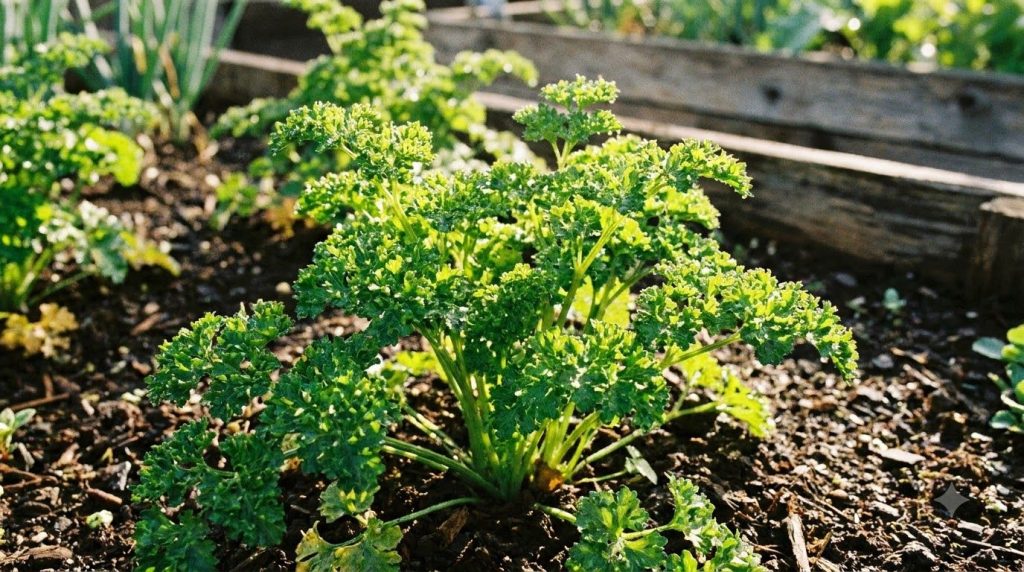
Give your parsley room to breathe! Once seedlings are a few inches tall, thin them so that individual plants are spaced about 6-8 inches apart. This ensures each plant has enough space to develop a strong root system and full foliage without competing for resources.
3. Consistent Watering
Aim for consistently moist soil. Check the soil moisture daily by sticking your finger about an inch deep. If it feels dry, it’s time to water. Water deeply until you see water draining from the bottom of pots or until the soil is thoroughly saturated in garden beds. Avoid letting the soil dry out completely or sit in standing water.
4. Smart Harvesting for Growth
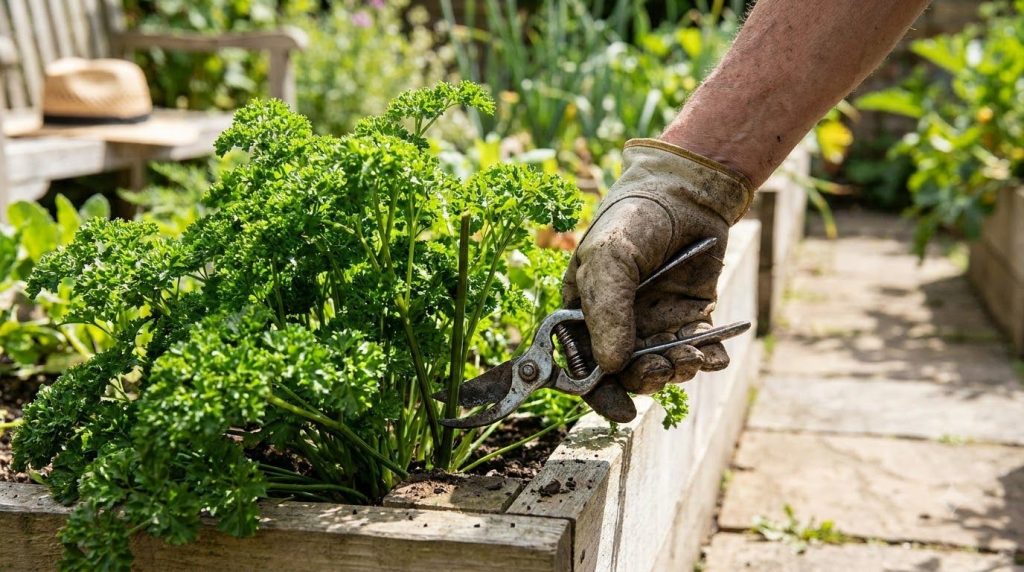
Believe it or not, how you harvest your parsley directly impacts its future growth. Instead of picking leaves randomly from the top, harvest the outer, mature stems close to the base of the plant. This technique encourages new growth from the center, leading to a bushier, fuller plant. Regular harvesting also prevents the plant from going to seed too early, extending your harvest season.
5. Healthy Soil Matters
While not explicitly mentioned in the infographic, healthy soil is the foundation of any thriving plant. Ensure your parsley is planted in well-draining, nutrient-rich soil. Amending your soil with compost or well-rotted manure before planting can provide a slow-release of nutrients, supporting strong growth.
Ready for Your Best Parsley Harvest Yet?
By implementing these straightforward tips – ensuring proper light, spacing, consistent watering, and smart harvesting techniques – you’ll be well on your way to growing the strong, full, and flavorful parsley you’ve always desired. Say goodbye to weak, leggy stems and hello to a garden brimming with lush, healthy herbs!
Happy gardening!