Craving that melt-in-your-mouth texture? The Taiwanese Jiggly Castella Cake, a delightful dessert known for its ethereal softness and delicate bounce, is a must-try for any baking enthusiast. With its delicate crumb and subtle sweetness, it’s the perfect treat to master in your kitchen.
This iconic cake originated from a Japanese confection, itself inspired by Portuguese Pão de Castela, and has evolved into a beloved Taiwanese staple. Unlike traditional sponge cakes, the Castella cake achieves its signature ‘jiggle’ through a meticulous preparation process involving a water bath and slow baking at a low temperature, which ensures an incredibly moist and airy texture. Get ready to bake some magic and impress your friends and family with this seemingly complex, yet utterly rewarding, dessert.
In this guide, we’ll walk you through everything you need to know to whip up your own perfect Jiggly Castella Cake, from the precise ingredients to step-by-step instructions and essential tips for that signature wobble.
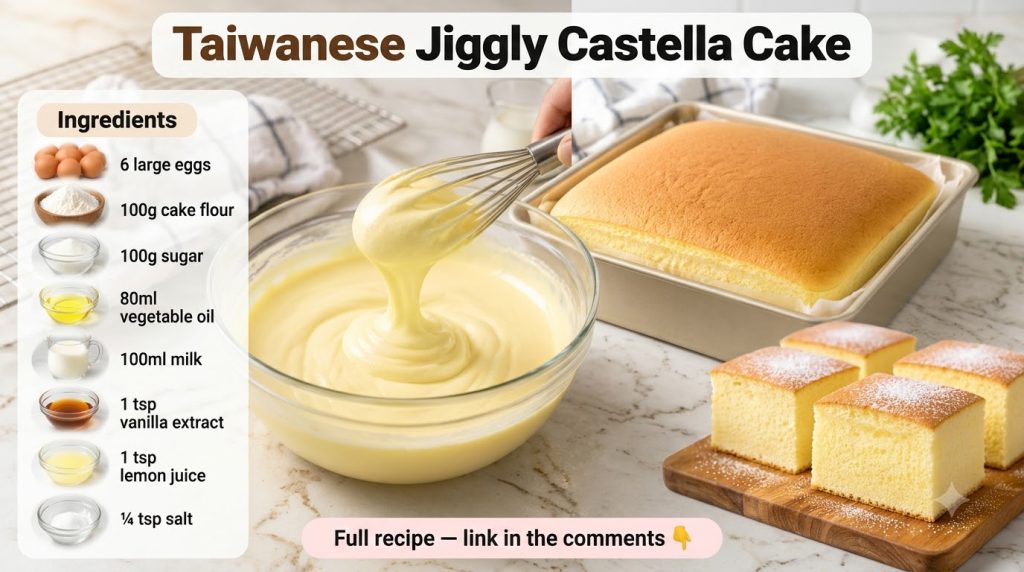
The Secret to a Perfect Jiggly Castella Cake: Your Recipe
Achieving the signature jiggly texture of a Taiwanese Castella cake relies on careful measurement and precise technique. Here’s a comprehensive recipe to guide you through the process, ensuring a light, airy, and utterly delicious result.
Ingredients
- 6 large eggs, separated (at room temperature)
- 1/4 cup (60ml) whole milk
- 1/4 cup (60ml) neutral oil (like grapeseed or canola oil)
- 1/2 cup (60g) cake flour, sifted
- 1/2 cup (100g) granulated sugar, divided
- 1/2 teaspoon vanilla extract
- Pinch of salt
- 1/4 teaspoon cream of tartar or 1/2 teaspoon lemon juice (optional, for meringue stability)
Equipment You’ll Need
- 8×8 inch (20×20 cm) square baking pan (or similar size round pan)
- Parchment paper
- Large roasting pan (for water bath)
- Electric mixer (stand or hand-held)
- Whisks
- Spatulas
- Fine-mesh sieve
- Heatproof bowl
Preparation Time
- Prep time: 30 minutes
- Cook time: 60-70 minutes
- Chill time: 1-2 hours (for best slicing)
- Servings: 8-10 slices
Step-by-Step Baking Instructions
- Prepare Your Pan: Line your square baking pan with parchment paper, allowing it to extend about 1 inch (2.5 cm) above the rim. This helps the cake rise without sticking and prevents burning the sides.
- Preheat Oven & Water Bath: Preheat your oven to 300°F (150°C). Place your large roasting pan (empty) in the oven on the middle rack. Once the oven is hot, carefully pour enough hot water into the roasting pan to reach about 1 inch (2.5 cm) up the sides of your baking pan.
- Make the Oil-Milk Mixture: In a small heatproof bowl, combine the neutral oil and milk. Heat gently over low heat or in a microwave for 30-60 seconds until warm, but not simmering. This helps to emulsify the batter and create a softer crumb.
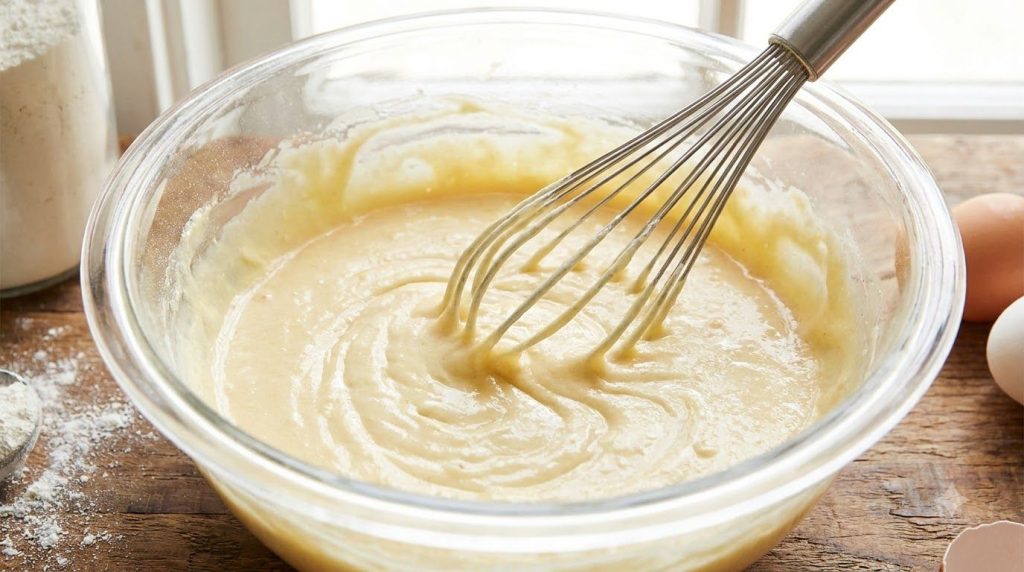
- Create the Yolk Batter: Sift the cake flour into a medium bowl. Pour the warm oil-milk mixture over the flour and whisk until smooth. Add the egg yolks and vanilla extract, whisking until the batter is lump-free and uniform. Set aside.
- Whip the Meringue: In a separate, clean, large bowl, begin whipping the egg whites with an electric mixer on medium speed. Once they become frothy, add the pinch of salt and cream of tartar (if using). Gradually add the granulated sugar, a tablespoon at a time, continuing to whip on medium-high speed until you achieve soft peaks. The meringue should be glossy and hold its shape, but still be soft and not stiff.
- Gently Fold the Batter: Add about one-third of the meringue into the egg yolk batter. Fold gently with a spatula until just combined. This lightens the yolk mixture. Then, pour the yolk mixture back into the remaining meringue. Continue to fold gently, using a ‘cut and fold’ technique, until no streaks of egg white remain and the batter is uniform. Be careful not to deflate the meringue.
- Pour and Bake: Pour the finished batter into your prepared baking pan. Gently tap the pan a few times on the counter to release any large air bubbles. Carefully place the baking pan into the hot water bath inside the preheated oven.
- Bake: Bake for 60-70 minutes, or until the top is golden brown and a wooden skewer inserted into the center comes out clean. The cake should be gloriously jiggly when gently shaken.
- Cool: Once baked, remove the cake from the water bath and the oven. Let it cool in the pan for about 10-15 minutes on a wire rack. Then, invert the cake onto another wire rack, gently peel off the parchment paper, and let it cool completely. For cleaner slices, chill the cake in the refrigerator for 1-2 hours before cutting.
Serving and Storage Tips
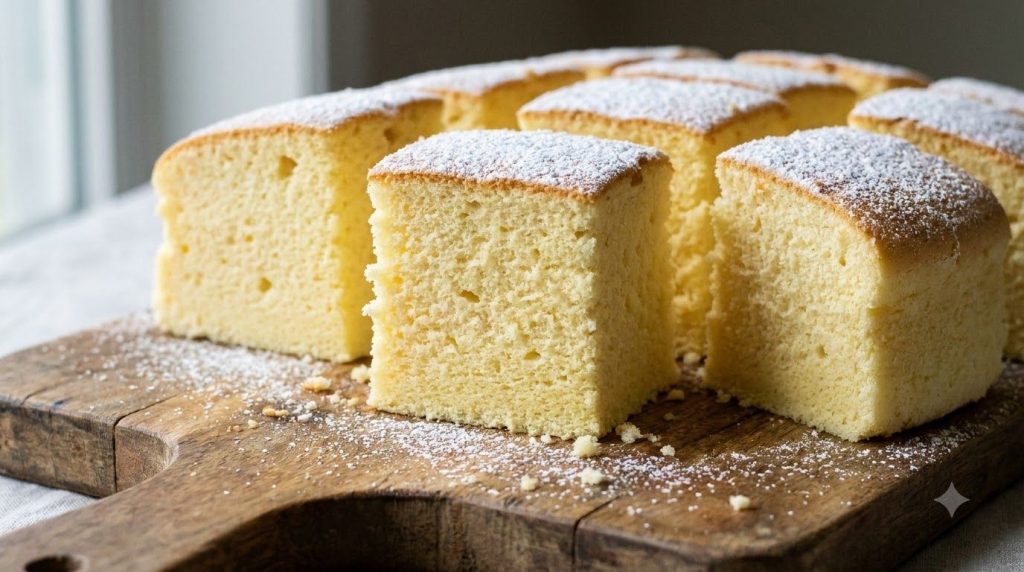
Taiwanese Jiggly Castella Cake is best enjoyed fresh, either warm or at room temperature. Dust with a little powdered sugar just before serving for an elegant touch. Store any leftovers in an airtight container at room temperature for up to 2 days, or in the refrigerator for up to 4 days. The texture may firm up slightly when chilled, but it will still be delicious.
What Makes it So Jiggly? The Science Behind the Bounce
The characteristic ‘jiggle’ of the Castella cake isn’t just for show; it’s a testament to its unique baking process. It’s achieved primarily through two key factors:
- Meringue-Based Batter: The cake relies heavily on a soft-peak meringue, which incorporates a large amount of air into the batter. This air, trapped within the egg white protein matrix, expands during baking, creating a light and airy structure.
- Water Bath and Low-Temperature Baking: Baking the cake in a water bath provides a gentle, moist, and even heat. This prevents the cake from drying out and encourages a slow, uniform rise. The low temperature allows the cake to cook through without forming a tough crust, resulting in a delicate, custardy texture that wobbles when touched.
Tips for Castella Cake Success
While the recipe is straightforward, a few expert tips can help you achieve perfection:
- Room Temperature Eggs: Essential for both the yolk batter and meringue. Room temperature egg whites whip up with more volume and stability.
- Sift Your Flour: Sifting cake flour prevents lumps and helps to incorporate air, leading to a lighter cake.
- Don’t Overmix: Overmixing the egg yolk batter can develop gluten, making the cake tough. Overmixing the meringue will make it unstable. Fold gently.
- Proper Meringue Consistency: Soft peaks are crucial. Stiff peaks can make the cake dry and prone to cracking.
- Control Oven Temperature: An oven thermometer can be very helpful to ensure your oven maintains the precise low temperature required.
- Avoid Opening the Oven Door: Resist the urge to peek during the first 45 minutes of baking, as sudden temperature drops can cause the cake to sink.
Frequently Asked Questions About Taiwanese Castella Cake
Why did my Castella cake crack on top?
Cracking often occurs if the oven temperature is too high, causing the top to set and dry out before the inside is fully cooked and expanded. Ensure your oven is accurately calibrated and bake in a water bath to maintain moisture.
My cake isn’t jiggly, it’s dense. What went wrong?
A dense cake usually means the meringue was either not whipped enough (not enough air incorporated) or it was deflated during the folding process. Be gentle when folding the meringue into the yolk batter.
Can I use all-purpose flour instead of cake flour?
While cake flour is highly recommended for its lower protein content, which yields a tender crumb, you can substitute all-purpose flour. For every cup of all-purpose flour, remove 2 tablespoons and replace with 2 tablespoons of cornstarch, then sift thoroughly. This helps mimic the properties of cake flour.
How long does Castella cake last?
When stored properly in an airtight container at room temperature, it typically lasts for 2-3 days. Refrigerating can extend its life to about 4-5 days, though the texture might become slightly firmer.
Final Thoughts on Baking Your Own Jiggly Castella Cake
Baking a Taiwanese Jiggly Castella Cake is a truly rewarding experience, offering a unique blend of delicate texture and subtle sweetness that’s unlike any other dessert. This recipe, while requiring a bit of patience and attention to detail, promises a beautiful, wobbly, and utterly delicious outcome that will delight anyone who tries it.
Embrace the process, enjoy the aroma filling your kitchen, and savor the moment you cut into your perfectly jiggly creation. Happy baking!