Most people ignore this common houseplant, seeing it as just another decorative item or a quick fix for sunburn. But the truth is, the humble aloe vera plant holds a treasure trove of practical, everyday remedies that often go overlooked. Beyond its renowned soothing properties for irritated skin, this succulent powerhouse offers solutions for everything from minor cuts to digestive support, making it a must-have in any natural wellness toolkit.
Many pre-packaged aloe products contain additives and preservatives that dilute its potency. Learning to harness the fresh gel directly from the plant unlocks its full potential. This guide will walk you through transforming a simple leaf into a versatile ingredient for your daily health and beauty routine.
What It Is: The Aloe Vera Plant
Aloe vera, scientifically known as Aloe barbadensis miller, is a succulent plant species that stores water in its thick, fleshy leaves. These leaves contain a clear, gelatinous substance – the aloe vera gel – which is packed with vitamins, enzymes, minerals, sugars, lignin, saponins, salicylic acids, and amino acids. It’s this complex composition that gives aloe its remarkable healing and soothing abilities. There are many varieties, but Aloe barbadensis miller is the most common for medicinal use.
Ingredients for Fresh Aloe Gel
The core ingredient for most DIY aloe vera remedies is simply a fresh leaf from a mature plant. Ensure your plant is at least two years old for optimal gel potency.
- 1 large, mature Aloe Vera leaf: Choose a lower, outer leaf as these are typically older and contain more gel.
- Clean water: For rinsing.
- Optional: Vitamin E oil (for preservation in skincare recipes).
Approximate Measurements for Gel Extraction
One large aloe leaf can yield anywhere from 1/4 to 1/2 cup of fresh gel, depending on its size and thickness. It’s best to extract gel as needed for maximum freshness, though larger batches can be stored.
Formula / Recipe: Basic Aloe Gel Extraction
Extracting fresh aloe gel is simple once you know the steps. This forms the base for most homemade aloe vera remedies.
Step-by-Step Method: Harvesting and Extracting
- Harvest the Leaf: Using a sharp, clean knife, cut a large, mature leaf from the base of the plant, close to the stem.
- Drain the Aloin: Immediately place the cut end of the leaf downward in a glass or jar for 10-15 minutes. A yellowish, sticky liquid called aloin will drain out. Aloin is a laxative and can be irritating to skin or digestive system if not removed.
- Wash and Trim: After draining, rinse the leaf thoroughly under cool water. Trim off the spiny edges along both sides of the leaf.
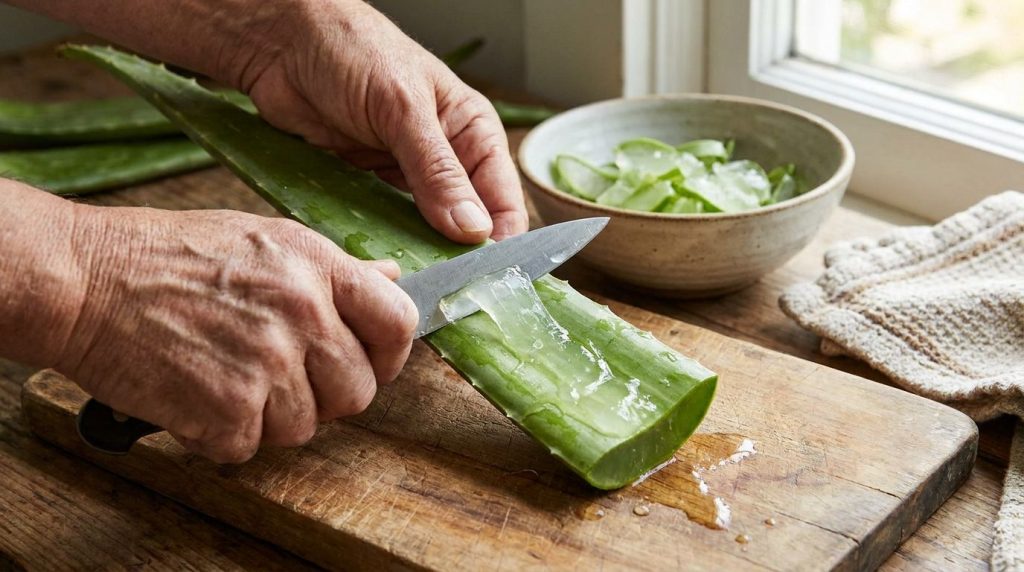
- Fillet the Leaf: Lay the leaf flat on a cutting board. Carefully slide your knife just under the green rind to separate it from the clear gel. You can also peel the top layer off first, then scoop out the gel.
- Scoop the Gel: Using a spoon or a dull knife, gently scoop the clear, translucent gel into a clean bowl. Try to avoid scraping any remaining yellow residue from the rind.
- Blend (Optional): For a smoother, more uniform gel consistency (especially for topical use), you can blend the scooped gel in a blender or with an immersion blender for a few seconds until smooth.
Quick Tip: Getting the Most Gel
When filleting, ensure your knife is sharp enough to glide smoothly but not so sharp that it cuts too deep into the rind, risking aloin contamination. A slightly flexible knife can be helpful.
How to Use Fresh Aloe Vera Gel
Once you have your fresh gel, the possibilities are numerous:
- Skin Soother: Apply directly to sunburn, minor burns, insect bites, or irritated skin for instant cooling relief.
- Moisturizer: Use as a light, non-greasy moisturizer for face and body.
- Hair Mask: Massage into scalp and hair to soothe itchiness, reduce dandruff, and add shine. Leave on for 20-30 minutes before shampooing.
- Digestive Aid: A small amount (1-2 tablespoons) can be mixed with water or juice and consumed to support digestion and alleviate occasional constipation. (Ensure all aloin is removed if consuming internally).
- Face Mask Base: Combine with honey, turmeric, or other natural ingredients for custom face masks.
How Often to Use It
For topical applications, aloe vera gel can be used daily or as needed for relief. For internal use, start with a small amount (1 tablespoon) and do not exceed 2 tablespoons per day. Consult a healthcare professional for prolonged internal use.
How to Buy / How to Choose Ingredients
The best way to get fresh aloe vera is to grow your own plant. They are low-maintenance and thrive indoors with bright, indirect light. If buying a leaf, choose one that is plump, firm, and free of blemishes. If purchasing bottled gel, look for 100% pure aloe vera gel with minimal additives, ideally organic and cold-pressed.
Storage
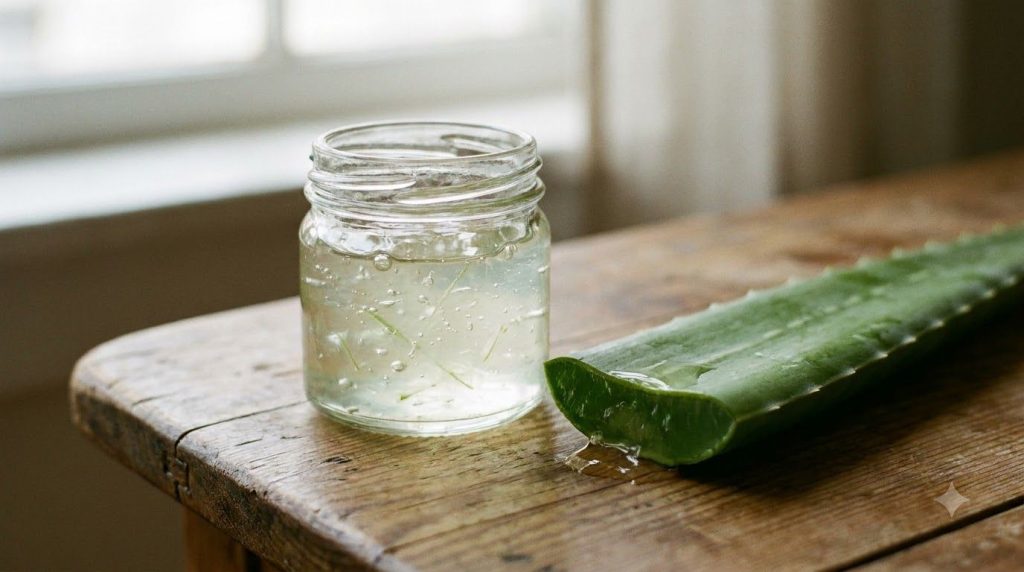
Freshly extracted aloe vera gel can be stored in an airtight container in the refrigerator for up to 5-7 days. For longer storage, you can freeze it in ice cube trays. Once frozen, transfer the cubes to a freezer-safe bag, and they will last for up to 6 months. Thaw a cube as needed for topical use.
Fresh vs. Store-Bought Aloe Gel
| Feature | Fresh Aloe Vera Gel | Store-Bought Aloe Vera Gel |
|---|---|---|
| Purity | 100% pure, no additives | May contain preservatives, thickeners, fragrances, colors |
| Potency | Highest concentration of active compounds | Potency can decrease due to processing and additives |
| Shelf Life | 5-7 days (refrigerated), 6 months (frozen) | Varies, often 1-2 years (unopened), shorter after opening |
| Cost | Low (cost of a plant) | Variable, can be expensive for high-quality pure gels |
| Preparation | Requires extraction time | Ready to use |
Practical Tips
- Patch Test: Always perform a patch test on a small area of skin before applying aloe vera widely, especially if you have sensitive skin.
- Cleanliness is Key: Ensure all tools (knives, bowls, blenders) are clean to prevent contamination of your gel.
- Freeze for Cooling: Keep aloe cubes in the freezer for immediate relief from sunburn or bug bites.
Common Mistakes
- Not Draining Aloin: Skipping step 2 can lead to skin irritation or digestive upset if consumed.
- Using Immature Leaves: Younger leaves have less gel and fewer beneficial compounds.
- Contaminating the Gel: Allowing the green rind or yellow aloin into your clear gel can reduce its quality and cause issues.
- Over-Processing: Blending for too long or using high heat can degrade the beneficial compounds.
- Assuming All Aloe is Equal: Not all aloe species are suitable for medicinal use, and not all store-bought gels are pure.
Cautions / Who Should Avoid It
While generally safe, there are some considerations:
- Aloin Sensitivity: Some individuals may be sensitive to aloin even after draining. Discontinue use if irritation occurs.
- Allergies: Rare, but some people can be allergic to aloe vera.
- Pregnancy/Breastfeeding: Internal use is generally not recommended due to its laxative effects and lack of sufficient research on safety.
- Interactions: Internal aloe can interact with certain medications, including diuretics, laxatives, and blood thinners. Consult a doctor before consuming internally if on medication.
- Children: Internal use for children should be avoided unless advised by a pediatrician.
Quick Summary
Aloe vera is a versatile plant for DIY remedies. Best preparation involves harvesting a mature leaf, draining the irritating aloin, and carefully extracting the clear gel. Use it topically for soothing skin and hair, or internally in small amounts for digestive support (with caution). Store fresh gel in the refrigerator for up to a week or freeze for longer use. Always patch test and ensure aloin is removed, especially for internal consumption.
FAQ
Can I use fresh or dried aloe vera?
For most remedies, fresh aloe vera gel is preferred for its higher potency and purity. Dried aloe is usually the latex (aloin), not the gel, and is primarily used as a laxative.
How long does fresh aloe vera gel last?
Fresh gel lasts about 5-7 days in the refrigerator. Freezing extends its shelf life to up to 6 months.
Can I refrigerate it?
Yes, refrigeration is essential for preserving fresh aloe gel and maintaining its potency.
How often should I use it?
Topical use can be daily or as needed. Internal use should be limited to 1-2 tablespoons daily and not for prolonged periods without medical advice.
Can I freeze fresh aloe vera gel?
Absolutely. Freezing in ice cube trays is an excellent way to store it for extended periods and have single-use portions ready.
What part of the aloe vera plant is best?
The clear gel from the inner leaf is the part used for most remedies. The yellow latex (aloin) found just under the rind should be drained and avoided, especially for internal use.
Can I reuse the leaves after extracting the gel?
Once the gel is extracted, the green rind has little practical use for remedies and should be discarded.
When should I avoid using aloe vera?
Avoid internal use if pregnant, breastfeeding, or on certain medications. Always avoid if you have an allergic reaction. Be cautious with internal use for children.
You may also like: DIY Turmeric Face Mask for Radiant Skin
Read more: Natural Remedies for Dry Skin Relief
Conclusion
The aloe vera plant is far more than just a pretty face or a quick sunburn soother. By understanding how to properly harvest and prepare its incredible gel, you unlock a world of natural, effective remedies for skin, hair, and even internal wellness. Embrace this hidden treasure in your home, and you’ll find yourself reaching for its green leaves again and again for practical, everyday solutions.
See the full guide: Growing Your Own Aloe Vera Indoors