Are unwelcome guests like moths or other fabric-loving pests causing a nuisance in your home? While commercial pest solutions are available, many people explore homemade remedies. This DIY blend, combining mothballs and cloves with liquids in a spray bottle, aims to create a strong deterrent. However, it’s important to approach this method with caution due to the nature of some of its ingredients. Understanding the components and how to use them safely is key to exploring this home hack effectively.
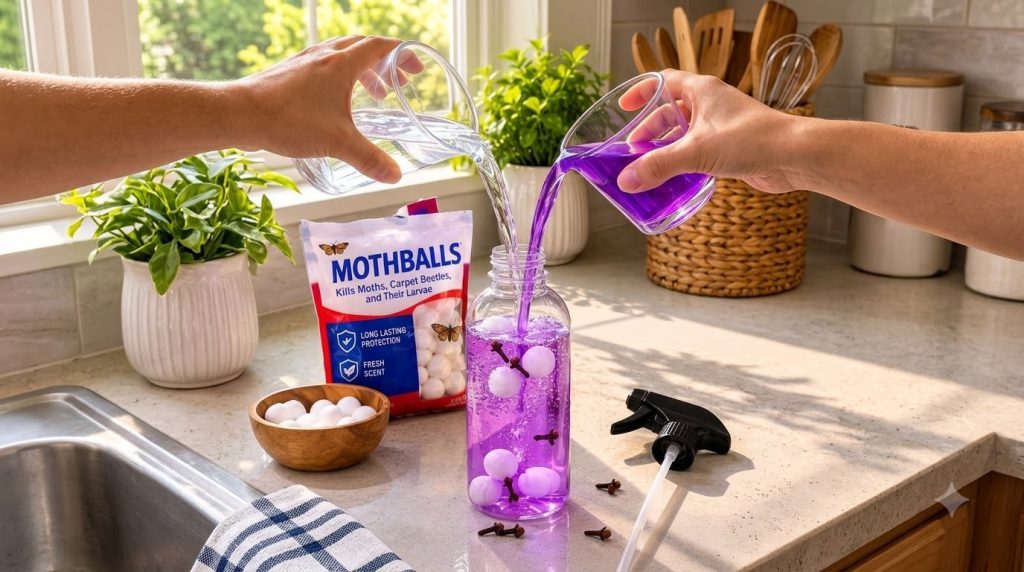
What You’ll Need
- Mothballs: Approximately 10-15 standard size (a generous handful).
- Cloves: About 1-2 tablespoons (a generous sprinkle).
- Clear Liquid: Enough to fill about half of your bottle (e.g., water or rubbing alcohol).
- Purple Liquid: Enough to fill the remaining half of your bottle (unspecified, could be dyed water or another liquid compatible with your clear liquid).
- Clear Glass Bottle: With a tight-fitting lid, preferably a spray nozzle.
- Funnel: (Optional) For easier pouring.
Why This DIY Can Be Useful
This DIY combines ingredients known for their repellent properties to create a concentrated deterrent.
- Cloves: These aromatic spice buds contain eugenol, a compound recognized for its natural insect-repelling qualities. The strong scent can help drive away various pests.
- Mothballs: Mothballs contain active ingredients such as naphthalene or paradichlorobenzene. These are registered pesticides specifically designed to deter and kill moths and other fabric pests through their vapor. When combined, these ingredients are intended to form a potent scent barrier.
How to Make It
Follow these steps to prepare your homemade repellent spray:
- Carefully place the mothballs into your clean, clear glass bottle.
- Add the cloves to the bottle, distributing them amongst the mothballs.
- Using a funnel if you have one, carefully pour in the clear liquid until the bottle is approximately halfway full.
- Slowly add the purple liquid until the bottle is nearly full, ensuring you leave a small space at the top.
- Secure the spray nozzle or tight-fitting lid onto the bottle.
- Gently shake the bottle to help disperse the ingredients and mix the liquids.
How to Use It
This spray is intended for targeted application in areas where pests are a concern. Remember to always prioritize safety during use.
- Target Areas: Use this spray in areas where you suspect pest activity, such as within closets, storage bins (away from contents), or secluded corners of rooms.
- Application: Lightly mist surfaces from a distance. The goal is to create a scent barrier, not to saturate the area. Avoid spraying directly onto delicate fabrics or finished surfaces without prior testing.
- Frequency: Reapply as needed, keeping in mind the strong, lingering scent.
- Important: DO NOT spray on clothing, bedding, upholstery, or any surfaces that will come into direct contact with skin, food, or food preparation areas.
What to Expect
This DIY repellent is designed to create a noticeable scent barrier that may deter pests. You can expect a strong aroma from the combination of cloves and mothballs. Its effectiveness will depend on the specific type of pest, the extent of the problem, and consistent application. This solution is best used as a deterrent and is not intended to eliminate existing infestations. For severe pest problems, professional pest control is recommended.
Helpful Tips
- Always ensure adequate ventilation in the area when preparing and using this spray to minimize inhalation of fumes.
- Store the bottle securely out of reach of children, pets, and food items, preferably in a cool, dark, and well-ventilated space.
- Label the bottle clearly and prominently with a warning such as “Pest Repellent – Do Not Ingest – Keep Away from Children and Pets.”
Important Notes / Safety
Mothballs are registered pesticides and contain chemicals (naphthalene or paradichlorobenzene) that can be harmful if misused. They are typically designed to work as vapors in enclosed spaces for passive deterrence, not for dissolution into liquids and spraying. This DIY method involves altering their intended use, which may increase potential exposure and risks.
- Ventilation is CRUCIAL: Use this DIY only in extremely well-ventilated areas, or outdoors if possible. Open windows and doors thoroughly during and after use.
- Avoid Inhalation and Skin Contact: Do not directly inhale the spray. Wear protective gloves if you anticipate skin contact, and wear a mask if the fumes are strong. Wash hands thoroughly with soap and water after handling.
- Keep Away from Children and Pets: The contents are toxic if ingested or if there is prolonged exposure. Ensure the product is stored securely and used only where children and pets cannot access it.
- Do Not Use on Clothes or Bedding: The chemicals can linger on fabrics and are harmful with prolonged skin contact.
- Check Manufacturer Instructions: Always refer to the original packaging instructions for mothballs for their intended and safe use. This DIY method deviates from standard use and may pose additional risks not covered by manufacturer guidelines.
- Patch Test: Before spraying on any surface, test a small, inconspicuous area to ensure no discoloration or damage occurs.
- Not for Food Areas: Never use this spray near food preparation surfaces, dining areas, or food storage.
- Environmental Considerations: Be mindful of the environmental impact of pesticides. Consider safer, non-toxic alternatives for pest control if suitable for your specific needs. If you notice any adverse reactions or health concerns, discontinue use immediately and seek medical advice.