Your Ultimate Guide to Delicious Homemade Pasta Sauce Recipes
There’s nothing quite like a steaming plate of pasta, and when it’s topped with a rich, flavorful homemade sauce, it transcends into something truly special. Forget bland, store-bought jars; mastering homemade pasta sauce recipes is easier than you think and opens up a world of fresh, customizable flavors. This guide will show you how to create a versatile base sauce and inspire you with ideas for exploring a variety of incredible homemade options.
From a classic, slow-simmered marinara to quick, vibrant pestos and creamy concoctions, making your own pasta sauce allows you to control the ingredients, adjust the seasonings to your preference, and ensure every bite is bursting with authentic taste. Get ready to elevate your weeknight dinners and impress your family and friends with minimal effort!
Why You’ll Love Making Your Own Pasta Sauces
- Fresh, Vibrant Flavors: Homemade sauces boast a depth of flavor that jarred versions simply can’t match, thanks to fresh ingredients.
- Completely Customizable: Adjust seasonings, spice levels, and ingredients to perfectly suit your family’s taste buds and dietary needs.
- Healthier Options: You control the amount of salt, sugar, and preservatives, leading to a much healthier meal.
- Budget-Friendly: Often, making sauce from scratch is more economical than buying high-quality store-bought alternatives.
- Meal Prep Powerhouse: Most sauces can be made in advance and stored, making weeknight dinners a breeze.
- Impressive & Rewarding: There’s a genuine satisfaction in serving a meal made with love, right down to the sauce.
Ingredients for Versatile Homemade Pasta Sauce Recipes
While specific sauces will have their unique components, here’s a list of common ingredients you’ll want to have on hand to make a range of delicious homemade pasta sauces:
- Olive Oil: Extra virgin olive oil for sautéing and finishing.
- Aromatics: Yellow onions, garlic cloves, shallots.
- Tomatoes: Canned crushed tomatoes, diced tomatoes, whole peeled tomatoes (San Marzano are excellent), tomato paste, fresh ripe tomatoes.
- Herbs (Fresh & Dried): Fresh basil, fresh parsley, fresh oregano, dried oregano, dried basil, bay leaves.
- Spices: Red pepper flakes, black pepper.
- Dairy: Parmesan cheese (grated), Pecorino Romano, heavy cream, ricotta cheese, butter.
- Pantry Staples: Vegetable or chicken broth, white wine (optional), sugar (a pinch to balance acidity).
- For Pesto: Fresh basil leaves, pine nuts, garlic, Parmesan, olive oil.
Ingredient Notes
- Quality Tomatoes Matter: For tomato-based sauces, the quality of your canned tomatoes makes a huge difference. Look for San Marzano tomatoes if possible, as they have a sweeter, less acidic flavor.
- Fresh vs. Dried Herbs: Fresh herbs like basil and parsley are best added towards the end of cooking or as a garnish for maximum flavor. Dried herbs, like oregano, can be added earlier to meld with the sauce.
- Garlic & Onion: Don’t rush sautéing your aromatics. Cooking them slowly until softened and fragrant builds a crucial flavor base for your sauce.
- Olive Oil: Use a good quality extra virgin olive oil for the best flavor, both for cooking and for drizzling over the finished dish.
Equipment You’ll Need
- Large Pot or Dutch Oven
- Large Skillet or Sauté Pan
- Cutting Board
- Sharp Knife
- Measuring Cups and Spoons
- Wooden Spoon or Spatula
- Blender or Immersion Blender (optional, for smoother sauces)
How to Make a Versatile Tomato Pasta Sauce (Our Base Recipe)
Let’s start with a foundational tomato sauce – a simple marinara – that can be enjoyed as is or easily adapted into countless other delicious homemade pasta sauce recipes.
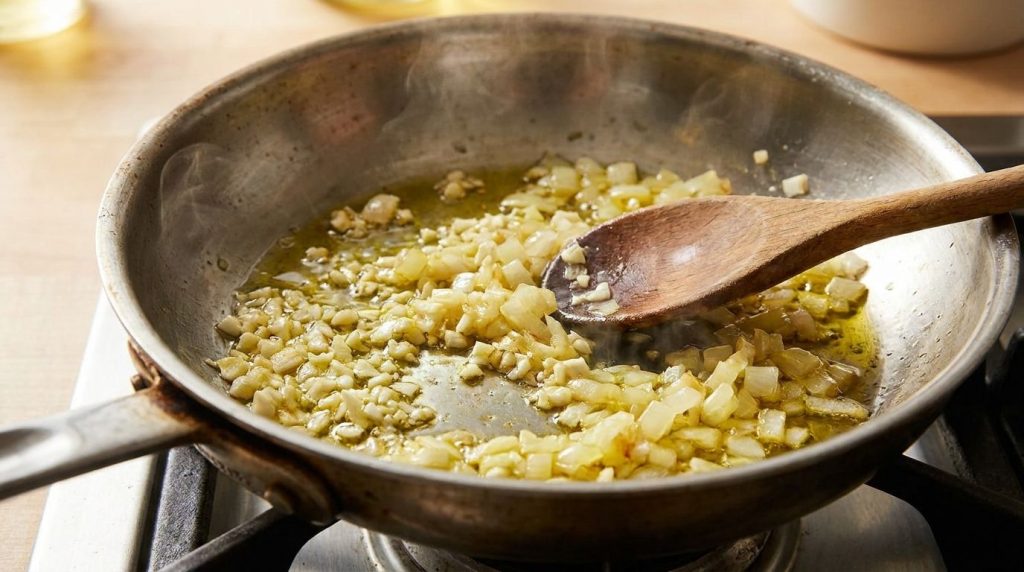
- Prep Your Aromatics: Finely dice 1 medium yellow onion and mince 3-4 cloves of garlic.
- Sauté the Base: In a large pot or Dutch oven, heat 2 tablespoons (30 ml) of olive oil over medium heat. Add the diced onion and cook for 5-7 minutes, until softened and translucent, stirring occasionally. Add the minced garlic and 1/2 teaspoon red pepper flakes (if using) and cook for another 1-2 minutes until fragrant, being careful not to burn the garlic.
- Build the Tomato Flavor: Stir in 2 tablespoons (30 g) of tomato paste and cook for 2-3 minutes, stirring constantly, until it darkens slightly and caramelizes. This step deepens the tomato flavor significantly.
- Add Tomatoes and Simmer: Pour in one 28-ounce (794 g) can of crushed tomatoes (or whole peeled tomatoes, crushed by hand). Add 1 teaspoon dried oregano, a pinch of sugar (about 1/4 teaspoon, optional, to balance acidity), 1/2 teaspoon salt, and 1/4 teaspoon black pepper. Stir everything together.
- Simmer to Perfection: Bring the sauce to a gentle simmer, then reduce the heat to low, cover partially, and let it simmer for at least 30-45 minutes, or up to 1.5 hours, stirring occasionally. The longer it simmers, the more the flavors will meld and deepen.
- Finish with Freshness: Taste and adjust seasonings as needed. Stir in 1/4 cup (about 5-7 g) fresh basil leaves, roughly chopped, just before serving. If you prefer a smoother sauce, you can carefully use an immersion blender or transfer batches to a regular blender (use caution with hot liquids) to purée.
Pro Tips for the Best Results
- Don’t Rush the Simmer: Good tomato sauce needs time for the flavors to develop. A longer, slower simmer is key for a rich, well-rounded taste.
- Taste As You Go: Seasoning is personal. Taste your sauce throughout the cooking process and adjust salt, pepper, and sugar as needed.
- Use Pasta Water: Always reserve a cup or two of starchy pasta water before draining. A splash or two can help loosen your sauce and bind it beautifully to your pasta.
- Bloom Dried Herbs: If using dried herbs, briefly cook them with your aromatics and tomato paste before adding liquids. This helps release their essential oils and enhances their flavor.
- Quality Ingredients are Key: Start with the best quality tomatoes, olive oil, and fresh herbs you can find. It truly makes a difference in the final product.
Common Mistakes to Avoid
- Burning the Garlic: Garlic burns quickly and tastes bitter. Keep a close eye on it and remove it from the heat as soon as it’s fragrant.
- Not Sautéing Tomato Paste: Skipping the step of cooking tomato paste can result in a raw, tinny flavor. Always cook it down until slightly darkened.
- Under-Seasoning: A bland sauce is often just an under-seasoned sauce. Don’t be afraid to add enough salt and pepper, and perhaps a pinch of sugar to balance acidity.
- Not Simmering Long Enough: Rushing the simmer prevents flavors from fully melding and deepening. Give your sauce adequate time.
- Overcrowding the Pan: If you’re adding vegetables or meat to your sauce, ensure your pan isn’t too crowded, which can steam ingredients instead of browning them, leading to less flavor.
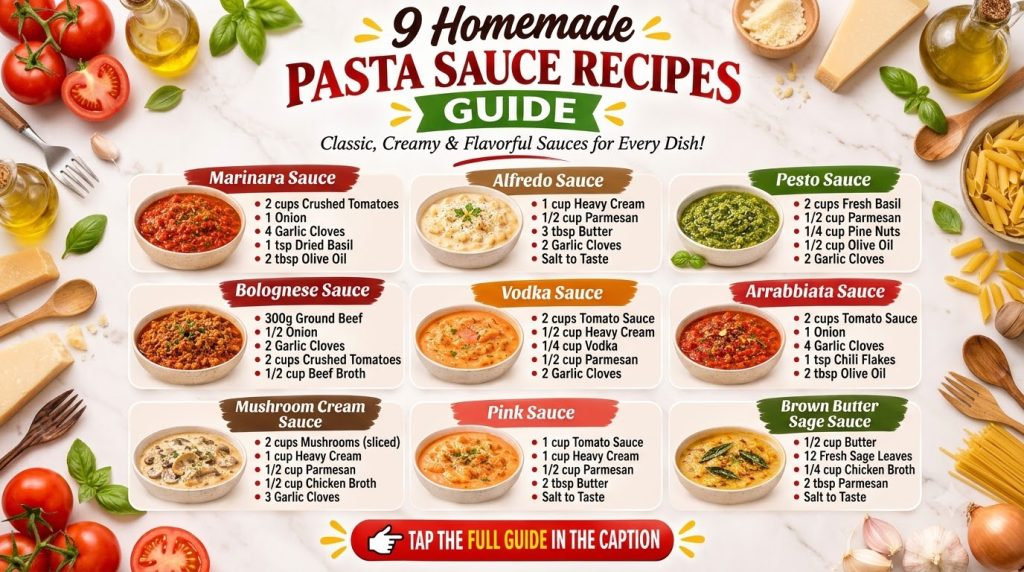
Variations & Substitutions: Explore 9 Sauce Styles!
This basic marinara is fantastic, but it’s just the beginning! Here are ideas for exploring various homemade pasta sauce recipes, building on common flavor profiles:
- Spicy Arrabbiata: Add extra red pepper flakes to the marinara base, a dash of dry white wine, and a splash of reserved pasta water for a fiery kick.
- Creamy Tomato Sauce: Stir in 1/2 cup (120 ml) heavy cream or a dollop of mascarpone cheese to your finished marinara for a velvety texture.
- Garlic & Oil (Aglio e Olio): Sauté plenty of sliced garlic in olive oil until golden. Toss with cooked pasta, red pepper flakes, and fresh parsley. No tomatoes needed!
- Pesto: Blend fresh basil, pine nuts (or walnuts), garlic, Parmesan cheese, and olive oil in a food processor until smooth. Toss with pasta, adding a little pasta water to thin if needed.
- Mushroom Cream Sauce: Sauté sliced mushrooms until golden. Deglaze with white wine or broth, then add heavy cream and Parmesan. Serve over fettuccine.
- Roasted Red Pepper Sauce: Roast red bell peppers until charred, then peel and blend with garlic, a touch of cream, and Parmesan for a sweet, smoky sauce.
- Lemon-Ricotta Sauce: Combine creamy ricotta cheese with lemon zest, fresh lemon juice, Parmesan, and a splash of pasta water for a bright, light sauce.
- Meat Bolognese: Brown ground beef or Italian sausage with your aromatics. Add red wine, then crushed tomatoes, and simmer for at least 1-2 hours for a hearty, rich sauce.
- Vodka Sauce: Start with an onion and garlic base, add tomato paste, then a splash of vodka (it evaporates, leaving a distinct flavor) and crushed tomatoes, finished with a generous amount of heavy cream.
Serving Suggestions
Homemade pasta sauces pair beautifully with a variety of pasta shapes. Our versatile tomato sauce is excellent with spaghetti, penne, rigatoni, or even a hearty ravioli. For a truly satisfying meal, consider:
- Freshly Grated Cheese: Parmesan, Pecorino Romano, or a blend of Italian cheeses.
- Crusty Bread: Perfect for soaking up every last drop of delicious sauce.
- A Simple Green Salad: A light, crisp salad dressed with vinaigrette provides a refreshing contrast.
- Protein Additions: Grilled chicken, sautéed shrimp, or meatballs can easily be added to your pasta dish.
- Fresh Herbs: A final sprinkle of fresh basil or parsley brightens the flavors.
Storage & Reheating
Making a big batch of homemade pasta sauce is a smart move for meal prep!
- Refrigerator: Allow the sauce to cool completely. Transfer to an airtight container and store in the refrigerator for up to 4-5 days.
- Freezer: For longer storage, freeze the cooled sauce in freezer-safe containers or heavy-duty freezer bags for up to 3 months. Leave some headspace if using containers, as liquids expand when frozen. Label with the date.
- Reheating: Thaw frozen sauce overnight in the refrigerator or gently reheat from frozen over low heat on the stovetop, stirring frequently. Add a splash of water or broth if it seems too thick. Reheat refrigerated sauce gently on the stovetop or in the microwave until warmed through.
FAQ About Homemade Pasta Sauce
How long does homemade pasta sauce last in the refrigerator?
Properly stored homemade pasta sauce can last for 4 to 5 days in an airtight container in the refrigerator.
Can I freeze homemade pasta sauce?
Yes, homemade pasta sauce freezes beautifully! It’s an excellent way to prepare meals ahead. Freeze in airtight, freezer-safe containers for up to 3 months.
What kind of tomatoes are best for making sauce?
For a rich, flavorful tomato sauce, high-quality canned crushed or whole peeled San Marzano tomatoes are often recommended. Their balance of sweetness and acidity is ideal.
How can I make my homemade pasta sauce richer?
To enrich your sauce, try simmering it longer, adding a tablespoon of butter at the end, stirring in a splash of heavy cream or a spoonful of mascarpone, or using a good quality parmesan rind while it simmers (remove before serving).
Can I make this base tomato sauce vegetarian or vegan?
Yes, the base tomato sauce provided is naturally vegan. Just ensure any additions like cheese or cream are plant-based if you want to maintain its vegan status.
Why did my homemade pasta sauce turn out bland?
Bland sauce is often due to under-seasoning or not simmering long enough. Make sure to taste and adjust salt, pepper, and perhaps a pinch of sugar. A longer simmer allows flavors to deepen and meld.
How do I know when the sauce is done simmering?
Your sauce is done simmering when it has thickened to your desired consistency and the flavors have deepened and married together, typically after at least 30-45 minutes, but often better after an hour or more.
Recipe Card
Versatile Tomato Pasta Sauce
A foundational, flavorful homemade tomato pasta sauce that’s perfect on its own or as a base for many variations.
Prep Time: 15 minutes
Cook Time: 45-90 minutes
Total Time: 60-105 minutes
Servings: 4-6
Course: Main Course
Cuisine: Italian
Cooking Method: Simmering
Ingredients:
- 2 tbsp (30 ml) extra virgin olive oil
- 1 medium yellow onion, diced
- 3-4 cloves garlic, minced
- 1/2 tsp red pepper flakes (optional)
- 2 tbsp (30 g) tomato paste
- 1 (28-ounce / 794 g) can crushed tomatoes (or whole peeled, hand-crushed)
- 1 tsp dried oregano
- 1/4 tsp sugar (optional, to balance acidity)
- 1/2 tsp salt, plus more to taste
- 1/4 tsp black pepper, plus more to taste
- 1/4 cup (5-7 g) fresh basil leaves, roughly chopped
Instructions:
- Prep Your Aromatics: Finely dice the yellow onion and mince the garlic cloves.
- Sauté the Base: In a large pot or Dutch oven, heat the olive oil over medium heat. Add the diced onion and cook for 5-7 minutes, until softened and translucent, stirring occasionally. Add the minced garlic and red pepper flakes (if using) and cook for another 1-2 minutes until fragrant, being careful not to burn the garlic.
- Build the Tomato Flavor: Stir in the tomato paste and cook for 2-3 minutes, stirring constantly, until it darkens slightly and caramelizes.
- Add Tomatoes and Simmer: Pour in the crushed tomatoes. Add the dried oregano, sugar (if using), salt, and black pepper. Stir everything together.
- Simmer to Perfection: Bring the sauce to a gentle simmer, then reduce the heat to low, cover partially, and let it simmer for at least 30-45 minutes, or up to 1.5 hours, stirring occasionally.
- Finish with Freshness: Taste and adjust seasonings as needed. Stir in the fresh basil leaves just before serving.
Notes:
For a smoother sauce, carefully use an immersion blender or transfer batches to a regular blender (use caution with hot liquids) to purée after simmering.
Storage:
Store cooled sauce in an airtight container in the refrigerator for up to 4-5 days, or freeze for up to 3 months.
Nutrition: Nutrition information is an estimate and may vary depending on the ingredients and brands used.