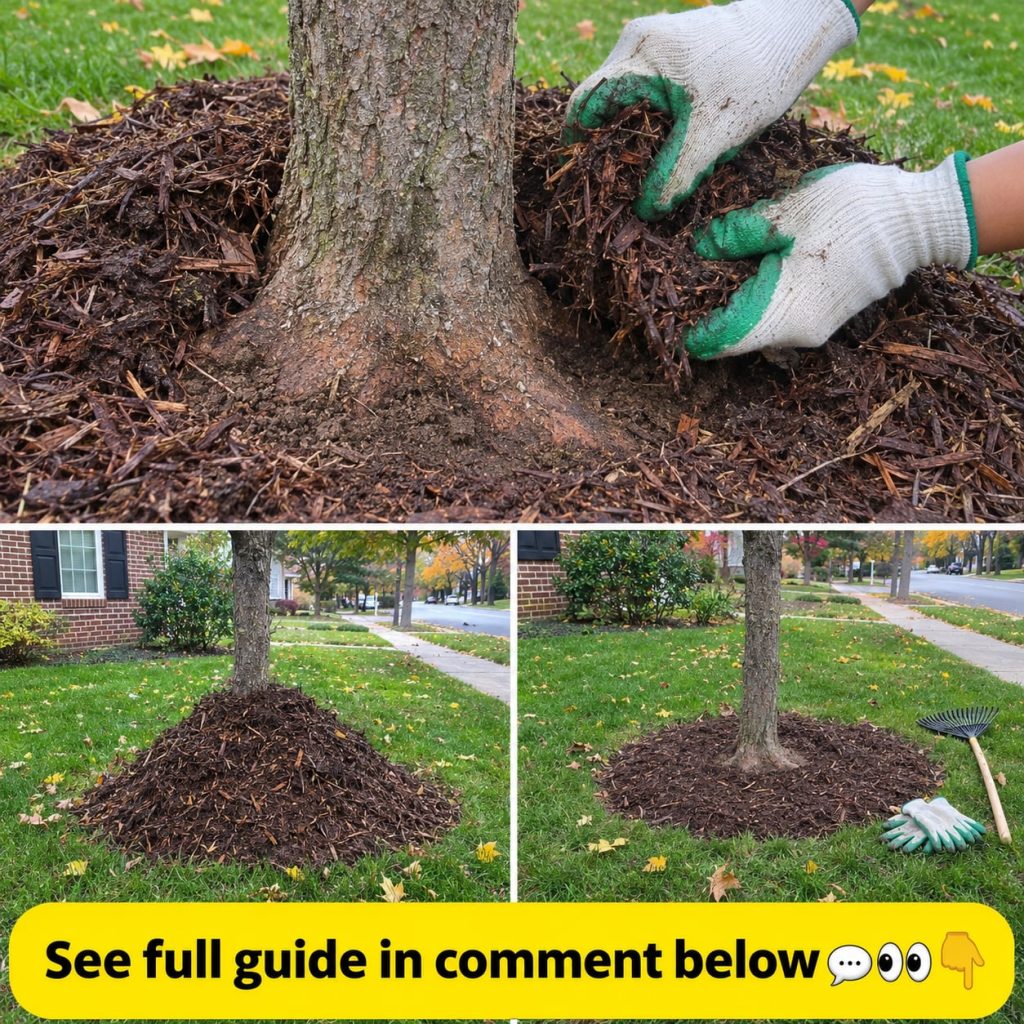
Most people ignore this common landscaping practice, but it’s quietly damaging trees in countless yards. You might have seen landscapers deliberately pulling back thick piles of mulch from tree trunks, exposing the base. This isn’t just for aesthetics; they’re fixing a hidden problem known as a ‘mulch volcano’ – a seemingly harmless pile that can suffocate and rot your trees from the ground up.
Understanding and correcting this issue is one of the simplest, yet most impactful, steps you can take for the long-term health of your trees. A healthy tree base means a healthier tree overall, protecting your investment and enhancing your yard’s beauty for years to come. Let’s dig into why this matters and how to fix it.
What is a Mulch Volcano and Why Is It Harmful?
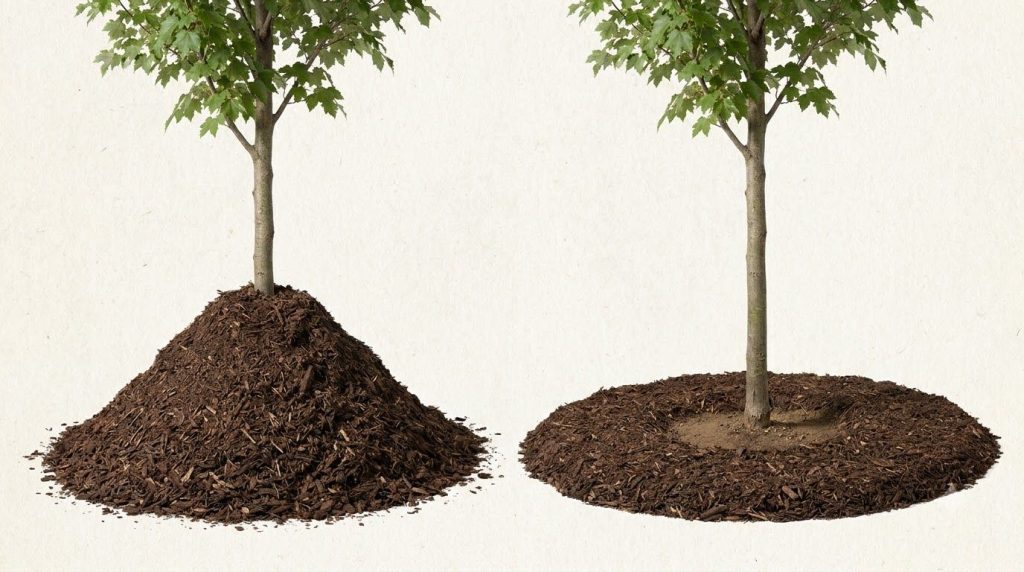
A mulch volcano occurs when mulch is piled high and directly against the trunk of a tree, resembling a cone or volcano shape. While mulch is beneficial for retaining soil moisture, regulating temperature, and suppressing weeds, its improper application can be detrimental. When mulch touches the trunk, it creates a consistently moist environment that can lead to several serious issues:
- Trunk Rot: The constant dampness promotes the growth of fungi and bacteria, causing the bark to soften and rot, weakening the tree’s structural integrity.
- Pest Infestation: Moist, decaying mulch provides an ideal habitat for pests like rodents, termites, and insects that can chew through the bark and feast on the tree’s cambium layer.
- Girdling Roots: The piled mulch encourages roots to grow upwards into the mulch layer rather than outwards into the soil, often circling the trunk and choking the tree over time.
- Suffocation: A thick layer of mulch reduces oxygen exchange to the root flare and upper root system, essentially suffocating the tree.
- Nutrient Imbalance: Some mulches, especially fresh ones, can tie up nitrogen as they decompose, starving the tree of essential nutrients.
The Remedy: Proper Mulching Technique
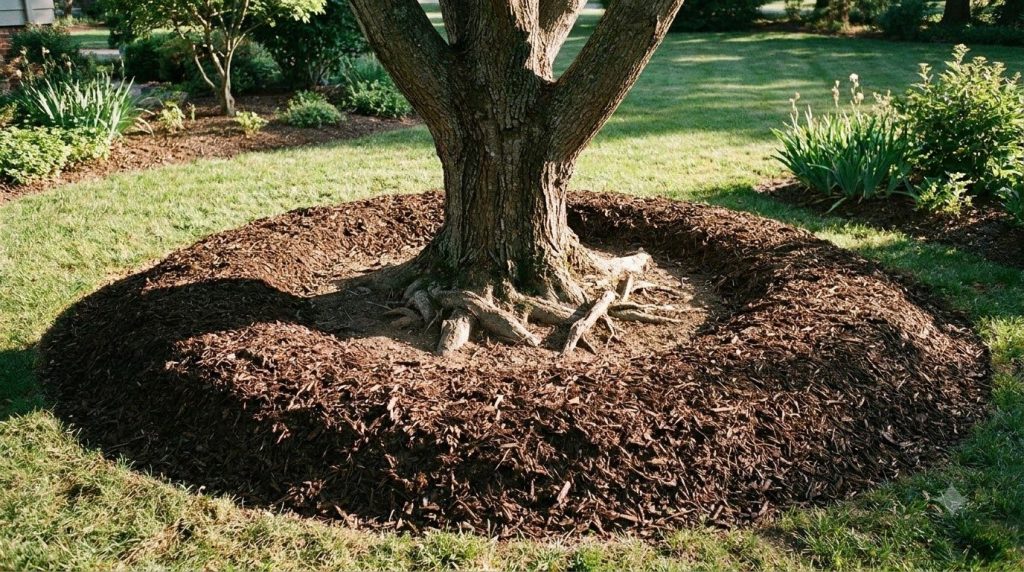
The solution is simple: create a ‘mulch donut’ instead of a ‘mulch volcano.’ This involves applying mulch in a flat, even layer around the tree, leaving a clear space around the trunk’s base.
Approximate Measurements & Formula
- Depth: 2-4 inches (5-10 cm) of mulch.
- Distance from Trunk: Keep mulch at least 4-6 inches (10-15 cm) away from the trunk flare. This creates a donut-like shape.
- Radius: Extend the mulch ring out to the tree’s drip line or at least 2-3 feet (60-90 cm) in diameter for young trees.
Step-by-Step Method to Fix a Mulch Volcano
- Clear the Base: Gently remove all existing mulch that is piled against the tree trunk. Use your hands or a small hand rake to avoid damaging the bark. You should see the root flare – the point where the trunk widens as it meets the ground.
- Inspect the Trunk: Check the bark for any signs of rot, insect damage, or girdling roots. Address any issues if possible (e.g., carefully prune small girdling roots if you’re experienced, otherwise consult an arborist).
- Prepare the Area: Ensure the soil around the tree is level and free of weeds.
- Apply New Mulch: Spread a 2-4 inch layer of your chosen mulch in a uniform ring around the tree.
- Form the Donut: Crucially, leave a 4-6 inch ring clear of mulch directly around the trunk. The mulch should look like a donut, with the tree trunk in the hole.
Quick Tip: Find the Root Flare
If you can’t easily see the root flare, gently dig away soil and mulch from the base until you find the point where the trunk visibly widens. This is your guide for where the mulch should *not* touch.
How to Use and How Often to Use
Proper mulching should be done once a year, typically in the spring or fall. Top up the mulch as needed if it compacts or breaks down, maintaining the 2-4 inch depth and the critical clear space around the trunk. Always remove old, severely compacted, or moldy mulch before adding new.
How to Buy / How to Choose Ingredients (Mulch)
Not all mulches are created equal. Opt for organic mulches that decompose slowly and improve soil structure.
- Shredded Bark: Excellent choice, stays in place, decomposes slowly.
- Wood Chips: Good, but can tie up nitrogen if too fresh.
- Compost: Adds nutrients, but use as a thin layer under bark mulch, not as the main mulch.
- Pine Needles: Good for acid-loving plants, but can be messy.
Avoid dyed mulches, cypress mulch (can be unsustainable), and rubber mulch (doesn’t decompose, offers no soil benefits, can heat up excessively).
Fresh vs. Aged Mulch
| Mulch Type | Pros | Cons | Best Use |
|---|---|---|---|
| Fresh Wood Chips | Inexpensive, readily available | Can tie up nitrogen, intense decomposition odor | Allow to age 3-6 months before use, or use with added nitrogen fertilizer. |
| Aged Wood Chips/Bark | Stable, less nitrogen tie-up, pleasant aroma | More expensive, sometimes harder to find | Ideal for immediate application around trees and shrubs. |
Storage
Store excess mulch in a cool, dry place, away from direct sunlight and excessive moisture. Large piles of wet mulch can spontaneously combust due to internal heat from decomposition. Keep it in a well-ventilated area or spread it thinly if storing for extended periods.
Practical Tips for Tree Health
- Water Wisely: Even with mulch, ensure trees receive adequate water, especially during dry spells. Water deeply and infrequently.
- Avoid Root Disturbance: Be careful when digging or tilling around trees to avoid damaging surface roots.
- Prune Correctly: Remove dead, diseased, or crossing branches to improve tree structure and health.
- Regular Inspection: Periodically check your trees for signs of pests, diseases, or structural issues.
Common Mistakes
- Piling Mulch Against the Trunk: The number one mistake – the ‘mulch volcano’ itself.
- Using Too Much Mulch: More than 4 inches can lead to oxygen deprivation and root issues.
- Using the Wrong Type of Mulch: Inorganic mulches (like gravel) or dyed/recycled wood mulches can be harmful.
- Ignoring the Root Flare: Not identifying and exposing this critical area.
- Mulching Over Weeds: Always clear weeds first; mulch suppresses, but doesn’t eliminate, tenacious weeds.
Cautions / Who Should Avoid It
While mulching is generally beneficial, individuals with severe mold allergies should use caution when handling mulch, especially in damp conditions, and consider wearing a mask. Also, be aware that fresh mulches can sometimes contain seeds, introducing new weeds if not aged properly.
You may also like: Natural Pest Control for Gardeners: Chemical-Free Solutions
Quick Summary
The ‘mulch volcano’ is a widespread problem that suffocates and rots tree trunks. The solution is the ‘mulch donut’: apply 2-4 inches of organic mulch, keeping it 4-6 inches away from the tree’s trunk flare. Choose aged bark or wood chips for best results. This simple practice promotes healthy roots, prevents rot, and protects your trees from pests.
FAQ
- Can I use fresh wood chips from my own tree trimming?
It’s best to let fresh wood chips age for a few months to a year before applying them directly around trees. Fresh chips can deplete nitrogen from the soil as they decompose, potentially harming your tree. - How deep should my mulch layer be?
A depth of 2-4 inches (5-10 cm) is ideal. Any deeper can suffocate roots and promote disease. - How often should I reapply mulch?
Generally, once a year in spring or fall, or as needed to maintain the 2-4 inch depth as the mulch breaks down. - What is the ‘root flare’ and why is it important?
The root flare is the area where the tree trunk widens at the base and transitions into the root system. It needs to be exposed to air and light for proper respiration and to prevent rot. - Will mulch attract termites?
While mulch itself isn’t a primary food source for termites, a thick, damp layer of wood mulch piled against a wooden structure (like your house or a tree trunk) can create an attractive, moist environment for them. Keeping mulch away from foundations and tree trunks minimizes this risk. - Can I use plastic sheeting under mulch?
Plastic sheeting can hinder water and air penetration to the soil, leading to unhealthy roots. It’s better to use a breathable landscape fabric if you need a barrier, though mulch alone is often sufficient for weed suppression.
Conclusion
The ‘mulch volcano’ might seem like a small detail, but it’s a significant factor in tree health. By adopting the simple ‘mulch donut’ technique – keeping mulch away from the trunk and maintaining a moderate depth – you’re actively protecting your trees from rot, pests, and suffocation. This easy remedy ensures your trees remain vibrant, strong, and a beautiful part of your landscape for many years to come.
Read more: The Beginner’s Guide to Organic Gardening Practices
Continue with: Build Your Own Easy DIY Compost Bin for a Healthier Garden