Most people ignore it. The delicious red flesh of a watermelon gets all the attention, but the often-discarded rind holds a remarkable secret. What if you could transform this kitchen scrap into a valuable home remedy? We’re talking about the intriguing ‘white frost’ technique, a traditional method that turns watermelon rind into a potent, crystalline substance used in various natural preparations. Forget tossing that rind – this is the part most people skip, and it’s where the real magic happens.
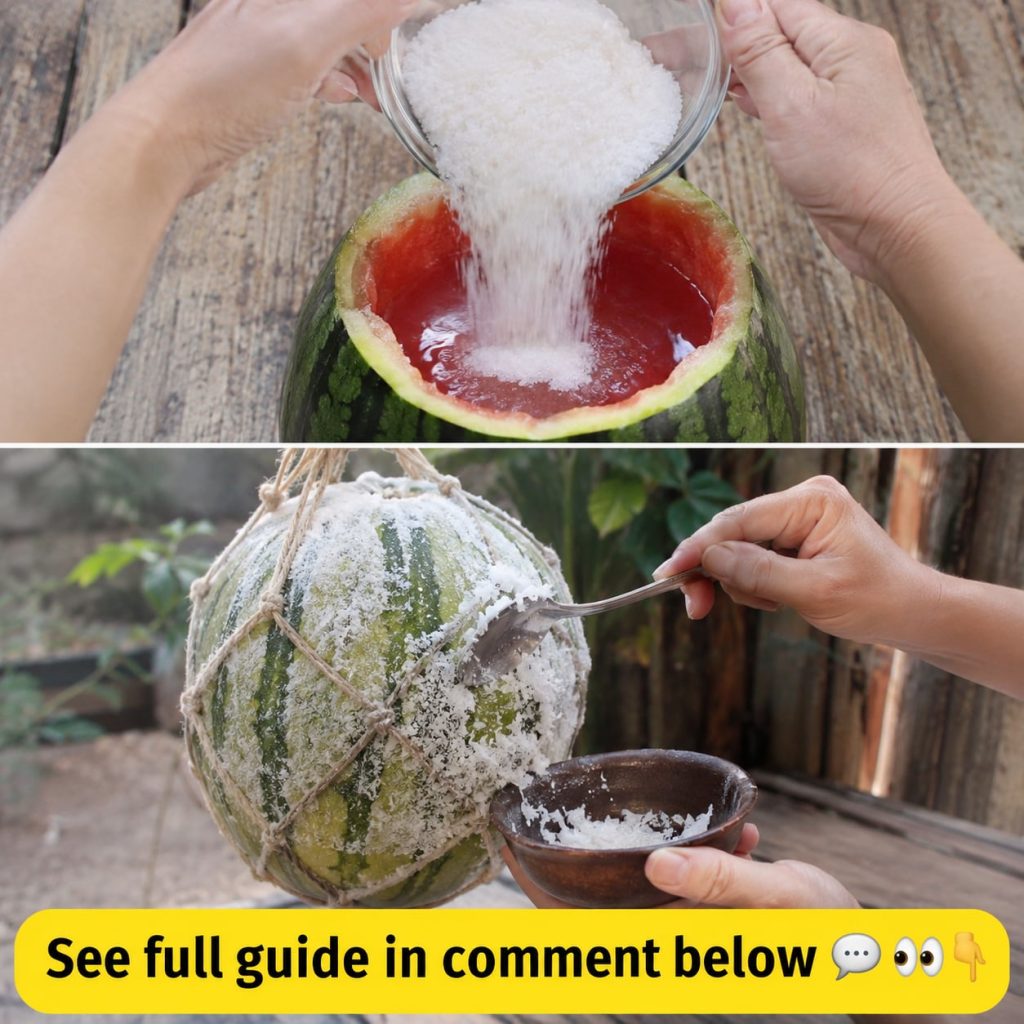
What is Watermelon Rind ‘White Frost’?
The ‘white frost’ from watermelon rind, often referred to as ‘Xi Gua Shuang’ in traditional practices, isn’t literal frost but rather a concentrated, crystalline substance that forms on the surface of watermelon rind when processed correctly. It’s believed to contain beneficial compounds from the rind in a more concentrated, easily accessible form. Traditionally, this ‘frost’ is highly prized for its cooling properties and its use in various topical and internal remedies for minor ailments, particularly those associated with heat.
It’s a natural crystallization process, much like how sea salt crystals form, but here, the active compounds of the watermelon rind are encouraged to surface and solidify. The goal is to dehydrate the rind slowly under specific conditions, allowing these precious crystals to emerge.
Ingredients for Making Watermelon Rind ‘White Frost’
The beauty of this remedy lies in its simplicity:
- Watermelon Rind: Fresh, organic, and thoroughly cleaned. Choose a ripe watermelon for best results.
- Optional Additions (for specific traditional variations): A pinch of salt or a thin layer of fine sugar can sometimes be used to draw out moisture and aid crystallization, though the purest form often relies solely on the rind itself. For this guide, we’ll focus on the traditional rind-only method.
Approximate Measurements
This isn’t an exact science like baking, but here’s a guideline:
- Quantity of Rind: Use the rind from one medium to large watermelon. The more rind you use, the more ‘frost’ you can potentially collect.
- Preparation Space: Ensure you have a clean, airy, and shaded space to dry the rind.
Formula / Recipe
The ‘formula’ is more about technique and patience than a strict recipe. It involves preparing the rind, layering it, and allowing nature (and careful monitoring) to do the rest.
Quick Tip: Rind Selection Matters
Always opt for organic or unsprayed watermelons if possible, as the rind is directly exposed to the environment. Thoroughly wash the watermelon before cutting to remove any surface impurities, even if you plan to peel the outer green layer.
Step-by-Step Method for Cultivating ‘White Frost’
- Prepare the Watermelon Rind:
- After enjoying the red flesh, carefully remove the green outer skin of the watermelon rind using a peeler or sharp knife. You want to use the pale white-to-light green fleshy part.
- Trim off any remaining pink or red flesh. You need a relatively clean, white rind.
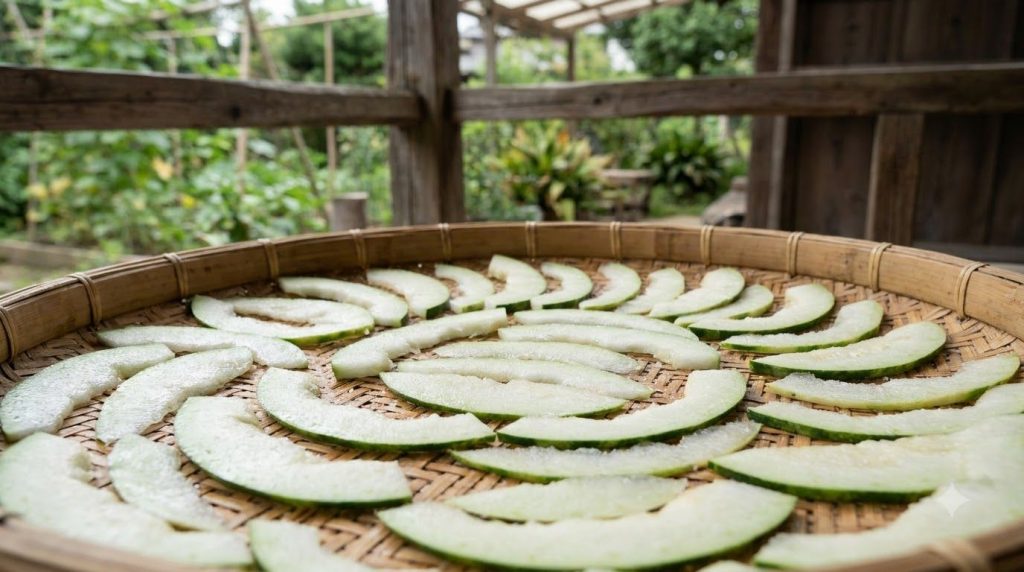
- Cut the rind into thin slices or strips, about 1/4 to 1/2 inch thick. Thinner pieces tend to dry more efficiently and promote crystallization.
- Arrange for Drying:
- Find a clean, well-ventilated area, away from direct sunlight and humidity. A shaded, breezy spot is ideal.
- Lay the rind pieces in a single layer on a clean, non-metallic surface. Traditional methods often use bamboo mats or clean, breathable cloths. Avoid plastic or anything that traps moisture.
- Ensure there’s good air circulation around each piece. You might use a drying rack or mesh screen.
- Monitor and Turn:
- Over the next several days (or even weeks, depending on humidity and temperature), the rind will begin to dehydrate.
- Periodically turn the rind pieces to ensure even drying and prevent mold growth. Do this gently.
- As it dries, you will start to see fine, white, powdery crystals appearing on the surface of the rind. This is your ‘white frost’.
- Collect the ‘White Frost’:
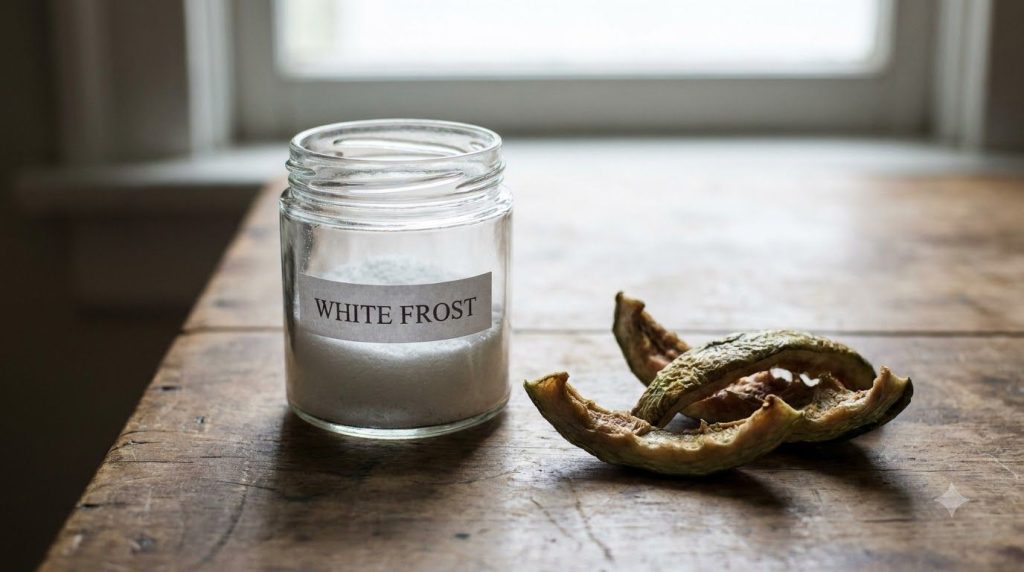
- Once a significant amount of white frost has appeared and the rind is completely dry and brittle, carefully scrape off the powdery substance using a clean, dry brush or a blunt knife.
- Collect the ‘frost’ into a clean, airtight glass jar.
How to Use Watermelon Rind ‘White Frost’
The collected ‘white frost’ is traditionally used in several ways:
- Topical Application: It can be mixed with a small amount of water to form a paste and applied to soothe minor skin irritations, insect bites, or areas of heat.
- Internal Use (with caution): Historically, a tiny pinch might be dissolved in warm water and consumed as a traditional cooling tonic. However, always exercise extreme caution with internal use and consult with a healthcare professional, especially if you have underlying health conditions.
- Mouth and Throat Rinse: A small amount can be dissolved in water to make a rinse for occasional mouth discomfort.
How Often to Use
For topical applications, you can use it as needed, usually a few times a day until discomfort subsides. For any internal use, which is strictly traditional and should be approached with extreme caution, frequency is minimal and not for regular consumption. Always err on the side of moderation and consult a professional.
How to Choose Ingredients
Selecting the right watermelon is crucial for the best ‘white frost’ yield:
- Ripe Watermelon: A ripe watermelon often has a sweeter, more flavorful flesh, which also indicates a more robust rind.
- Organic (Preferred): If possible, choose organic watermelons to minimize exposure to pesticides and chemicals that could be absorbed by the rind.
- Intact Rind: Ensure the rind is free from blemishes, soft spots, or signs of mold before you begin processing.
Storage
Once collected, the ‘white frost’ must be stored properly:
- Airtight Container: Keep it in a clean, dry, airtight glass jar.
- Cool, Dark Place: Store it in a cool, dark pantry or cupboard, away from direct sunlight and humidity.
- Longevity: Properly stored ‘white frost’ can last for several months, potentially up to a year, retaining its efficacy. Discard if you notice any discoloration, unusual smell, or signs of moisture.
Practical Tips for Success
- Patience is Key: The drying and crystallization process takes time. Don’t rush it.
- Airflow is Critical: Ensure excellent air circulation to prevent mold. A gentle fan in a room can sometimes help, but avoid excessive airflow that might blow away fine crystals.
- Humidity Control: This process is best undertaken in drier climates or during dry seasons. High humidity will hinder crystallization and promote spoilage.
- Cleanliness: Maintain strict hygiene throughout the entire process to prevent contamination.
Common Mistakes to Avoid
Making ‘white frost’ is relatively straightforward, but these common pitfalls can ruin your batch:
| Common Mistake | Why It’s a Problem | How to Avoid It |
|---|---|---|
| Using unwashed or sprayed rind | Introduces contaminants, compromising purity | Always use organic watermelon and wash thoroughly |
| Leaving red flesh on rind | Increases moisture, promotes mold, affects purity | Carefully trim all red flesh from the white rind |
| Too much humidity/poor airflow | Leads to mold growth instead of crystallization | Choose a dry, well-ventilated, shaded spot; turn rind regularly |
| Direct sunlight exposure | Degrades compounds, dries too quickly, less ‘frost’ | Dry in a shaded area, not direct sun |
| Impatience / collecting too early | Yields less frost, or frost that’s not fully potent | Wait until rind is brittle and frost is visibly abundant |
Cautions / Who Should Avoid It
While generally considered safe for external use, always perform a patch test on a small area of skin before widespread topical application, especially if you have sensitive skin. For internal consumption, it’s crucial to understand that this is a traditional remedy, not a pharmaceutical. Pregnant or nursing individuals, young children, and those with chronic health conditions or taking medications should absolutely consult a healthcare professional before considering any internal use of ‘white frost’. This guide is for informational purposes about traditional remedies and not medical advice.
Quick Summary
- Best Preparation: Thinly sliced, green-peeled watermelon rind, dried slowly in a clean, shaded, well-ventilated area.
- Best Use-Case: Primarily topical for soothing minor skin irritations and cooling effects.
- Storage: Airtight glass jar in a cool, dark, dry place.
- When to Use: As needed for topical concerns, or for traditional cooling tonics (with extreme caution).
- What to Avoid: Unclean rind, humid conditions, direct sun, and internal use without professional guidance.
FAQ
Can I use fresh or dried rind for ‘white frost’?
You must use fresh rind to start the process, but the goal is to dry it to induce the ‘white frost’ crystallization.
How long does the ‘white frost’ last?
When properly stored in an airtight container in a cool, dark place, it can last up to a year.
Can I refrigerate the ‘white frost’?
Refrigeration isn’t typically necessary and can introduce humidity. A dry pantry is usually sufficient.
How often should I use it?
For topical issues, use as needed. For traditional internal use, it’s occasional and very small amounts, always with caution and professional advice.
What part of the rind is best?
The white fleshy part, after removing the green outer skin and any remaining red fruit.
What if my rind grows mold instead of ‘white frost’?
This indicates too much humidity or poor airflow. Discard the moldy rind immediately and try again with stricter drying conditions.
Is ‘white frost’ safe to eat?
Traditionally, very small amounts were consumed as a cooling tonic. However, due to the lack of modern scientific verification and potential for contamination during DIY preparation, internal consumption should be approached with extreme caution and professional medical consultation.
Can I use any type of watermelon?
Any common watermelon variety can be used, but prioritize organic and thoroughly washed rinds.
Conclusion
The ‘white frost’ from watermelon rind offers a fascinating glimpse into traditional home remedies, turning what’s usually waste into a useful resource. With patience and attention to detail, you can cultivate this unique substance for various topical applications, harnessing the subtle power of a common fruit in an uncommon way. It’s a testament to how much potential lies hidden in plain sight, waiting for us to uncover it.
You may also like: Discovering the Hidden Uses of Citrus Peels
Read more: The Art of Making Herbal Tinctures at Home
Continue with: Understanding Natural Cooling Herbs for Summer Comfort

