Welcome, fellow plant enthusiasts! Have you ever wondered why some of your houseplants thrive while others struggle, even with diligent watering and light? The secret often lies beneath the surface: in their potting mix. Crafting the perfect potting mix isn’t just about throwing some soil in a pot; it’s about providing an environment tailored to your plant’s specific needs. Today, we’re diving deep into the art and science of custom potting mixes to help your indoor garden flourish.
Why the Right Potting Mix Matters
Think of potting mix as the foundation of your plant’s home. It’s responsible for several crucial functions:
- Anchorage: Providing stable support for roots.
- Aeration: Allowing air circulation to roots, preventing rot.
- Drainage: Letting excess water escape, avoiding soggy conditions.
- Moisture Retention: Holding enough water to keep roots hydrated.
- Nutrient Supply: Storing and slowly releasing essential nutrients.
A generic bag of ‘all-purpose’ potting soil might work for some plants, but many houseplants have unique requirements that a specialized mix can address, leading to healthier growth, fewer pest issues, and more vibrant foliage or blooms.
Key Ingredients for Your DIY Potting Mix
Before we jump into specific recipes, let’s get familiar with the common components you’ll be using. These can be found at most garden centers:
1. Base Materials
- Peat Moss: Excellent for moisture retention and acidity, but can be unsustainable.
- Coco Coir: A sustainable alternative to peat moss, offering good water retention and aeration.
- Compost/Humus: Adds nutrients and improves soil structure.
- Sterilized Topsoil: Provides density and minerals, often used for outdoor container plants or those needing more support.
2. Aeration and Drainage Enhancers
- Perlite: Lightweight, volcanic rock that improves drainage and aeration.
- Vermiculite: A mineral that improves aeration, retains moisture, and has some nutrient-holding capacity.
- Pumice: Similar to perlite but heavier, offering good drainage and stability.
- Coarse Sand/Grit: Essential for succulents and cacti, ensuring excellent drainage.
- Orchid Bark/Pine Bark Fines: Provides excellent aeration and drainage, especially for epiphytic plants.
3. Nutrient Boosters (Optional)
- Worm Castings: A natural, slow-release fertilizer.
- Bone Meal: Provides phosphorus for root development.
- Blood Meal: Provides nitrogen for leafy growth.
- Slow-Release Fertilizer: Granules that release nutrients over several months.
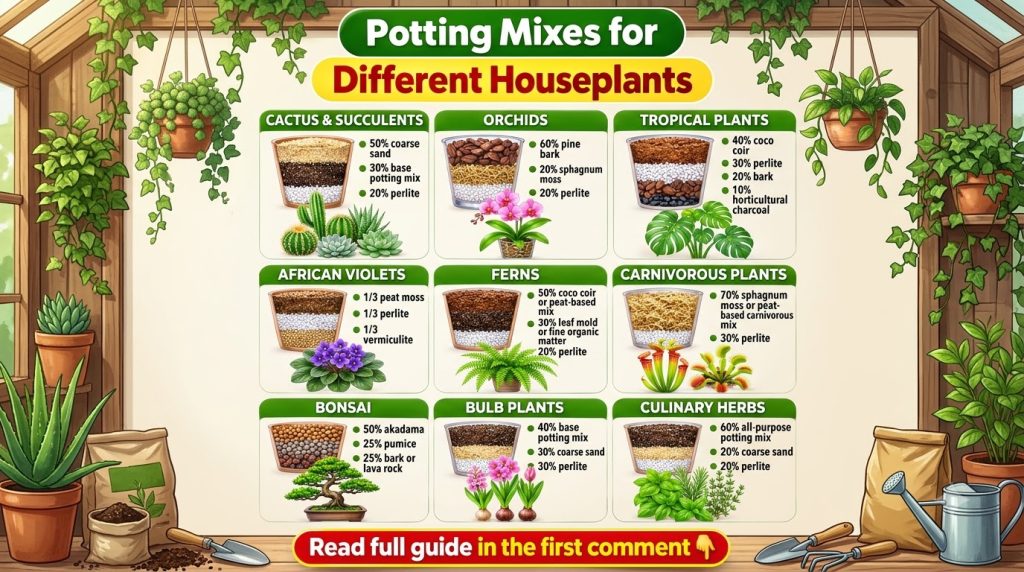
Custom Potting Mix Recipes for Popular Houseplants
Here are a few versatile mixes you can create to give your beloved plants exactly what they need:
1. The General Purpose Houseplant Mix
This mix is suitable for most common foliage plants like Pothos, Philodendrons, ZZ Plants, and Snake Plants.
- 2 parts coco coir or peat moss
- 1 part perlite or pumice
- 1 part compost or worm castings
This blend offers a good balance of moisture retention and drainage, preventing soggy roots while keeping the plant hydrated.
2. The Succulent and Cactus Mix
Cacti and succulents demand excellent drainage to prevent root rot. This mix mimics their arid natural habitats.
- 1 part potting soil (light, well-draining type)
- 1 part coarse sand or grit
- 1 part perlite or pumice
This combination ensures rapid water runoff and prevents moisture from lingering around the roots, which is crucial for these desert dwellers.
3. The Aroid/Tropical Plant Mix
Plants like Monsteras, Anthuriums, and many other tropicals love a chunky, well-aerated mix that still holds some moisture.
- 2 parts coco coir or peat moss
- 1 part orchid bark or pine bark fines
- 1 part perlite or pumice
- 0.5 part worm castings (optional, for added nutrients)
The bark provides excellent aeration, mimicking the bark they might cling to in their natural environment, while the coco coir retains sufficient moisture.
4. The Fern and Moisture-Loving Mix
Ferns and other plants that prefer consistently moist (but not waterlogged) conditions will appreciate this rich, absorbent mix.
- 2 parts coco coir or peat moss
- 1 part vermiculite
- 0.5 part compost
- 0.5 part perlite (for just a touch of drainage)
Vermiculite’s moisture-holding capacity combined with the coco coir ensures a consistently damp environment without becoming overly saturated.
Tips for Mixing Your Own Potting Media
- Use Clean Tools: Always use sterilized tools and containers to prevent introducing diseases or pests.
- Wear Gloves: Protect your hands, especially when working with peat moss or perlite dust.
- Mix Thoroughly: Ensure all ingredients are evenly distributed for a consistent texture.
- Moisten Slightly: Lightly moisten your mix before potting to prevent it from being too dusty and to help settle it around the roots.
- Store Properly: Store any leftover mix in an airtight container in a cool, dry place to keep it fresh and free from contaminants.
Happy Potting!
Experimenting with different potting mixes can be a rewarding part of your gardening journey. By understanding your plants’ unique needs and tailoring their soil to match, you’re giving them the best possible chance to thrive and bring beauty to your home. Happy planting, and may your houseplants grow lush and healthy!