Ever wondered if those eggs in your fridge are still good to eat? Don’t toss them out just yet! Knowing how fresh your eggs are can save you money, reduce food waste, and ensure your meals taste their best. Fortunately, there’s a super simple, reliable method to check egg freshness right in your kitchen: the egg float test.
This easy hack will empower you to confidently identify fresh eggs from older ones, helping you make informed decisions about cooking and consumption. Let’s dive in and learn how to master this essential kitchen skill!
How the Egg Float Test Works
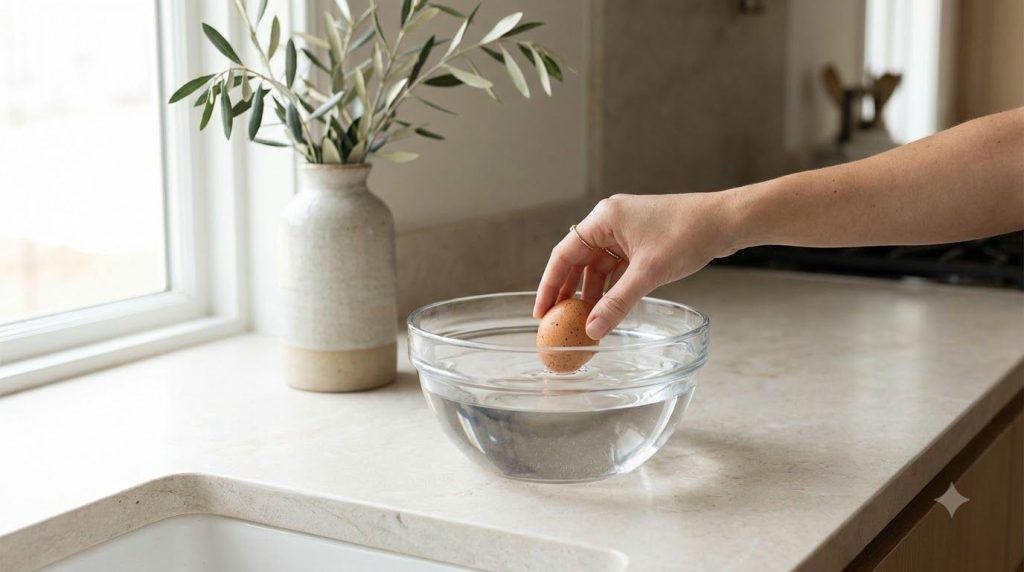
The egg float test is incredibly straightforward and requires nothing more than a bowl of water and your eggs. Here’s how to do it:
- Grab a Bowl: Fill a deep bowl or pot with cold water. Ensure it’s deep enough for an egg to be fully submerged.
- Gently Place Eggs: Carefully place each egg into the water, one at a time. Be gentle to avoid cracking them.
- Observe and Interpret: Watch how the egg behaves in the water. Its position will tell you a lot about its freshness.
The Science Behind the Float
Why do eggs float or sink? It all comes down to the air cell inside the egg. Every egg has a small air pocket at its blunt end. As an egg ages, its porous shell allows moisture to evaporate from the egg white, and air slowly seeps in, causing the air cell to enlarge. The larger the air cell, the more buoyant the egg becomes.
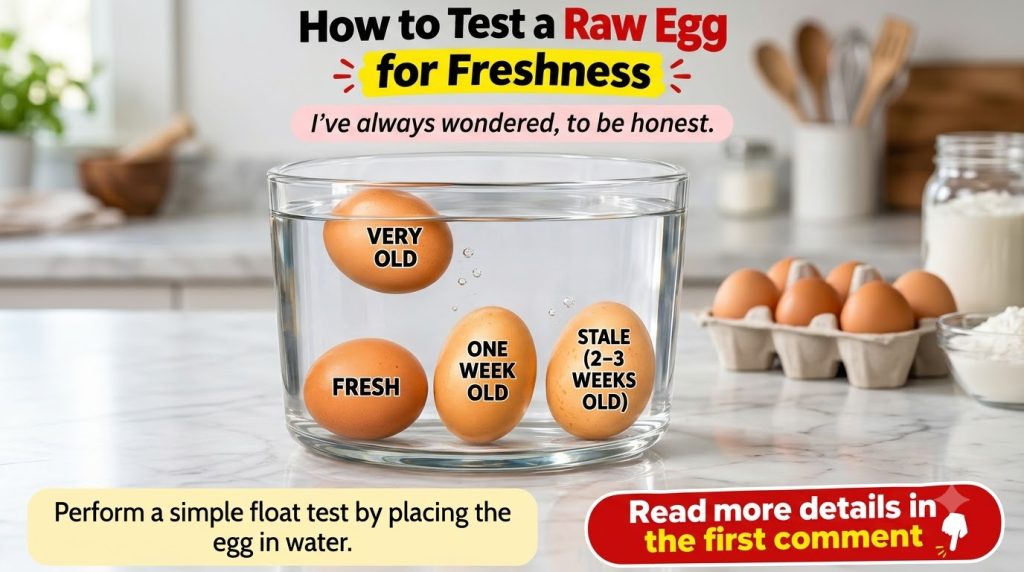
- Fresh Egg: Has a very small air cell and is dense. It sinks to the bottom and lies flat on its side.
- Moderately Fresh Egg: Has a slightly larger air cell. It will sink but stand on its pointy end, with the blunt end pointing upwards.
- Older Egg: Has a larger air cell. It will float, but might still touch the bottom of the bowl.
- Very Old Egg: Has a significantly large air cell. It will float entirely on the surface of the water.
What Your Egg’s Float Means for Eating
Here’s a quick guide to understanding your egg’s freshness based on its float:
| Egg Position | Freshness Level | Best Use |
|---|---|---|
| Sinks and lies flat | Very fresh (1-3 days old) | Any use: frying, poaching, scrambled, baking |
| Sinks but stands on end | Still fresh (up to 1-2 weeks old) | Any use: excellent for hard-boiling (easier to peel!) |
| Floats, but one end touches bottom | Getting older (2-3 weeks old) | Baking, scrambling, frittatas (check for smell first) |
| Floats completely on surface | Quite old (3+ weeks old) | Best to discard. Likely spoiled (always check smell before use!) |
Beyond the Float: Other Freshness Indicators
While the float test is excellent, it’s not the only way to check for freshness. Always trust your other senses:
- Smell: A bad egg will have an unmistakable, foul odor. If it smells off, even slightly, don’t eat it.
- Appearance: Crack the egg into a bowl. A fresh egg will have a firm, round yolk and a thick white that stays close to the yolk. An older egg’s yolk will be flatter, and the white will be thinner and spread out more.
Practical Tips for Egg Storage and Use
- Store in the Carton: Keep eggs in their original carton in the coldest part of your refrigerator, usually the back of the top shelf. The carton also protects them from absorbing odors from other foods.
- Don’t Wash Eggs: Eggshells have a natural protective coating that prevents bacteria from entering. Washing eggs removes this coating, making them more susceptible to spoilage.
- Use Older Eggs for Baking: Eggs that stand on end or slightly float are still perfectly fine for baking. Their thinner whites can actually incorporate more easily into batters. They are also ideal for hard-boiling, as their larger air cell makes them much easier to peel once cooked.
Common Mistakes to Avoid
- Not Enough Water: Ensure your bowl has enough water for the egg to move freely and clearly demonstrate its buoyancy.
- Ignoring Other Senses: While the float test is reliable, it’s always best practice to combine it with a quick smell check, especially for older eggs.
- Assuming All Floating Eggs are Bad: A floating egg isn’t automatically spoiled. It’s just older. Use your nose to confirm if it’s truly gone bad.
FAQs
Is a floating egg always bad?
No, not always. A completely floating egg simply means it’s older. If it doesn’t have a foul odor when cracked, it may still be safe for certain uses like baking, but it’s generally best to discard eggs that float completely, just to be safe.
How long do eggs typically last in the refrigerator?
With proper refrigeration, eggs can last for about 3-5 weeks beyond the pack date or about 2-3 weeks beyond the ‘sell-by’ date on the carton.
Does the temperature of the water matter for the float test?
Using cold water is standard and will give accurate results. The temperature itself doesn’t significantly impact the buoyancy of the egg.
Can I do the float test on brown and white eggs?
Yes, the float test works the same for both brown and white eggs. The color of the shell does not affect an egg’s freshness or its internal composition.
What’s the best way to store eggs to keep them fresh longer?
Store eggs in their original carton in the coldest part of your refrigerator, usually on an inner shelf rather than in the door, which tends to be warmer.
Conclusion
The egg float test is a fantastic, simple trick that every home cook should know. It’s a quick, visual way to assess freshness, reduce unnecessary food waste, and ensure you’re always using the best quality ingredients in your cooking. Next time you’re unsure about those eggs, remember this easy test and cook with confidence!
This content is for educational purposes only and should not be considered medical advice. Consult a qualified healthcare professional for personalized dietary recommendations.