Ever notice your washing machine discharging murky, reddish-brown water, or find unpleasant odors lingering in your laundry area? Over time, soap scum, mineral deposits, and mold can build up inside your washing machine, leading to less-than-fresh clothes and stained drainage areas. Before you call a professional, consider giving your appliance a powerful, natural deep clean.
This simple DIY method uses common household ingredients to tackle grime and odors, helping your washing machine run more efficiently and keep your clothes truly clean. It’s an easy, cost-effective way to refresh your appliance and prevent future issues.

What You’ll Need
- White Vinegar: 2 cups
- Baking Soda: 1/2 cup
- Microfiber Cloth or Sponge
- Old Toothbrush (optional)
Why This DIY Can Be Useful
White vinegar is a natural powerhouse for cleaning. Its acetic acid content helps to dissolve mineral deposits, cut through soap scum, and kill mold and mildew, which are common culprits behind dirty discharge and unpleasant smells. It also acts as a natural deodorizer.
Baking soda is a mild abrasive that helps scrub away grime and absorbs odors. When combined with vinegar, it creates a fizzing action that can help dislodge stubborn buildup from hard-to-reach areas inside the machine drum and hoses.
How to Make It
This isn’t a recipe to mix ingredients ahead of time, but rather a sequence of steps to prepare your machine for a thorough cleaning cycle.
- Empty the Machine: Ensure your washing machine is completely empty of clothes or any other items.
- Clean the Dispensers: If your machine has removable detergent and fabric softener dispensers, take them out and wash them thoroughly in your sink with hot water and soap. Use an old toothbrush to scrub away any sticky residue or mold. For non-removable dispensers, wipe them down with your microfiber cloth dampened with white vinegar.
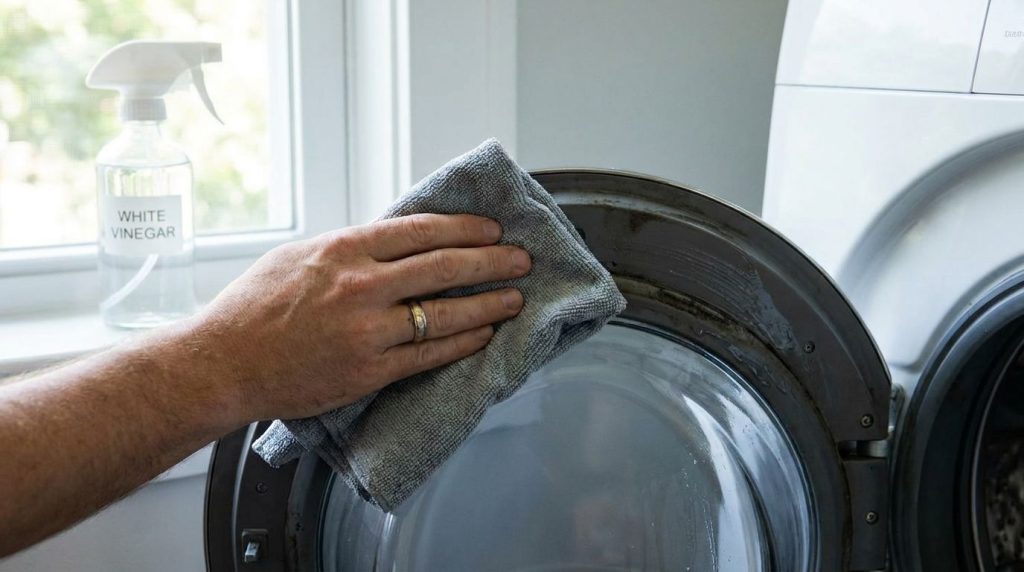
- Wipe Down Seals and Gaskets: For front-loading machines, pull back the rubber gasket around the door and wipe away any accumulated gunk, hair, or mold with your vinegar-dampened cloth. Don’t forget the inside of the door as well.
How to Use It
Once your machine is prepared, it’s time for the cleaning cycles.
- Vinegar Cycle: Pour 2 cups of white vinegar directly into the detergent dispenser or, if you have a top-loader, directly into the drum. Select the hottest water setting and the largest load size available. Run a complete wash cycle without any laundry. The hot water and vinegar will work together to break down mineral buildup and soap residue.
- Baking Soda Cycle: After the vinegar cycle is complete, sprinkle 1/2 cup of baking soda directly into the empty washing machine drum. Again, select the hottest water setting and the largest load size. Run another complete wash cycle. The baking soda will help scrub any remaining residue and neutralize odors.
- Final Wipe Down: Once both cycles are finished, wipe down the inside of the drum, the machine’s exterior, and any remaining parts you missed with your clean microfiber cloth.
What to Expect
After this deep clean, you should notice a significant difference. Your washing machine will likely smell fresher, and the discharge water should appear much clearer. Your clothes may also come out feeling cleaner and smelling better. You might even see a reduction in any residue on clothes or the drainage area.
Helpful Tips
- Regular Maintenance: Aim to deep clean your washing machine every 1-3 months, depending on how frequently you use it and your water hardness.
- Leave the Door Ajar: After each use, leave the washing machine door slightly open (if safe to do so) to allow the drum to air dry. This helps prevent mold and mildew growth.
- Use Less Detergent: Using too much detergent is a common cause of soap scum buildup. Follow the manufacturer’s recommendations for detergent usage, or even use slightly less, especially if you have soft water.
- Clean Lint Filters: Regularly check and clean any lint filters your machine might have, as these can also contribute to grime and reduced efficiency.
Important Notes / Safety
- Ventilation: Ensure good ventilation in your laundry area while cleaning, especially when using vinegar, as its fumes can be strong.
- Never Mix Bleach and Vinegar: This combination produces dangerous chlorine gas. Always clean with one substance at a time, and ensure thorough rinsing between different cleaning agents. This DIY uses only vinegar and baking soda separately.
- Check Manufacturer Guidelines: Always refer to your washing machine’s owner’s manual for specific cleaning instructions or recommendations, especially if your machine has a self-cleaning cycle feature.
- Allergy Sensitivity: If you have sensitive skin, consider wearing gloves while wiping down the machine.