Don’t Throw It Out! Restore Your Rusty Cast Iron Skillet
Is your beloved cast iron skillet looking more red than black? Don’t despair and certainly don’t toss it! Rust on cast iron is a common problem, but thankfully, it’s also a highly solvable one. Before you consider replacing that family heirloom or trusty kitchen companion, know that a simple, inexpensive, and incredibly effective home hack using common white vinegar can bring it back to life.
Cast iron cookware is renowned for its durability, even heat distribution, and ability to last for generations—if properly cared for. But neglect, improper drying, or prolonged exposure to moisture can lead to unsightly and problematic rust. This guide will walk you through how to use white vinegar and water to strip away the rust and prepare your skillet for a new life of delicious meals.
Why Cast Iron Rises to the Occasion (and How to Spot It)
Cast iron is an alloy of iron and carbon, and iron is highly susceptible to oxidation when exposed to oxygen and moisture—a process we commonly call rust. Rust appears as reddish-brown flakes or patches and can affect the food safety and cooking performance of your pan. While a little surface rust isn’t the end of the world, it needs to be addressed before it progresses.
The Magic Duo: White Vinegar & Water
White vinegar is a cleaning powerhouse, and its effectiveness in rust removal comes down to its acetic acid content. Acetic acid reacts with iron oxide (rust), essentially dissolving it away. However, vinegar is quite strong, so diluting it with water is crucial to prevent damaging the cast iron itself and to ensure a gentler, controlled restoration process. The water helps to temper the acidity, preventing pitting or etching of the metal.
What You’ll Need:
- Heavily rusted cast iron skillet
- White vinegar
- Water
- Large plastic tub or container (large enough to submerge the skillet)
- Stiff brush or steel wool (non-abrasive to prevent scratching if possible)
- Dish soap
- Clean cloths or paper towels
- Vegetable oil, flaxseed oil, or other seasoning oil
- Oven (for re-seasoning)
- Gloves (optional, but recommended for prolonged contact)
Step-by-Step Restoration Guide:
Follow these steps to bring your rusty cast iron back from the brink:
-
Initial Scrub
Before soaking, give the skillet a quick scrub with hot water and a stiff brush or steel wool to remove any loose rust or debris. This helps the vinegar penetrate more effectively.
-
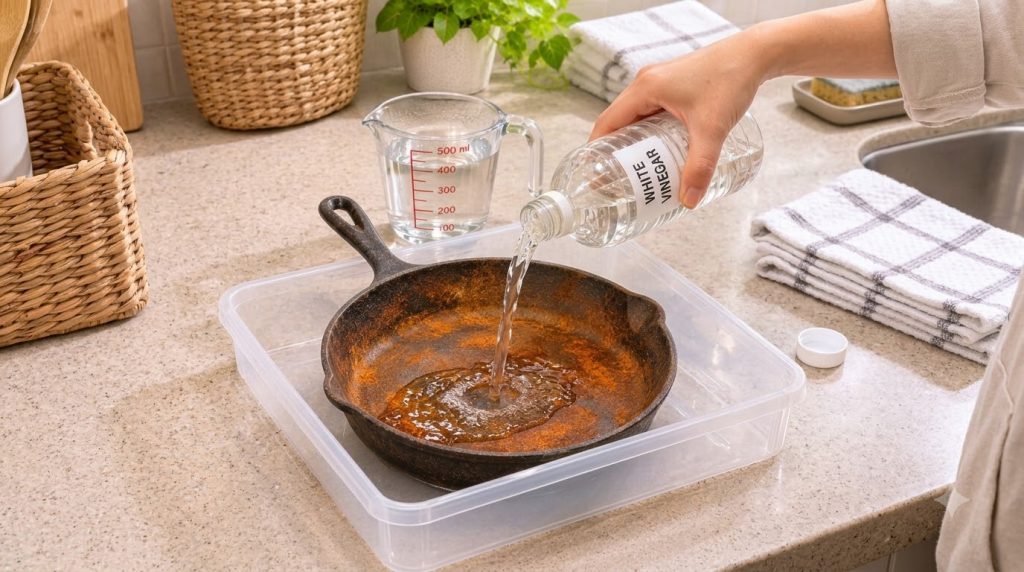
Prepare the Vinegar Bath
In your large plastic tub, mix white vinegar and water. A common ratio is 1 part white vinegar to 1 part water. For extremely rusty pans, you can go up to 1 part vinegar to 2 parts water, but never use undiluted vinegar for extended periods. Ensure there’s enough solution to fully submerge your skillet.
-
Soak the Skillet
Carefully place the rusted cast iron skillet into the vinegar and water solution, ensuring it is completely submerged. The soaking time is crucial: start with 1-3 hours for moderately rusty pans. For severely rusted items, you might need up to 8-12 hours, but *do not exceed 24 hours* as prolonged exposure to acidic vinegar can start to pit the iron itself.
Pro Tip: Check on the skillet every hour or two. You might see bubbles forming, which indicates the vinegar is working!
-
Scrub Away the Rust
After the soak, remove the skillet from the solution. Use your stiff brush or steel wool to scrub away the loosened rust. It should come off much easier now. If stubborn spots remain, you can briefly re-submerge and scrub again, but avoid leaving it in the solution for too long after the initial soak.
-
Rinse Thoroughly
Immediately after scrubbing, rinse the skillet thoroughly under hot running water. It’s critical to wash off all traces of vinegar to stop the acidic reaction and prevent new rust from forming. Use a small amount of dish soap and scrub again to ensure all residue is gone.
-
Dry Immediately and Completely
This is a critical step! Cast iron rusts incredibly quickly after being exposed to water and vinegar. Towel-dry the skillet immediately and completely. For extra measure, place it on a stovetop over medium heat for a few minutes until all moisture has evaporated and the pan is bone dry. You’ll literally see steam rising if there’s any water left.
-
Re-Season Your Skillet
Once dry, your skillet will likely look dull gray and feel slightly rough—it has been stripped of its old seasoning along with the rust. It’s now vulnerable to re-rusting, so immediate re-seasoning is essential. Apply a very thin, even layer of your chosen seasoning oil (like vegetable or flaxseed oil) to all surfaces of the pan, inside and out, including the handle. Wipe off any excess oil with a clean cloth.
Place the skillet upside down in a cold oven. Heat the oven to 450-500°F (230-260°C). Once it reaches temperature, let it bake for one hour. Turn off the oven and allow the skillet to cool completely inside the oven. This process creates a hard, protective layer of seasoning. You may need to repeat this seasoning process 2-3 times to build a good foundation.
Important Considerations & Safety Tips:
- Ventilation: Work in a well-ventilated area, as vinegar fumes can be strong.
- Gloves: Wear gloves to protect your hands from the acidic solution and rust.
- Plastic Container: Always use a plastic container for soaking. Metal containers can react with the vinegar.
- Monitor Soaking Time: Never leave cast iron in a vinegar solution for more than 24 hours, as it can cause etching or damage to the metal.
- Re-Seasoning is Key: Skipping the re-seasoning step will leave your cast iron vulnerable to immediate re-rusting.
Maintaining Your Restored Cast Iron:
To keep your cast iron rust-free and performing beautifully, remember these simple rules:
- Always hand wash with hot water and a gentle scrub brush (avoid harsh soaps or dishwashers).
- Dry immediately and thoroughly after every wash, preferably by heating on the stovetop.
- Apply a very thin coat of oil after each wash, especially if it looks dry, to maintain the seasoning.
- Store in a dry place.
With this white vinegar hack, you can easily rescue and restore your rusty cast iron skillet, extending its life and saving you money. Happy cooking!