Everyone knows the delicious papaya fruit, but here’s a secret most people ignore: the true power of the papaya often lies in its unripe stage, specifically within its milky sap. While the sweet, orange flesh gets all the culinary attention, the sap from an unripe papaya is what many traditional herbalists and natural remedy enthusiasts keep for its unique properties. This potent, natural liquid holds surprising benefits that are often overlooked, making it a hidden gem in the world of natural wellness.
What It Is: The Power of Unripe Papaya Sap
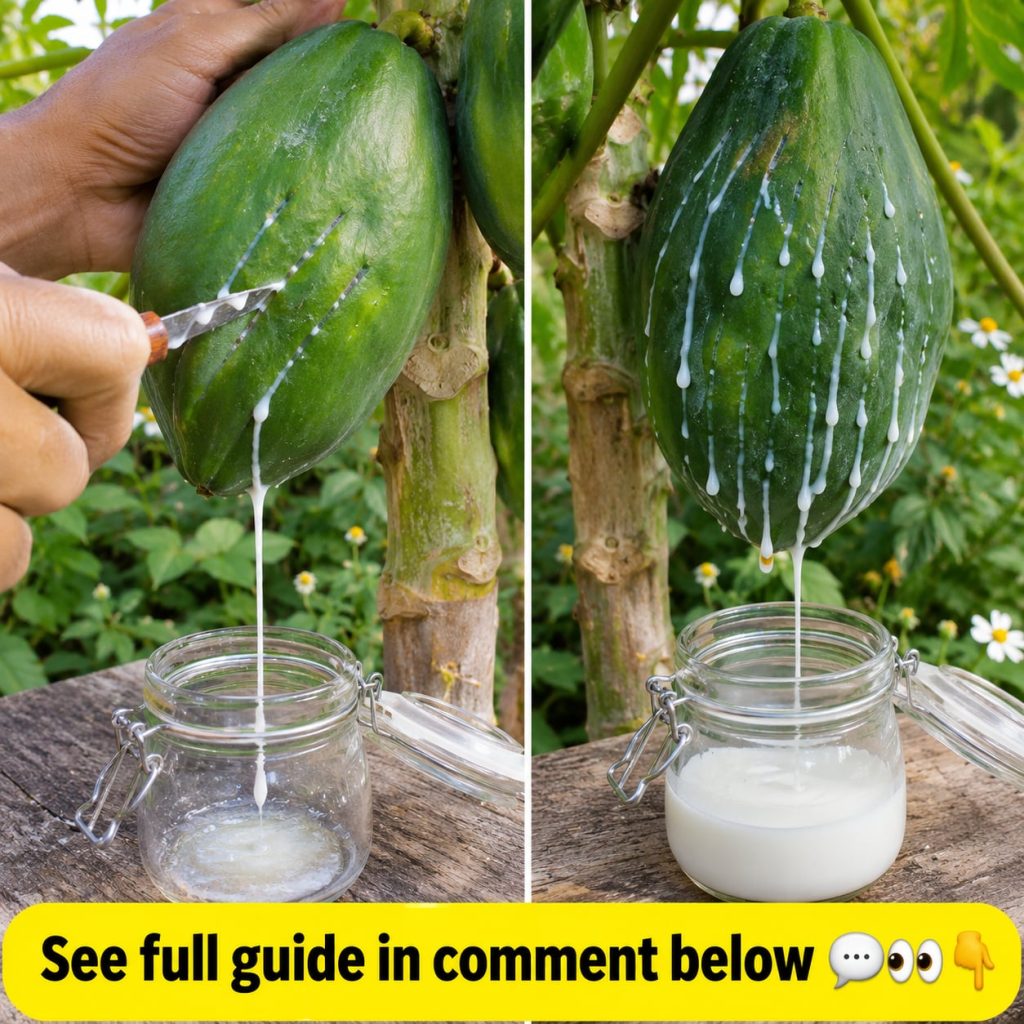
Unripe papaya sap, also known as latex, is the white, milky fluid that excretes from the skin of an unripe green papaya when it’s cut or scratched. This sap is rich in proteolytic enzymes like papain and chymopapain, which are responsible for its potent properties. Historically, indigenous communities have utilized this sap for a variety of external and internal applications, recognizing its ability to aid in digestion and offer support for skin and hair health.
Ingredients
The primary ingredient for this remedy is simply an unripe, green papaya. It’s crucial that the papaya is truly unripe, as the enzyme concentration decreases significantly as the fruit ripens. You will also need clean tools for extraction and a suitable container for collection.
Approximate Measurements
- Unripe Papaya: One medium-sized green papaya.
- Sap: A few drops to a teaspoon, depending on the intended use. It is highly concentrated, so a little goes a long way.
Formula / Recipe: Extracting Unripe Papaya Sap
Extracting the sap safely and effectively is key to harnessing its benefits. The process is straightforward, but requires care to avoid skin irritation from direct contact with large amounts of the raw sap.
Step-by-Step Method
- Select Your Papaya: Choose a firm, perfectly green, unripe papaya. Ensure there are no blemishes or soft spots.
- Clean the Papaya: Wash the papaya thoroughly under running water and pat it dry with a clean cloth.
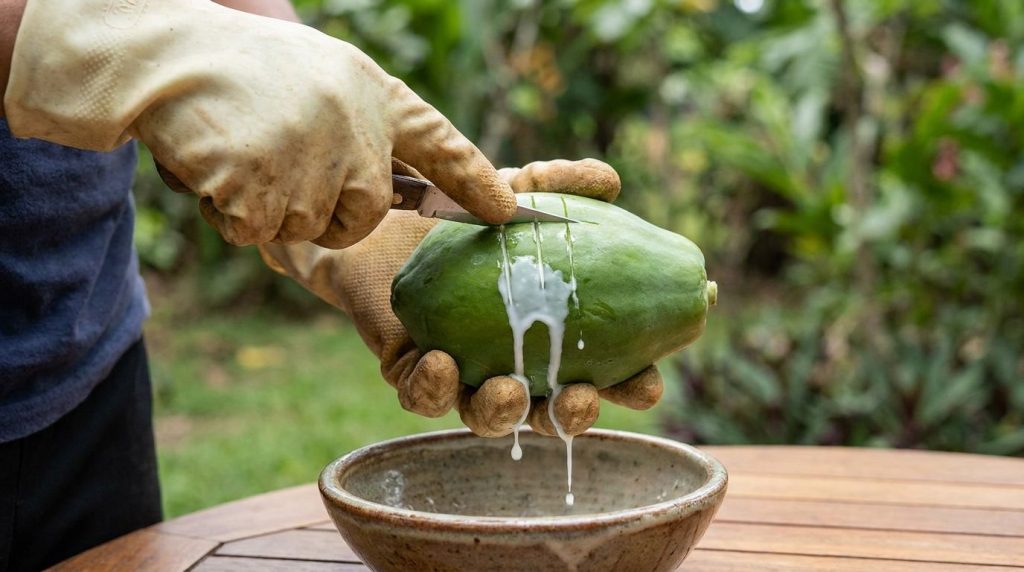
- Prepare Your Workspace: Lay down a clean towel or paper towels. Have a small, clean, non-metallic bowl or cup ready to collect the sap. Wear gloves to protect your hands, as the sap can be irritating.
- Make Incisions: Using a sharp, clean knife, make several shallow vertical cuts (about 1/8 to 1/4 inch deep) along the skin of the papaya. Do not cut too deep, as you only need to penetrate the skin slightly to release the sap.
- Collect the Sap: As you make the cuts, a white, milky sap will immediately begin to ooze out. Position your bowl or cup directly beneath the cuts to collect the dripping sap. Allow it to drip for about 10-15 minutes, or until the flow significantly slows down.
- Filter (Optional): If you notice any small debris or fruit particles in your collected sap, you can gently strain it through a fine-mesh sieve or cheesecloth for purity.
How to Use Unripe Papaya Sap
Due to its potent nature, unripe papaya sap is typically used externally or in very diluted forms internally. Always perform a patch test first.
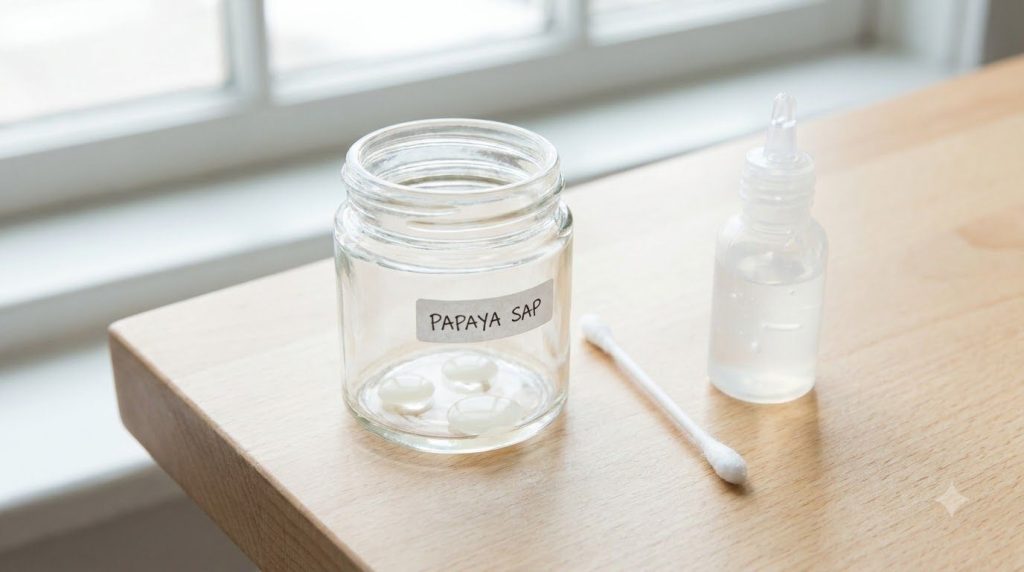
- For Skin Spots: Dilute a few drops of sap with an equal amount of water or aloe vera gel. Apply a tiny amount directly to the affected area using a cotton swab. Leave on for 5-10 minutes, then rinse thoroughly.
- For Hair & Scalp Health: Mix a few drops into your shampoo or conditioner, or dilute with water and use as a pre-shampoo scalp treatment. Ensure to rinse completely.
- Digestive Aid (Highly Diluted, Internal Use with Caution): *Consult a healthcare professional before internal use.* If advised, extremely small, highly diluted amounts (e.g., 1-2 drops in a full glass of water or juice) might be used to support digestion, but this is generally reserved for traditional practices under expert guidance.
Quick Tip: Fresh sap is always best. Use it immediately after collection for maximum potency.
How Often to Use
For external applications, start with once or twice a week to gauge your skin’s reaction. If tolerated, you might increase to every other day, but always monitor for any irritation. Internal use should only be under strict professional guidance and with extreme caution.
How to Buy / How to Choose Ingredients
When selecting papayas for sap extraction, look for those that are entirely green, firm to the touch, and free from any yellowing or black spots. Organic papayas are preferred to avoid pesticide residues.
Storage
Unripe papaya sap is most potent when fresh. If you must store it, place the collected sap in a small, airtight, non-metallic container (e.g., glass) and refrigerate immediately. It will likely degrade quickly, so try to use it within 24 hours. Freezing is not generally recommended as it can affect enzyme activity.
You may also like: DIY Turmeric Face Mask for Glowing Skin
Practical Tips
- Always wear gloves during sap extraction to prevent skin irritation.
- Perform a patch test on a small, inconspicuous area of your skin before full application.
- If diluting, use distilled water or a natural soothing agent like aloe vera gel.
- Avoid direct contact with eyes or sensitive mucous membranes.
Common Mistakes
- Using Ripe Papaya: The sap from ripe or even partially ripe papaya has significantly reduced enzyme content and will not be as effective.
- Applying Undiluted Sap: Applying raw, undiluted sap directly to large areas of skin can cause irritation, redness, or a burning sensation.
- Ignoring Patch Tests: Skipping a patch test can lead to unexpected allergic reactions or severe irritation.
- Ingesting Large Amounts: Unripe papaya sap is incredibly potent. Ingesting too much, or without proper dilution, can cause digestive upset or other adverse effects.
- Using Sprayed Fruits: Non-organic papayas may carry pesticide residues, which you don’t want in your remedy.
Cautions / Who Should Avoid It
- Pregnant Women: Unripe papaya, including its sap, is traditionally advised against during pregnancy due to concerns it might induce contractions.
- Individuals with Latex Allergies: Papaya sap is a latex, so those with latex allergies should avoid it.
- Sensitive Skin: People with very sensitive skin, eczema, or other dermatological conditions should use extreme caution or avoid it entirely.
- Internal Use: Internal consumption of unripe papaya sap should only be done under the strict guidance of a qualified healthcare professional.
- Blood Thinners: Papain may have blood-thinning properties; consult a doctor if on anticoagulant medication.
Sap Concentration Comparison
| Form of Papaya | Enzyme Concentration (Papain) | Recommended Use |
|---|---|---|
| Unripe Papaya Sap | Very High | External, highly diluted. Internal (expert guidance only) |
| Unripe Papaya Fruit | High | Culinary, topical masks (macerated) |
| Ripe Papaya Fruit | Low to Moderate | Culinary, gentle topical use |
Quick Summary
Unripe papaya sap is a potent natural remedy rich in enzymes like papain. Best prepared by making shallow cuts on a green papaya to collect the oozing liquid. For external use, always dilute and perform a patch test to address concerns like skin spots. It should be used fresh and stored briefly in the refrigerator. Avoid direct application of undiluted sap, and pregnant women or those with latex allergies should not use it. Internal use requires professional guidance.
Continue with: Homemade Beauty Remedies for Glowing Skin
FAQ
- Can I use ripe papaya sap instead?
No, ripe papaya sap has significantly less active enzymes and will not provide the same benefits. Only use unripe, green papaya. - How long does the collected sap last?
For maximum potency, use it immediately. If refrigerated in an airtight container, it might last up to 24 hours, but its efficacy will diminish. - Can I freeze unripe papaya sap?
Freezing is not recommended as it can negatively impact the delicate enzyme structure and reduce its effectiveness. - What part of the papaya is best for sap extraction?
The outer skin of the unripe green papaya is where the highest concentration of sap is found. - Is it safe to consume unripe papaya sap?
Internal consumption is generally not recommended without expert medical or herbal guidance due to its high potency and potential side effects. Always exercise extreme caution and dilute extensively if advised. - What if I experience skin irritation?
Immediately rinse the area with plenty of cool water. Discontinue use if irritation persists. Always perform a patch test before full application. - Can I use a metal knife to extract the sap?
While traditionally some use non-metallic tools, a clean, sharp stainless steel knife is generally fine for making the incisions, but avoid prolonged contact of the sap with metal containers, which could potentially react.
See the full guide: Clove Oil Benefits: How to Make It
Conclusion
Unripe papaya sap is a testament to nature’s overlooked pharmacies, offering a potent natural remedy when used correctly and cautiously. While its sweet fruit is universally enjoyed, the sap provides a concentrated source of beneficial enzymes for those seeking traditional, natural support for their skin and potentially their digestion. Always prioritize safety and appropriate application to truly unlock this hidden natural wonder.