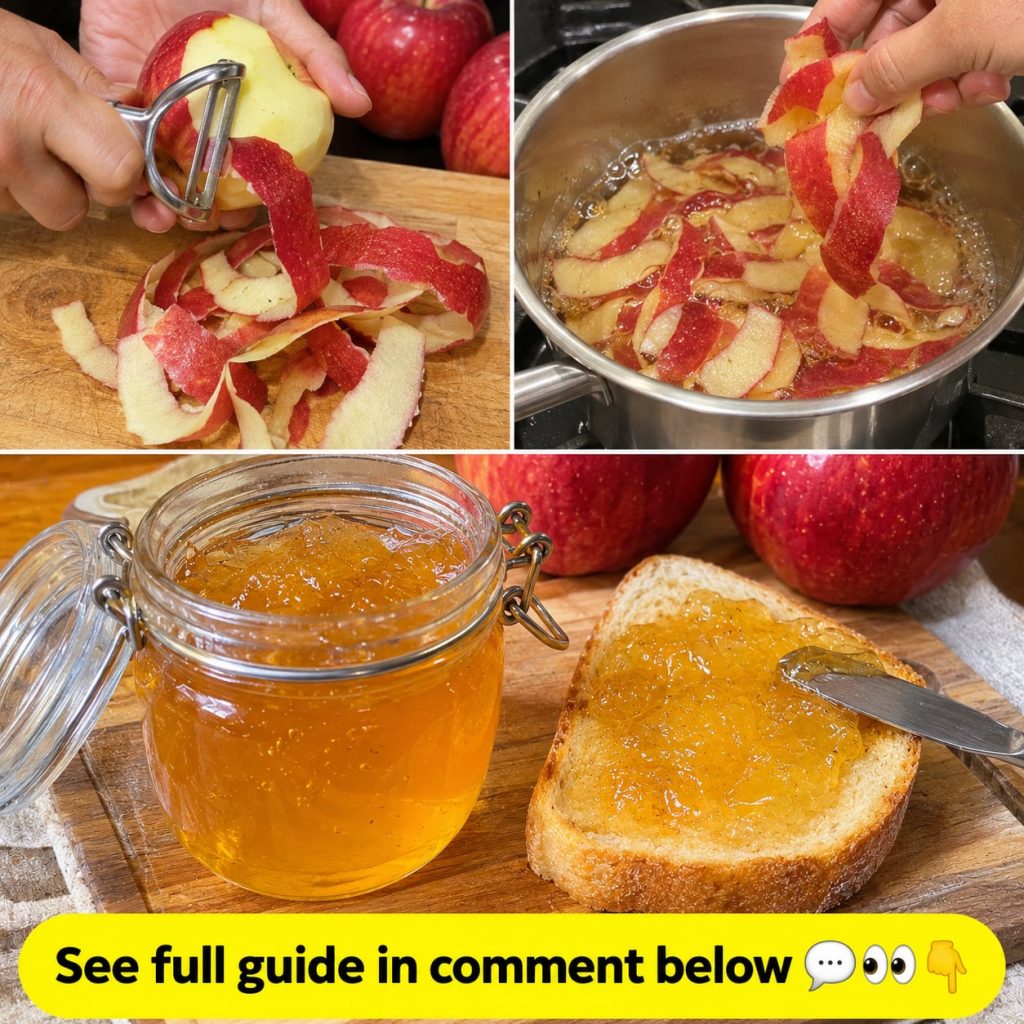
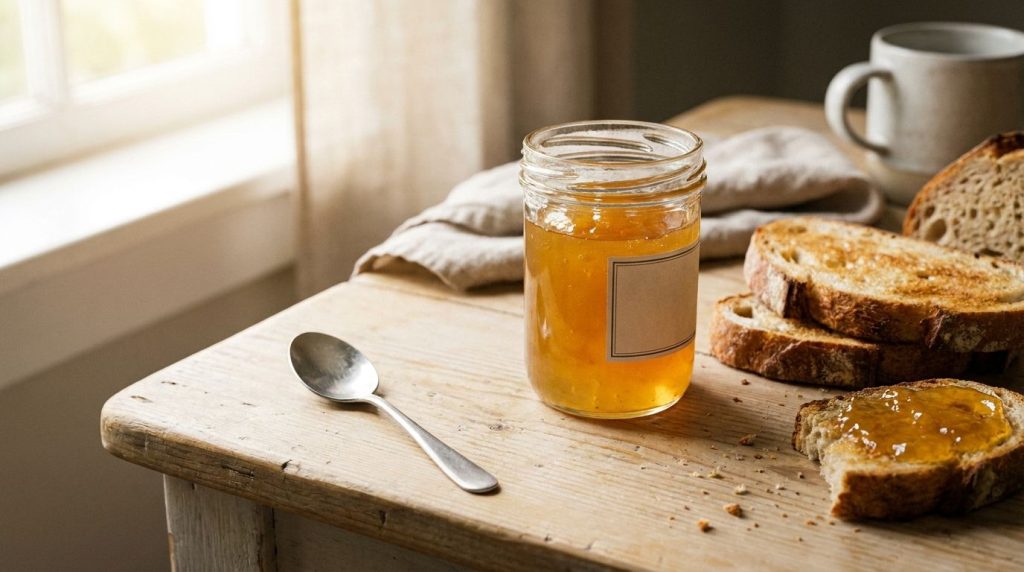
Most people toss apple peels into the bin without a second thought, but that thin skin is exactly what gives this homemade jelly its warm golden color and its natural setting power. This is the part most people skip: the peels do most of the work before any sugar goes in.
What Is Apple Peel Jelly?
Apple peel jelly is a simple fruit spread made by simmering clean apple peels in water, straining the liquid, and cooking it down with sugar and lemon juice until it sets. It is a practical way to use kitchen scraps, and it turns out a clear, golden spread with a light apple flavor.
The peels contain natural pectin and pigment, which is why the jelly can set with less added help than many fruit recipes need.
Ingredients
- Peels from about 1 kg (2 lb) of apples, roughly 6 medium apples
- 1 liter (about 4 cups) water
- 500 g (about 2 1/2 cups) granulated sugar
- 2 tablespoons fresh lemon juice
- Optional: 1 cinnamon stick or 2 whole cloves
Formula and Approximate Yield
The basic ratio is 1 liter of peel infusion to 500 g of sugar and 2 tablespoons of lemon juice. This makes about 3 to 4 small jars, depending on jar size.
Step-by-Step Method
- Wash the apples well under running water. Scrub gently to remove dust and wax.
- Peel the apples and place the peels in a large pot. Keep the flesh for another recipe.
- Cover the peels with the water and add the cinnamon or cloves if using.
- Bring to a boil, then reduce to a gentle simmer for 20 to 25 minutes, until the water turns pale gold.
- Strain through a fine sieve or cheesecloth. Press the peels lightly, but do not squeeze hard, to keep the liquid clear.
- Measure 1 liter of the strained liquid back into a clean pot.
- Add the sugar and lemon juice. Stir until the sugar dissolves.
- Boil over medium-high heat, stirring often, until the mixture thickens and reaches about 104 to 105 C (220 to 221 F), or passes the cold plate test.
- Skim off any foam and pour into warm, clean jars. Seal and let cool.
Quick Tip: Put a small plate in the freezer before you start. Spoon a little jelly onto the cold plate and wait 30 seconds. If it wrinkles when you push it with your finger, it is ready.
How to Use It
Spread it on toast, swirl it into plain yogurt, or serve it with soft cheese and crackers. It also works as a glaze for baked chicken or pork when you thin it with a splash of warm water.
How Often Can You Eat It?
Because this is a sugar-based spread, treat it as a occasional sweet addition rather than a daily staple. One to two teaspoons a day is a reasonable portion for most adults who eat it as part of a balanced diet.
How to Choose Apples
Look for firm apples with bright, unblemished skin. Red varieties such as Gala or Red Delicious often give a deeper amber color, while yellow or green apples produce a paler, lighter gold. Mixing varieties is fine and often gives a more interesting flavor.
Choose organic apples when possible, or wash conventional apples thoroughly, since the peel is where residues sit.
Fresh vs Peel Infusion: Quick Reference
| Option | Best For | Flavor | Storage |
|---|---|---|---|
| Fresh peel infusion | Same-day jelly | Bright and light | Use within 24 hours |
| Refrigerated infusion | Making jelly the next day | Light and clean | Up to 2 days in a sealed jar |
| Finished jelly, refrigerated | Everyday use | Mellow and sweet | Up to 3 weeks |
| Finished jelly, properly canned | Pantry storage | Mellow and sweet | Up to 1 year if sealed correctly |
Storage Tips
Store the jelly in clean, sterilized glass jars. Keep opened jars in the refrigerator and use a clean spoon every time to prevent mold. If you do not plan to can, freeze extra jelly in small containers for up to 3 months.
Practical Tips
- Use a wide, heavy pot so the jelly thickens faster.
- Do not stir too much during the final boil, since it can cloud the color.
- Keep a spare jar of hot water nearby to thin the jelly if it sets too firmly.
Did You Know? Peels from red apples can create a warmer, rosier gold, while peels from yellow apples give a lighter honey shade.
Common Mistakes
- Using bruised or moldy apples. Any spoilage in the peels will carry into the liquid.
- Boiling the peels too long, which can make the infusion bitter.
- Squeezing the strained peels hard, which leaves the jelly cloudy.
- Storing hot jelly in wet or unsterilized jars.
- Skipping the set test and cooking too long, which can produce a stiff, candy-like texture.
Cautions and Who Should Avoid It
This recipe is a food preparation, not a medical treatment. Because it contains a significant amount of sugar, people managing diabetes or blood sugar should avoid it or speak with a healthcare professional first. Anyone with a known apple allergy should not eat it. Infants under one year should not be given honey-based or sugar-heavy spreads, and young children should have only small amounts.
Quick Summary
- Best preparation: Simmer clean peels in water, strain, then cook with sugar and lemon juice.
- Best use: Toast, yogurt, cheese boards, or glazes.
- Storage: Refrigerate opened jars for up to 3 weeks or can for pantry storage.
- When to use: Any time you have leftover peels from baking or snacking.
- What to avoid: Bruised apples, overcooking, and oversized portions.
FAQ
Can I use dried apple peels?
Fresh peels give the best color and flavor. Dried peels can work in a pinch, but simmer them a little longer and taste the infusion before adding sugar.
Can I freeze the peels before making jelly?
Yes. Rinse and dry the peels, then freeze them in a sealed bag for up to 2 months. Thaw before simmering.
How long does apple peel jelly last?
Refrigerated jelly lasts about 3 weeks after opening. Properly canned jelly stored in a cool, dark place can last up to a year.
Can I reuse the peels for a second batch?
You can simmer the same peels again for a weaker, lighter infusion, but the second batch will have less color and may not set as firmly.
Do I need added pectin?
Usually no. The peels provide natural pectin, and lemon juice helps the set. If your jelly is too loose, cook it a few minutes longer and test again.
Why is my jelly cloudy?
Cloudiness often comes from squeezing the peels or stirring too hard. Strain gently and skim the foam before jarring.
Can I make it without sugar?
Sugar acts as a preservative and helps the jelly set. Lowering it changes the texture and shelf life, so use a tested low-sugar pectin recipe if you want a reduced-sugar version.
Final Thoughts
Apple peel jelly turns a kitchen scrap into something you will want to spread on everything. Start with clean peels, keep the simmer gentle, and test the set early. Once you see that golden jar on the counter, you will look at apple peels very differently.
You may also like: Read more about homemade fruit spreads in our full guide to small-batch jam making.
Related remedy: See the full guide to natural kitchen preserves and how to store them safely.
Continue with: Learn how to make a simple apple scrap vinegar at home.